 위린이
위린이
Bright fruit rises off the glass before you’ve even poured - nothing about it reads like single malt.
Camus VSOP - the basics
- ABV: 40%
- Grape: 100% Ugni Blanc
- Region: Cognac, France. Centered on the Borderies cru
- Aging: minimum 4 years, French oak
- House: Camus, founded 1863. Fifth-generation independent family-run cognac house
Borderies is the smallest of the six cognac crus, and Camus has its own vineyards there. If you want the wider map, I wrote up a brandy and cognac guide as a companion piece.
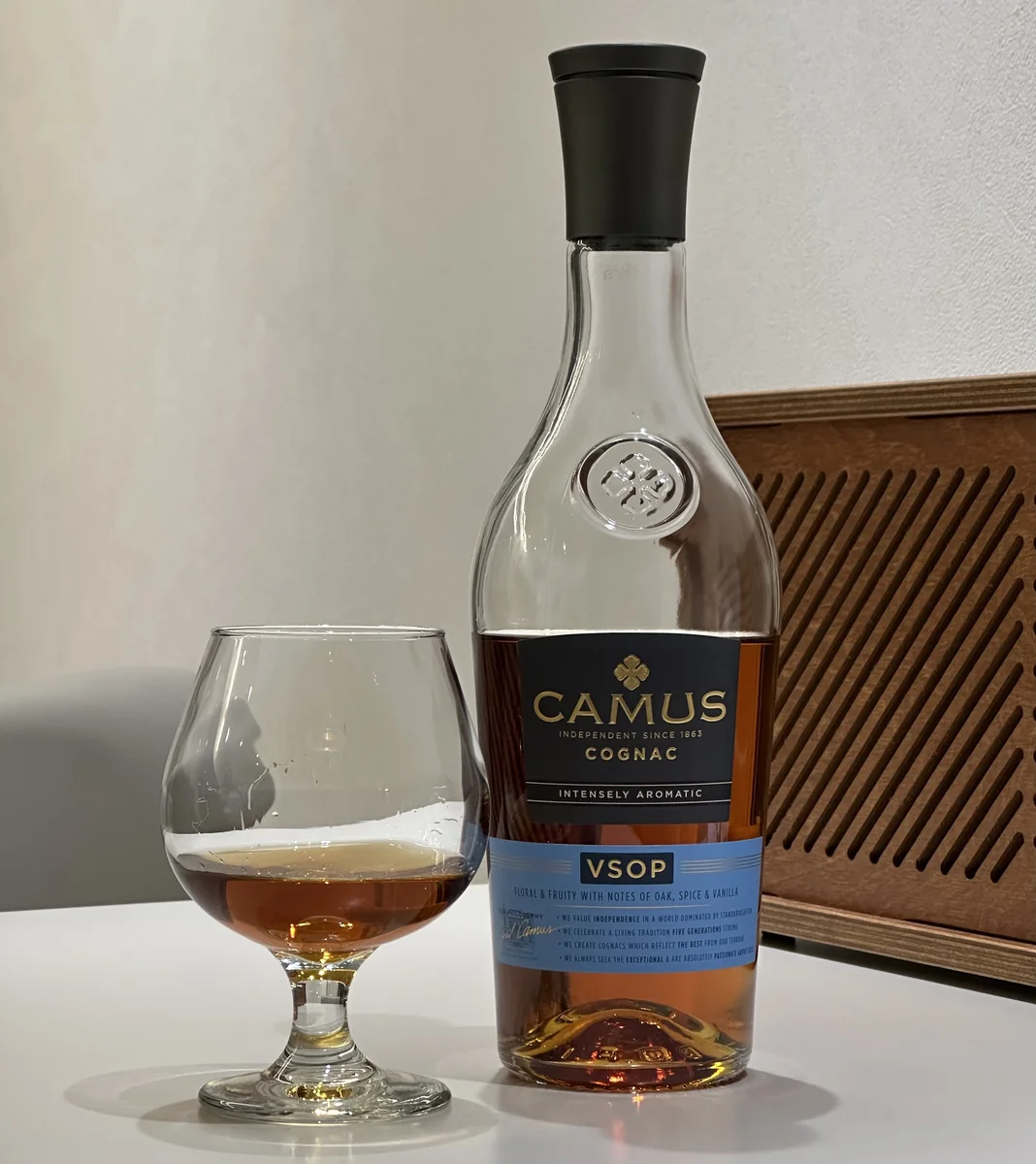
Tasting notes
Nose
Bright fruit bursts out the second the cap moves. Vanilla, oak, and spice sit underneath, but the texture of the whole thing is different from whisky - softer, rounder. There’s a sweet-white-wine quality floating in there too. That’s the grape base making itself known; wine’s aromatic structure is sitting in the background of the spirit. At 40% the alcohol barely registers, so you can stick your nose right in the glass and not get burned. None of the struck-match or mineral notes you sometimes catch on single malts. Fruit takes over - sulphur or mineral notes don’t register.
Palate
Soft and sweet. First sip, something close to fruit jam spreads across the tongue, and mid-palate a clean spice lifts behind it. More like white pepper than cinnamon. Body isn’t light, isn’t heavy - somewhere in the middle. Reads like a dense fruit liqueur.
Finish
Vanilla. Lands on vanilla, soft oak underneath. Medium length. Not dry, stays soft all the way out. No harsh edge or bitter turn, which makes this an easy one to spend time with.
Side by side with Glenlivet 18
Same session, I poured Glenlivet 18 next to it to see how they’d line up. Completely different direction.
Glenlivet 18 is malty. Grain-derived nuttiness sits on the floor of the glass, and dried apricot, orange peel, and toffee stack on top. The age shows. Camus VSOP has none of that grain floor. What it has instead is that dense fruit-liqueur quality pushed to the front. Both qualify as “fruity” but in different modes - Glenlivet is dried fruit, Camus is fresh fruit.
Pouring them side by side is where cognac finally made sense. Whisky is a grain-based spirit. Cognac is a grape-based spirit. The skeleton has to come out different. When I tried Angel’s Envy port cask finish I wrote that it’d land better with wine or brandy drinkers than with Scotch drinkers - Camus more or less confirmed that instinct.
On the 40% question
On a single malt, 40% tends to feel thin. Nose and palate both flatten out. Cognac at 40% is a different situation. The whole point of the category is to sit with the aroma in a glass for a while, and 40% actually fits that use case. You get the fruit open and full without alcohol sharpness stepping on it.
What pairs with it
- Dark chocolate - Camus’s fruit sweetness meeting cacao bitterness is basically dessert in a glass. You want 70% cacao or higher to balance it
- Dried fruit - dried apricot, fig. Extends the fruit character of the cognac cleanly
Camus lineup
- VSOP - today’s bottle. 40%, Borderies-focused
- VSOP Borderies Single Estate - from Camus’s own estate vineyards. More premium
- XO - minimum 10 years, Intensely Aromatic range
- XO Borderies Family Reserve - single-estate XO
- Ile de Re - aged on an island off the French west coast, marine character
Coming from whisky my cognac reference points are thin - Hennessy and Remy Martin are still ahead. For what’s in the glass, Camus VSOP is a solid after-dinner pour.
![[Bourbon] Knob Creek vs Russell's Single Barrel](/assets/images/posts/2026-04-26-knob-creek-9-vs-russells-reserve-single-barrel-comparison.webp)
![[Highland] Glenmorangie Infinita 18 First Pour Review](/assets/images/posts/2026-04-24-glenmorangie-the-infinita-18-years-review.webp)
![[Sherry] Macallan 12 vs GlenDronach 12 - Side by Side](/assets/images/posts/2026-04-20-macallan-12-vs-glendronach-12-sherry-comparison.webp)