<?xml version="1.0" encoding="utf-8"?>
<feed xmlns="http://www.w3.org/2005/Atom">
  <generator uri="https://jekyllrb.com/" version="3.10.0">Jekyll</generator>
  <link href="https://blog.spemer.com/en/feed.xml" rel="self" type="application/atom+xml" />
  <link href="https://blog.spemer.com/en/" rel="alternate" type="text/html" hreflang="en" />
  <link href="https://blog.spemer.com/feed.xml" rel="alternate" type="application/atom+xml" hreflang="ko" title="위린이 아카이브" />
  <updated>2026-05-20T03:58:12+00:00</updated>
  <id>https://blog.spemer.com/en/feed.xml</id>
  <title type="html">Whisky Noob</title>
  <subtitle>Tasting notes on Scotch, bourbon, and Japanese whisky, plus frontend development and SEO notes.</subtitle>
  
  
  <entry>
    <title type="html">[Sherry &amp;amp; Light Peat] Benromach 15 Years Review</title>
    <link href="https://blog.spemer.com/en/benromach-15-years-review/" rel="alternate" type="text/html" title="[Sherry &amp; Light Peat] Benromach 15 Years Review" />
    <published>2026-05-19T06:00:00+00:00</published>
    <updated>2026-05-19T06:00:00+00:00</updated>
    <id>https://blog.spemer.com/en/benromach-15-years-review</id>
    <content type="html" xml:base="https://blog.spemer.com/en/benromach-15-years-review/"><![CDATA[<p>The next bottle picked up after <a href="/en/benromach-10-year-review/">Benromach 10</a>. Box came home, got cracked open right away.</p>

<h2 id="whats-different-from-the-10">What’s different from the 10</h2>

<p>The shift from the 10 to the 15 is in the cask finish. Both sit in first-fill bourbon and sherry casks. The 15 then spends roughly six more years married in oloroso sherry casks. The bourbon-to-sherry ratio is reported around 80:20. Peat stays at the same light level as the 10. The cask finish dials sherry intensity up one more notch.</p>

<p>Benromach runs on a handful of people doing the whole production - one of the smallest Speyside operations. Mentioned in the <a href="/en/benromach-10-year-review/">10 review</a> too. The 15 is that same small-batch run pulled five years further, which puts it on a different shelf from a similarly-priced 15 out of a large distillery.</p>

<p>ABV 43%, no coloring, non-chill filtered, all carried over from the 10. Color is a touch deeper - bright gold with a few drops of soy sauce dropped in. Same family, visible without tasting.</p>

<div class="google-ads-box" data-ad-type="in-article">
  <div class="google-ads" data-ad-type="in-article">
    <ins class="adsbygoogle" style="display: block; text-align: center" data-ad-layout="in-article" data-ad-format="fluid" data-ad-client="ca-pub-3627439872518903" data-ad-slot="5939724010"></ins>
    <script>
      (adsbygoogle = window.adsbygoogle || []).push({});
    </script>
  </div>
</div>

<h2 id="in-the-glass">In the glass</h2>

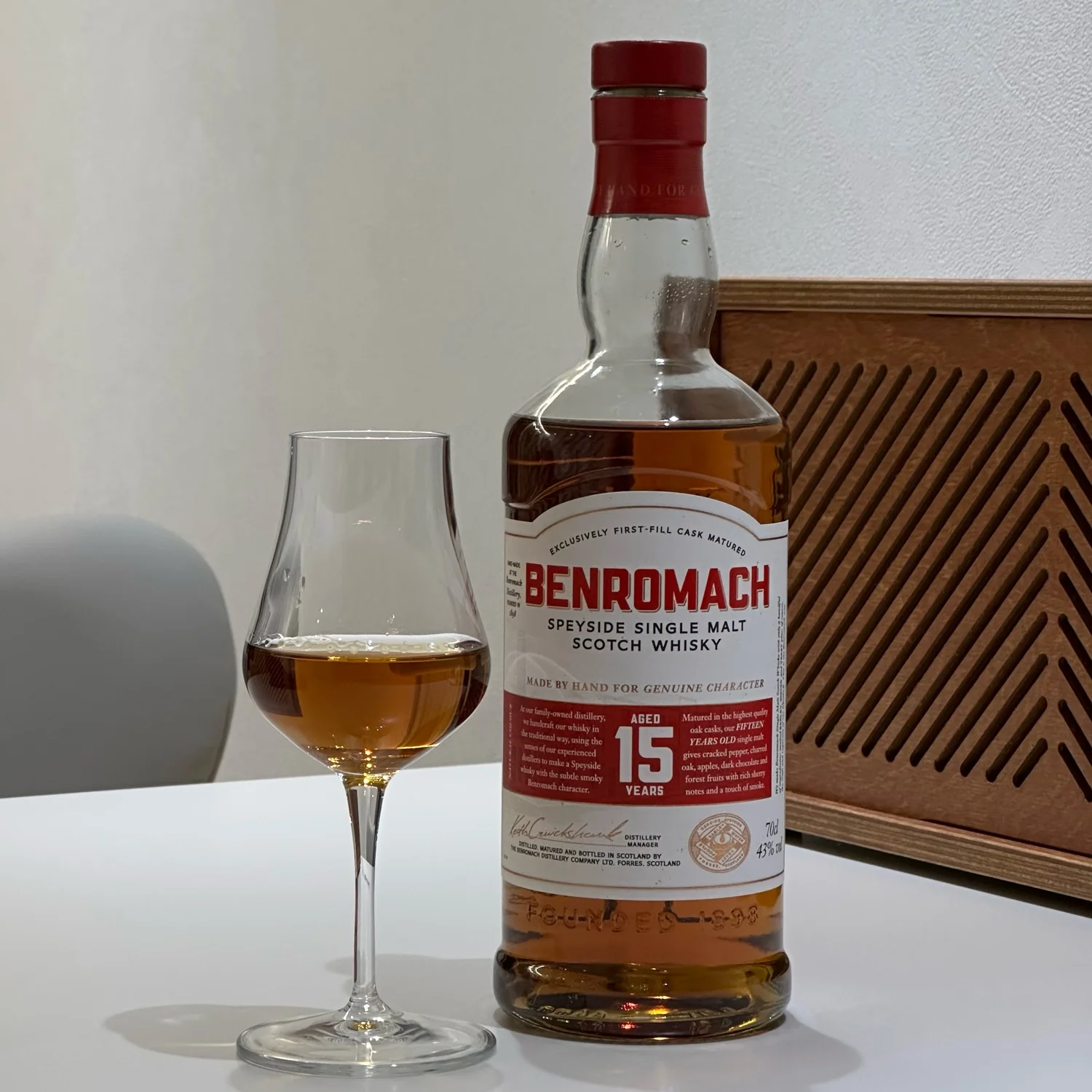
<p><img src="/assets/images/posts/2026-05-19-benromach-15-years-review.webp" alt="Benromach 15 Years single malt whisky" /></p>

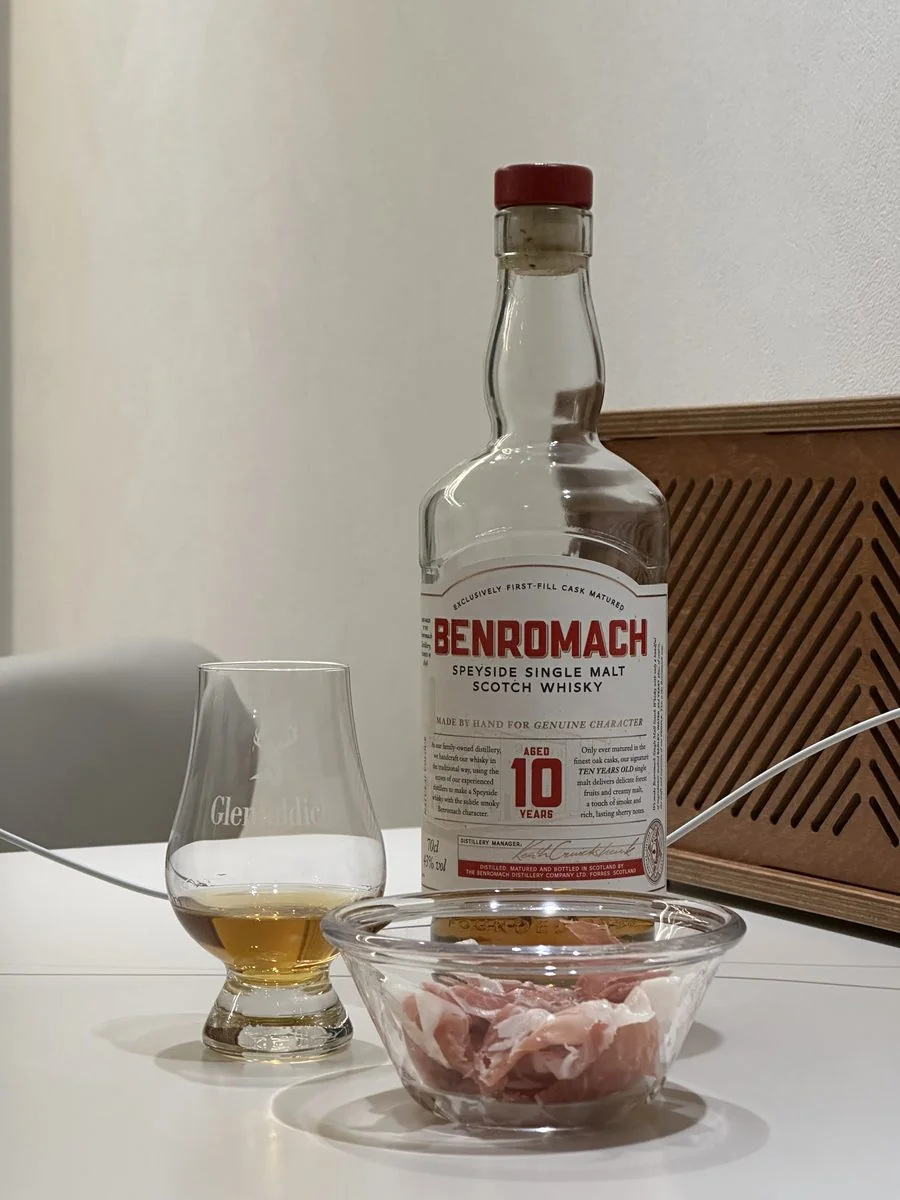
<p>Bottle reads the same as the 10 - clean red label, bold BENROMACH wordmark. A good-looking pour. Stared at it for a minute before tipping the glass. Poured straight off opening.</p>

<h3 id="nose">Nose</h3>

<p>Light smoke lays down first, then sherry rises pleasantly on top. Not a heavy sherry - a bright one. Apple and pear come in together, apple slightly ahead, and not just any apple - more like a ripe honey apple. A bit of maltiness hovers. Classic single malt Scotch profile, reading like <a href="/en/benromach-10-year-review/">Benromach 10</a> with the smoke pulled back a notch and the sherry pushed up. Orange honey toward the back.</p>

<h3 id="palate">Palate</h3>

<p>Spice hits first. Body fits the 43% well, with a slightly oily texture underneath. The sweetness leans more toward malt than sherry. Not that the sherry sugar is gone - the malt just sits in front by weight. <a href="/en/johnnie-walker-green-label-15-years-review/">Johnnie Walker Green 15</a> kept coming to mind. That bottle has its own malt explosion, and the direction Benromach 15’s sweetness takes overlaps. The same read held on the second sip.</p>

<h3 id="finish">Finish</h3>

<p>Smoke dominates the finish over sherry, and it’s a pleasant smoke. The label says light peat and it really is light. More smoky than peaty, and it stays around for a long time. Never sharp, never off-putting. Light peat holding its own through the finish like this isn’t common.</p>

<h2 id="after-some-time-in-the-glass">After some time in the glass</h2>

<p>Sherry’s share creeps up the longer the pour sits. Smoke leads slightly at first, then sherry settles in as the glass opens. The bourbon cask side - vanilla, wood - starts to peek through at the same time. The opening ratio slowly redistributes.</p>

<p>Day one, so the aromatics aren’t fully unpacked. Could land differently after a few days, the way <a href="/en/glenallachie-15-year-after-opening-review/">GlenAllachie 15 did post-opening</a>. Might revisit the same glass after a week.</p>

<div class="google-ads-box" data-ad-type="in-article">
  <div class="google-ads" data-ad-type="in-article">
    <ins class="adsbygoogle" style="display: block; text-align: center" data-ad-layout="in-article" data-ad-format="fluid" data-ad-client="ca-pub-3627439872518903" data-ad-slot="5939724010"></ins>
    <script>
      (adsbygoogle = window.adsbygoogle || []).push({});
    </script>
  </div>
</div>

<h2 id="what-5-extra-years-adds">What 5 extra years adds</h2>

<p>Rating: 4.5. Light peat held in restraint while first-fill sherry and bourbon balance each other, plus smoke carrying a long, easy finish with zero pushback - those two carried the most weight. The 10’s outline stays intact, pulled one shade deeper.</p>

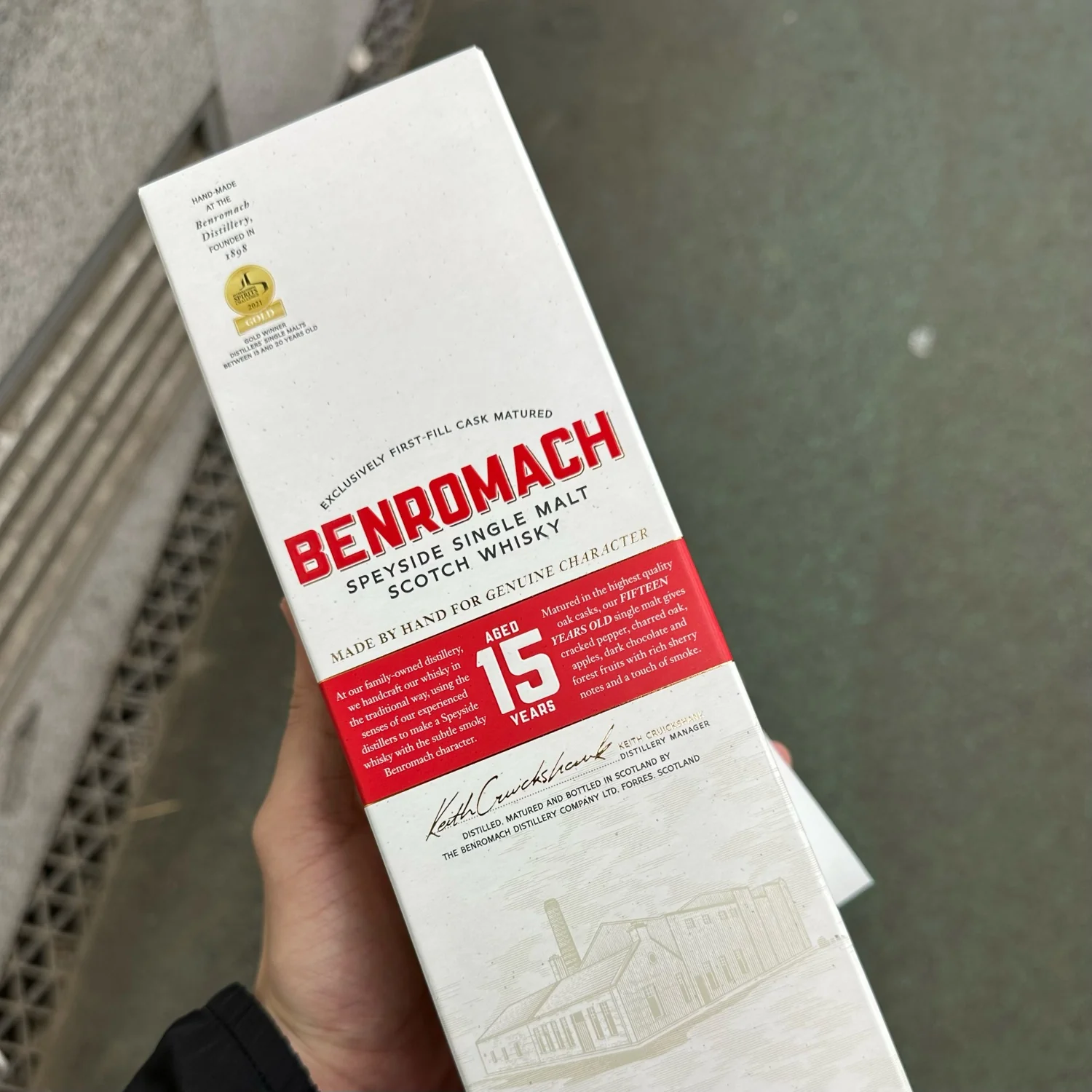
<p><img src="/assets/images/posts/2026-05-19-benromach-15-years-review-sub.webp" alt="Benromach 15 Years box" /></p>

<p>In the same price tier, <a href="/en/macallan-12-year-sherry-oak-review/">Macallan 12 Sherry Oak</a> and <a href="/en/glenallachie-15-year-after-opening-review/">GlenAllachie 15</a> sit nearby on the sherry side. Those run sherry-only. Light peat sitting next to sherry isn’t a common configuration - the bottle ends up less of a head-to-head and more of an alternative without a real substitute.</p>

<div class="google-ads-box" data-ad-type="in-article">
  <div class="google-ads" data-ad-type="in-article">
    <ins class="adsbygoogle" style="display: block; text-align: center" data-ad-layout="in-article" data-ad-format="fluid" data-ad-client="ca-pub-3627439872518903" data-ad-slot="5939724010"></ins>
    <script>
      (adsbygoogle = window.adsbygoogle || []).push({});
    </script>
  </div>
</div>]]></content>
    <author>
      <name>Spemer</name>
    </author>
    
    <summary type="html">Benromach 15 Years tasting review. First-fill bourbon and sherry casks, then six more years married in oloroso sherry. Light peat, notes from day one.</summary>
    
    
    <media:thumbnail xmlns:media="http://search.yahoo.com/mrss/" url="/assets/images/posts/2026-05-19-benromach-15-years-review.webp" />
    
    
    <category term="Whisky" />
    
  </entry>
  
  <entry>
    <title type="html">JSON-LD in 2026: SearchAction and FAQ cleanup</title>
    <link href="https://blog.spemer.com/en/google-searchaction-faq-rich-results-seo-change/" rel="alternate" type="text/html" title="JSON-LD in 2026: SearchAction and FAQ cleanup" />
    <published>2026-05-19T05:00:00+00:00</published>
    <updated>2026-05-19T05:00:00+00:00</updated>
    <id>https://blog.spemer.com/en/google-searchaction-faq-rich-results-seo-change</id>
    <content type="html" xml:base="https://blog.spemer.com/en/google-searchaction-faq-rich-results-seo-change/"><![CDATA[<p>Two JSON-LD patterns that used to be common in SEO templates have lost most of their Google Search value.</p>

<p>The first is <code class="language-plaintext highlighter-rouge">SearchAction</code>, which powered the sitelinks search box. Google removed that visual element from Search results starting November 21, 2024. The second is <code class="language-plaintext highlighter-rouge">FAQPage</code>, now that FAQ rich results stopped appearing in Google Search as of May 7, 2026.</p>

<p>If you came here looking for a <code class="language-plaintext highlighter-rouge">potentialAction</code> snippet or an <code class="language-plaintext highlighter-rouge">acceptedAnswer</code> example, the short version is this: in 2026, these are usually cleanup candidates, not new things to add.</p>

<p>This is not a ranking algorithm update. The extra search result UI went away. That means the practical work is smaller too: remove markup that no longer earns the feature, keep the structured data that still has a job, and do not overread the Search Console graph.</p>

<h2 id="what-changed">What changed</h2>

<p>Google said in its <a href="https://developers.google.com/search/blog/2024/10/sitelinks-search-box" rel="noopener noreferrer" target="_blank" title="Farewell, Sitelinks Search Box" class="markdown-link">Search Central blog</a> that the sitelinks search box visual element would be removed globally. The change did not affect rankings or the other sitelinks visual element.</p>

<p>FAQ followed the same direction. The <a href="https://support.google.com/webmasters/answer/6211453?hl=en#rich_result_reports" rel="noopener noreferrer" target="_blank" title="Search Console data anomalies" class="markdown-link">Search Console data anomalies page</a> says FAQ rich results no longer appear as of May 7, 2026, so reported FAQ impressions can drop. Google’s <a href="https://developers.google.com/search/docs/appearance/structured-data/faqpage?hl=en" rel="noopener noreferrer" target="_blank" title="FAQ structured data documentation" class="markdown-link">FAQ structured data documentation</a> also notes that FAQ search appearance, the rich result report, and Rich Results Test support are being dropped in June 2026, with Search Console API support ending in August 2026.</p>

<table>
  <thead>
    <tr>
      <th>Item</th>
      <th>What changed</th>
      <th>Practical move</th>
    </tr>
  </thead>
  <tbody>
    <tr>
      <td><code class="language-plaintext highlighter-rouge">SearchAction</code> JSON-LD</td>
      <td>Sitelinks search box UI retired</td>
      <td>Remove it if that UI was the only goal</td>
    </tr>
    <tr>
      <td><code class="language-plaintext highlighter-rouge">FAQPage</code> JSON-LD</td>
      <td>FAQ rich results no longer appear</td>
      <td>Consider removing it if it was only for Google rich results</td>
    </tr>
    <tr>
      <td>Search Console</td>
      <td>FAQ impressions may drop</td>
      <td>Separate CTR changes from ranking changes</td>
    </tr>
  </tbody>
</table>

<div class="google-ads-box" data-ad-type="in-article">
  <div class="google-ads" data-ad-type="in-article">
    <ins class="adsbygoogle" style="display: block; text-align: center" data-ad-layout="in-article" data-ad-format="fluid" data-ad-client="ca-pub-3627439872518903" data-ad-slot="5939724010"></ins>
    <script>
      (adsbygoogle = window.adsbygoogle || []).push({});
    </script>
  </div>
</div>

<h2 id="code-to-remove-searchaction">Code to remove: SearchAction</h2>

<p>If your site still has this kind of <code class="language-plaintext highlighter-rouge">SearchAction</code> JSON-LD, the <code class="language-plaintext highlighter-rouge">potentialAction</code> block is the part to review.</p>

<div class="language-html highlighter-rouge"><div class="highlight"><pre class="highlight"><code><span class="nt">&lt;script </span><span class="na">type=</span><span class="s">"application/ld+json"</span><span class="nt">&gt;</span>
<span class="p">{</span>
  <span class="dl">"</span><span class="s2">@context</span><span class="dl">"</span><span class="p">:</span> <span class="dl">"</span><span class="s2">https://schema.org</span><span class="dl">"</span><span class="p">,</span>
  <span class="dl">"</span><span class="s2">@type</span><span class="dl">"</span><span class="p">:</span> <span class="dl">"</span><span class="s2">WebSite</span><span class="dl">"</span><span class="p">,</span>
  <span class="dl">"</span><span class="s2">url</span><span class="dl">"</span><span class="p">:</span> <span class="dl">"</span><span class="s2">https://example.com/</span><span class="dl">"</span><span class="p">,</span>
  <span class="dl">"</span><span class="s2">potentialAction</span><span class="dl">"</span><span class="p">:</span> <span class="p">{</span>
    <span class="dl">"</span><span class="s2">@type</span><span class="dl">"</span><span class="p">:</span> <span class="dl">"</span><span class="s2">SearchAction</span><span class="dl">"</span><span class="p">,</span>
    <span class="dl">"</span><span class="s2">target</span><span class="dl">"</span><span class="p">:</span> <span class="dl">"</span><span class="s2">https://example.com/search?q={search_term_string}</span><span class="dl">"</span><span class="p">,</span>
    <span class="dl">"</span><span class="s2">query-input</span><span class="dl">"</span><span class="p">:</span> <span class="dl">"</span><span class="s2">required name=search_term_string</span><span class="dl">"</span>
  <span class="p">}</span>
<span class="p">}</span>
<span class="nt">&lt;/script&gt;</span>
</code></pre></div></div>

<p>For the sitelinks search box, <code class="language-plaintext highlighter-rouge">SearchAction</code> no longer has a visible Google Search payoff. Keeping it will not create a Search Console error, but there is not much reason to keep it if that was the only purpose.</p>

<p>Do not remove the whole <code class="language-plaintext highlighter-rouge">WebSite</code> object by reflex. Site name markup can still use <code class="language-plaintext highlighter-rouge">WebSite</code> with basic properties such as <code class="language-plaintext highlighter-rouge">name</code> and <code class="language-plaintext highlighter-rouge">url</code>.</p>

<div class="language-html highlighter-rouge"><div class="highlight"><pre class="highlight"><code><span class="nt">&lt;script </span><span class="na">type=</span><span class="s">"application/ld+json"</span><span class="nt">&gt;</span>
<span class="p">{</span>
  <span class="dl">"</span><span class="s2">@context</span><span class="dl">"</span><span class="p">:</span> <span class="dl">"</span><span class="s2">https://schema.org</span><span class="dl">"</span><span class="p">,</span>
  <span class="dl">"</span><span class="s2">@type</span><span class="dl">"</span><span class="p">:</span> <span class="dl">"</span><span class="s2">WebSite</span><span class="dl">"</span><span class="p">,</span>
  <span class="dl">"</span><span class="s2">name</span><span class="dl">"</span><span class="p">:</span> <span class="dl">"</span><span class="s2">Example</span><span class="dl">"</span><span class="p">,</span>
  <span class="dl">"</span><span class="s2">url</span><span class="dl">"</span><span class="p">:</span> <span class="dl">"</span><span class="s2">https://example.com/</span><span class="dl">"</span>
<span class="p">}</span>
<span class="nt">&lt;/script&gt;</span>
</code></pre></div></div>

<p>So the cleanup is narrow: remove <code class="language-plaintext highlighter-rouge">SearchAction</code>, keep valid site identity data. If you are also auditing crawl and index controls, the <a href="/en/robots-txt-meta-robots-seo-guide/">robots.txt and meta robots guide</a> is the better place to start.</p>

<div class="google-ads-box" data-ad-type="in-article">
  <div class="google-ads" data-ad-type="in-article">
    <ins class="adsbygoogle" style="display: block; text-align: center" data-ad-layout="in-article" data-ad-format="fluid" data-ad-client="ca-pub-3627439872518903" data-ad-slot="5939724010"></ins>
    <script>
      (adsbygoogle = window.adsbygoogle || []).push({});
    </script>
  </div>
</div>

<h2 id="code-to-review-faqpage">Code to review: FAQPage</h2>

<p><code class="language-plaintext highlighter-rouge">FAQPage</code> JSON-LD added only for FAQ rich results is now worth reviewing too.</p>

<div class="language-html highlighter-rouge"><div class="highlight"><pre class="highlight"><code><span class="nt">&lt;script </span><span class="na">type=</span><span class="s">"application/ld+json"</span><span class="nt">&gt;</span>
<span class="p">{</span>
  <span class="dl">"</span><span class="s2">@context</span><span class="dl">"</span><span class="p">:</span> <span class="dl">"</span><span class="s2">https://schema.org</span><span class="dl">"</span><span class="p">,</span>
  <span class="dl">"</span><span class="s2">@type</span><span class="dl">"</span><span class="p">:</span> <span class="dl">"</span><span class="s2">FAQPage</span><span class="dl">"</span><span class="p">,</span>
  <span class="dl">"</span><span class="s2">mainEntity</span><span class="dl">"</span><span class="p">:</span> <span class="p">[</span>
    <span class="p">{</span>
      <span class="dl">"</span><span class="s2">@type</span><span class="dl">"</span><span class="p">:</span> <span class="dl">"</span><span class="s2">Question</span><span class="dl">"</span><span class="p">,</span>
      <span class="dl">"</span><span class="s2">name</span><span class="dl">"</span><span class="p">:</span> <span class="dl">"</span><span class="s2">Should I remove SearchAction?</span><span class="dl">"</span><span class="p">,</span>
      <span class="dl">"</span><span class="s2">acceptedAnswer</span><span class="dl">"</span><span class="p">:</span> <span class="p">{</span>
        <span class="dl">"</span><span class="s2">@type</span><span class="dl">"</span><span class="p">:</span> <span class="dl">"</span><span class="s2">Answer</span><span class="dl">"</span><span class="p">,</span>
        <span class="dl">"</span><span class="s2">text</span><span class="dl">"</span><span class="p">:</span> <span class="dl">"</span><span class="s2">If it was only for the sitelinks search box, removing it is reasonable.</span><span class="dl">"</span>
      <span class="p">}</span>
    <span class="p">}</span>
  <span class="p">]</span>
<span class="p">}</span>
<span class="nt">&lt;/script&gt;</span>
</code></pre></div></div>

<p>That does not mean deleting the FAQ content users can read. Keep useful questions and answers on the page. What lost its purpose is the Google rich result layer built around <code class="language-plaintext highlighter-rouge">FAQPage</code>.</p>

<table>
  <thead>
    <tr>
      <th>Item</th>
      <th>Recommendation</th>
    </tr>
  </thead>
  <tbody>
    <tr>
      <td>Visible FAQ content</td>
      <td>Keep it if it helps readers</td>
    </tr>
    <tr>
      <td><code class="language-plaintext highlighter-rouge">FAQPage</code> JSON-LD</td>
      <td>Remove or stop generating it if it was only for Google FAQ rich results</td>
    </tr>
    <tr>
      <td><code class="language-plaintext highlighter-rouge">SearchAction</code> <code class="language-plaintext highlighter-rouge">potentialAction</code></td>
      <td>Remove if it was only for the sitelinks search box</td>
    </tr>
    <tr>
      <td><code class="language-plaintext highlighter-rouge">BreadcrumbList</code>, <code class="language-plaintext highlighter-rouge">Product</code>, <code class="language-plaintext highlighter-rouge">Review</code></td>
      <td>Keep when accurate</td>
    </tr>
    <tr>
      <td><code class="language-plaintext highlighter-rouge">WebSite</code> name/url markup</td>
      <td>Keep when accurate</td>
    </tr>
  </tbody>
</table>

<div class="google-ads-box" data-ad-type="in-article">
  <div class="google-ads" data-ad-type="in-article">
    <ins class="adsbygoogle" style="display: block; text-align: center" data-ad-layout="in-article" data-ad-format="fluid" data-ad-client="ca-pub-3627439872518903" data-ad-slot="5939724010"></ins>
    <script>
      (adsbygoogle = window.adsbygoogle || []).push({});
    </script>
  </div>
</div>

<h2 id="what-changes-in-search-results">What changes in Search results</h2>

<p>For <code class="language-plaintext highlighter-rouge">SearchAction</code>, the site search box under the result is gone.</p>

<p>For FAQ rich results, the expandable question-and-answer area is gone. CTR can move, but do not turn that into a ranking story too quickly.</p>

<p>Use Search Console like this:</p>

<ol>
  <li>Compare performance before and after May 7, 2026.</li>
  <li>Segment queries that used to trigger FAQ-style intent: <code class="language-plaintext highlighter-rouge">FAQ</code>, <code class="language-plaintext highlighter-rouge">how</code>, <code class="language-plaintext highlighter-rouge">review</code>, <code class="language-plaintext highlighter-rouge">price</code>, <code class="language-plaintext highlighter-rouge">question</code>.</li>
  <li>If average position is stable but CTR drops, the missing rich result may explain it.</li>
  <li>If average position also drops, check content quality, competing pages, indexing, and technical SEO separately.</li>
</ol>

<div class="google-ads-box" data-ad-type="in-article">
  <div class="google-ads" data-ad-type="in-article">
    <ins class="adsbygoogle" style="display: block; text-align: center" data-ad-layout="in-article" data-ad-format="fluid" data-ad-client="ca-pub-3627439872518903" data-ad-slot="5939724010"></ins>
    <script>
      (adsbygoogle = window.adsbygoogle || []).push({});
    </script>
  </div>
</div>

<h2 id="practical-cleanup-plan">Practical cleanup plan</h2>

<p>Start by finding the markup in your codebase.</p>

<div class="language-bash highlighter-rouge"><div class="highlight"><pre class="highlight"><code>rg <span class="s2">"SearchAction|FAQPage|potentialAction|query-input|acceptedAnswer"</span>
</code></pre></div></div>

<p>On WordPress, check SEO, FAQ, and schema plugin settings first. On a static site, inspect shared SEO components, layout templates, and JSON-LD includes.</p>

<p>When you rebuild JSON-LD, use the types that still have a clear role: WebSite basics, Organization, Article, BreadcrumbList, Product, and similar supported markup. You can generate those quickly with the <a href="https://utils.spemer.com/en/json-ld-generator/?utm_source=blog.spemer.com&amp;utm_medium=referral&amp;utm_campaign=google-searchaction-faq-rich-results-seo-change" rel="noopener noreferrer" target="_blank" title="JSON-LD Generator" class="markdown-link">JSON-LD Generator</a>. For Google FAQ rich result visibility, though, adding new <code class="language-plaintext highlighter-rouge">FAQPage</code> markup is hard to justify now.</p>

<p>Then make the cleanup small:</p>

<ul>
  <li>Remove <code class="language-plaintext highlighter-rouge">SearchAction</code> if it existed only for the sitelinks search box</li>
  <li>Remove or disable <code class="language-plaintext highlighter-rouge">FAQPage</code> if it existed only for Google FAQ rich results</li>
  <li>Keep accurate <code class="language-plaintext highlighter-rouge">BreadcrumbList</code>, <code class="language-plaintext highlighter-rouge">Product</code>, <code class="language-plaintext highlighter-rouge">Review</code>, <code class="language-plaintext highlighter-rouge">Organization</code>, and <code class="language-plaintext highlighter-rouge">WebSite</code> name/url markup</li>
  <li>Turn off FAQ schema in your CMS plugin if it is being generated automatically</li>
</ul>

<p>After deployment, use the <a href="https://search.google.com/test/rich-results" rel="noopener noreferrer" target="_blank" title="Rich Results Test" class="markdown-link">Rich Results Test</a> only to confirm the structured data you still care about is valid. Missing FAQ or sitelinks search box previews are normal now.</p>

<p>A drop in FAQ impressions in Search Console is not an error by itself. Do not delete the visible FAQ section, and definitely do not <code class="language-plaintext highlighter-rouge">noindex</code> a page, just because the FAQ report changed.</p>

<p>The takeaway is boring, which is good. Remove markup for retired UI, keep structured data that still describes the page, and spend the saved energy on content quality.</p>

<div class="google-ads-box" data-ad-type="in-article">
  <div class="google-ads" data-ad-type="in-article">
    <ins class="adsbygoogle" style="display: block; text-align: center" data-ad-layout="in-article" data-ad-format="fluid" data-ad-client="ca-pub-3627439872518903" data-ad-slot="5939724010"></ins>
    <script>
      (adsbygoogle = window.adsbygoogle || []).push({});
    </script>
  </div>
</div>]]></content>
    <author>
      <name>Spemer</name>
    </author>
    
    <summary type="html">What changed for SearchAction and FAQ rich results, what to remove from JSON-LD, and how to read the Search Console drop.</summary>
    
    
    <media:thumbnail xmlns:media="http://search.yahoo.com/mrss/" url="/assets/images/posts/2026-05-19-google-searchaction-faq-rich-results-seo-change.webp" />
    
    
    <category term="SEO" />
    
  </entry>
  
  <entry>
    <title type="html">[Korea] KI ONE Tiger Korean Single Malt Review</title>
    <link href="https://blog.spemer.com/en/kiwon-tiger-korean-single-malt-review/" rel="alternate" type="text/html" title="[Korea] KI ONE Tiger Korean Single Malt Review" />
    <published>2026-05-16T19:00:00+00:00</published>
    <updated>2026-05-16T19:00:00+00:00</updated>
    <id>https://blog.spemer.com/en/kiwon-tiger-korean-single-malt-review</id>
    <content type="html" xml:base="https://blog.spemer.com/en/kiwon-tiger-korean-single-malt-review/"><![CDATA[<p>A bottle of KI ONE Tiger landed on the table at a friend’s place last weekend, and I finally got two proper pours of it. Korean single malt is still a small corner of the global whisky map, and to me Tiger is the bottle outside readers are most likely to run into first - Three Societies has been the one Korean distillery actually getting written about overseas. So this is less a price-and-value writeup and more a note on what the liquid itself tastes like, from someone still finding my way with whisky.</p>

<p>Opinions at the table were split. One friend thought the sherry was pushed too hard, another thought 46% made it easy to sip for a long evening. I sat closer to the second camp, but the sherry-forward profile is worth flagging upfront so the rest of these notes make sense.</p>

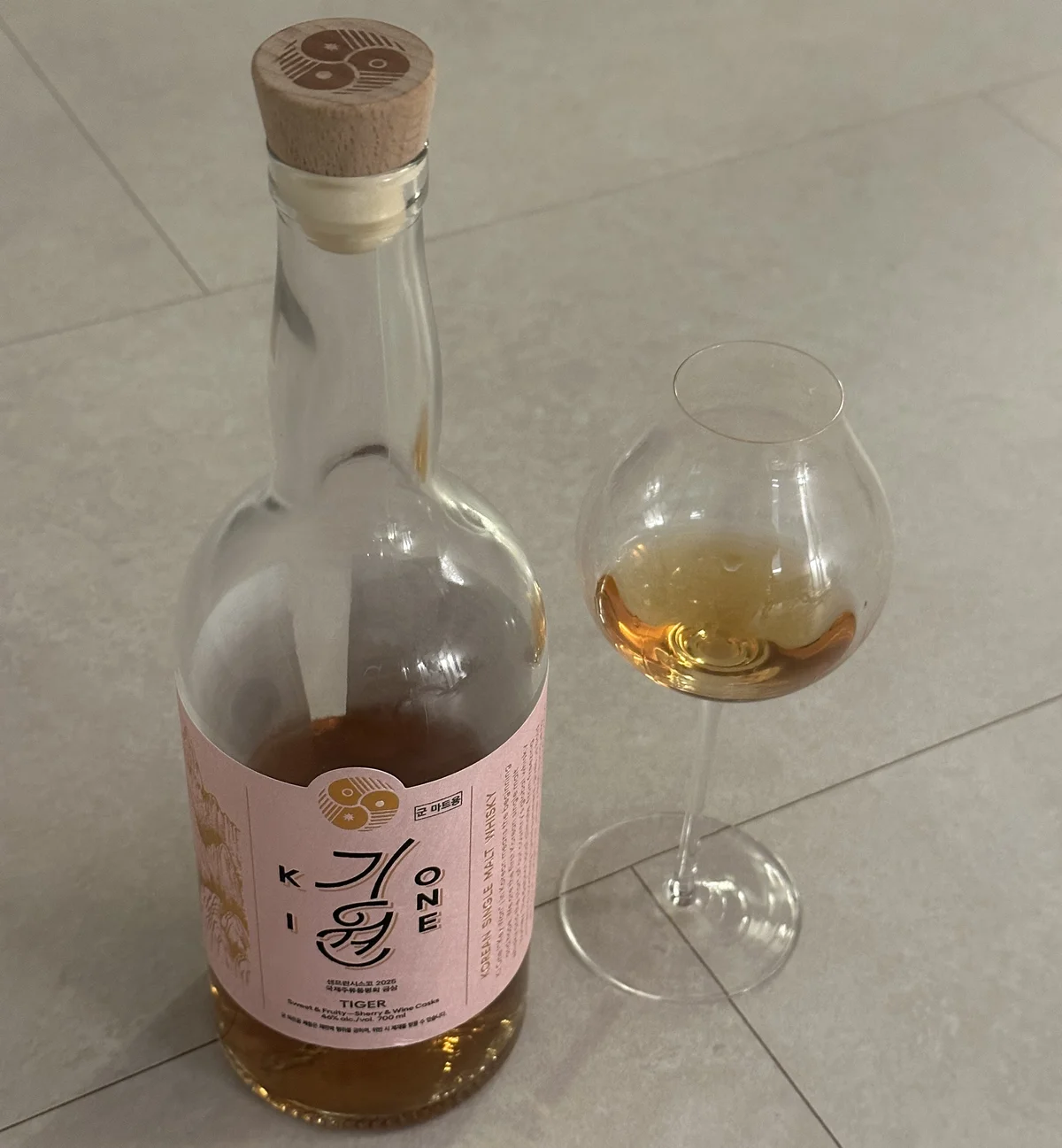
<p><img src="/assets/images/posts/2026-05-17-kiwon-tiger-korean-single-malt-review.webp" alt="KI ONE Tiger Korean single malt" /></p>

<h2 id="what-ki-one-tiger-actually-is">What KI ONE Tiger actually is</h2>

<p>KI ONE comes out of Three Societies Distillery in Namyangju, just outside Seoul - the first proper single malt distillery in Korea. Distillation started in 2020, and the Tiger expression dropped in November 2024 as part of the signature lineup. The same lineup has an Eagle (bourbon-led) and a Unicorn (smoky); Tiger is the sherry and wine cask one.</p>

<div class="google-ads-box" data-ad-type="in-article">
  <div class="google-ads" data-ad-type="in-article">
    <ins class="adsbygoogle" style="display: block; text-align: center" data-ad-layout="in-article" data-ad-format="fluid" data-ad-client="ca-pub-3627439872518903" data-ad-slot="5939724010"></ins>
    <script>
      (adsbygoogle = window.adsbygoogle || []).push({});
    </script>
  </div>
</div>

<p>There’s no age statement on the label. Korean law requires at least three years in cask to call something whisky, so it’s somewhere in that early-aged window. The cask story is oloroso sherry as the backbone with red wine casks blended in. Bottled at 46%, non-chill-filtered, no added colour, so the colour you see is what the wood gave it. Korea’s humid summers and cold winters push aging faster than Scotland, which is the easy way to read why a young malt like this drinks fuller than its years suggest.</p>

<p>The wider KI ONE range picked up a trophy at IWSC 2025. I couldn’t confirm whether Tiger specifically was the bottle that won, so leave that as a range-level note.</p>

<h2 id="nose-palate-finish">Nose, palate, finish</h2>

<p>Standard whisky glasses at the table, not Glencairns. I let the pour sit for a minute before going in.</p>

<h3 id="nose">Nose</h3>

<p>Sherry and oak lead, but not the dense Christmas-cake nose you get from a heavy oloroso bomb. It’s softer - sweet, slightly sticky, with spice tucked behind. The classic dried-fruit-and-nut signature from the <a href="/en/sherry-cask-whisky-common-tasting-notes/">common notes in sherry cask whisky</a> is there but lighter, and the red wine cask seems to lift it sideways into something a bit brighter. At 46% there’s almost no alcohol heat on the nose. Friendly approach.</p>

<div class="google-ads-box" data-ad-type="in-article">
  <div class="google-ads" data-ad-type="in-article">
    <ins class="adsbygoogle" style="display: block; text-align: center" data-ad-layout="in-article" data-ad-format="fluid" data-ad-client="ca-pub-3627439872518903" data-ad-slot="5939724010"></ins>
    <script>
      (adsbygoogle = window.adsbygoogle || []).push({});
    </script>
  </div>
</div>

<h3 id="palate">Palate</h3>

<p>Sweet on entry. Butterscotch candy hits first, sherry follows half a beat later. There’s a creamy texture in the mid-palate, and for a second I got something close to red berries folded into cream - not a note I’d have predicted on a Korean malt, but it came back the same way on the second sip, so it wasn’t just suggestion.</p>

<p>Body is medium-plus for the strength. It doesn’t feel thin, but it also doesn’t have the cask-strength weight of something like <a href="/en/kavalan-solist-oloroso-sherry-cask-review/">Kavalan Solist Oloroso</a>, which sits closest as a regional reference - another Asian distillery leaning hard on sherry casks at high strength. Tiger is the more conversational version of that idea. Easy to nurse through a long sit-down.</p>

<div class="google-ads-box" data-ad-type="in-article">
  <div class="google-ads" data-ad-type="in-article">
    <ins class="adsbygoogle" style="display: block; text-align: center" data-ad-layout="in-article" data-ad-format="fluid" data-ad-client="ca-pub-3627439872518903" data-ad-slot="5939724010"></ins>
    <script>
      (adsbygoogle = window.adsbygoogle || []).push({});
    </script>
  </div>
</div>

<h3 id="finish">Finish</h3>

<p>Sherry rides through to the end. There’s a soft spice in the tail, warm rather than hot. Medium length. No tannic grip, no rough alcohol catching on the way down. It clears cleanly enough that the next sip starts fresh, which is more than I can say for some young sherried malts at this strength.</p>

<h2 id="what-worked-alongside-it">What worked alongside it</h2>

<p>The food at the table happened to be the right kind of accident - a few cheese slices and some dark chocolate. Dark chocolate flattened Tiger’s sweetness one notch and left the sherry stickiness sitting on its own, which I liked. Cheese pushed the creamy mid-palate forward. Nothing surprising for a sherry-led malt, just confirmation that the standard pairings work without overthinking it.</p>

<div class="google-ads-box" data-ad-type="in-article">
  <div class="google-ads" data-ad-type="in-article">
    <ins class="adsbygoogle" style="display: block; text-align: center" data-ad-layout="in-article" data-ad-format="fluid" data-ad-client="ca-pub-3627439872518903" data-ad-slot="5939724010"></ins>
    <script>
      (adsbygoogle = window.adsbygoogle || []).push({});
    </script>
  </div>
</div>

<h2 id="where-it-sits">Where it sits</h2>

<p>Taste-only, this is a bottle I’d recommend trying. The texture is unusual for the age, the strength is sociable, and the sherry-and-wine cask blend gives it a profile that doesn’t directly clone any of the obvious Scotch references. I’d put it around 4.2 from where I’m sitting.</p>

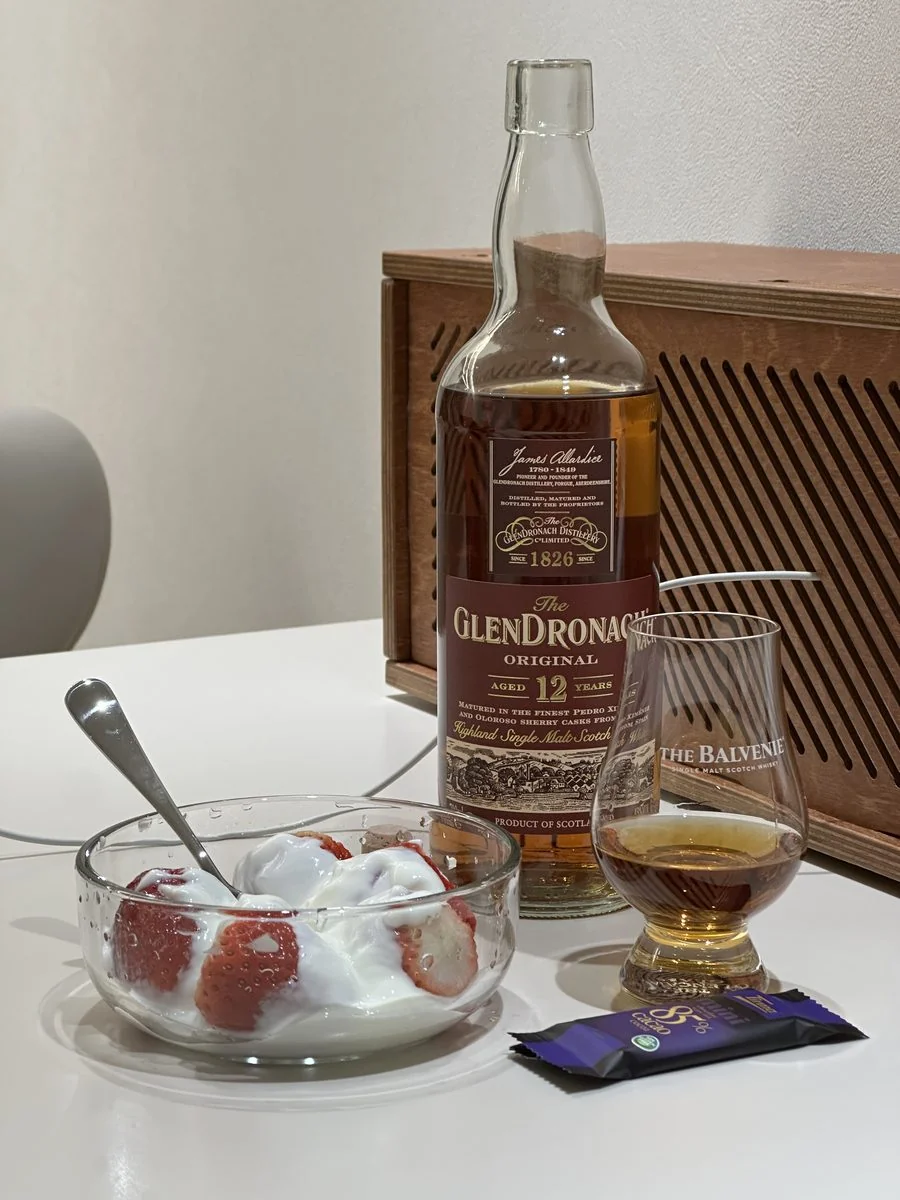
<p>For an outside reader, the more useful question is where Tiger lands next to imports you can already get easily. Compared to <a href="/en/glendronach-12-years-original-bottling-review/">GlenDronach 12 Original</a>, Tiger is less dense, less deeply sherried, and reads younger - but it has a textural lift the GlenDronach doesn’t. Against the Arran cask strength I covered in the <a href="/en/arran-sherry-cask-vs-aberlour-abunadh-batch84-comparison/">Arran Sherry Cask vs Aberlour A’bunadh comparison</a>, it’s noticeably gentler and less concentrated. If your interest is the deepest sherry profile possible, the Scotch options still win. If your interest is hearing what a young Asian-climate single malt sounds like when it leans on sherry casks, Tiger is one of the cleaner examples of that conversation right now.</p>

<div class="google-ads-box" data-ad-type="in-article">
  <div class="google-ads" data-ad-type="in-article">
    <ins class="adsbygoogle" style="display: block; text-align: center" data-ad-layout="in-article" data-ad-format="fluid" data-ad-client="ca-pub-3627439872518903" data-ad-slot="5939724010"></ins>
    <script>
      (adsbygoogle = window.adsbygoogle || []).push({});
    </script>
  </div>
</div>

<p>The pour I had came from a PX (Korean military commissary) bottle a friend brought along, and the broader retail version of Tiger sits at a premium that puts it firmly in mid-shelf single malt territory rather than entry-level. That’s the honest tension with the bottle - the liquid is interesting, but you’re also paying the early-distillery tax. For me, knowing what it tastes like was the point of the evening, and on that count it delivered. If a second bottle ever shows up at another gathering, I’m taking the pour to check whether that berries-and-cream flash returns on a different night.</p>]]></content>
    <author>
      <name>Spemer</name>
    </author>
    
    <summary type="html">KI ONE Tiger, a 46% Korean single malt from Three Societies. Tasting notes and how it stands next to imported single malts.</summary>
    
    
    <media:thumbnail xmlns:media="http://search.yahoo.com/mrss/" url="/assets/images/posts/2026-05-17-kiwon-tiger-korean-single-malt-review.webp" />
    
    
    <category term="Whisky" />
    
  </entry>
  
  <entry>
    <title type="html">[Cocktail] Camus VSOP + Disaronno French Connection</title>
    <link href="https://blog.spemer.com/en/camus-vsop-disaronno-french-connection-cocktail/" rel="alternate" type="text/html" title="[Cocktail] Camus VSOP + Disaronno French Connection" />
    <published>2026-05-14T02:00:00+00:00</published>
    <updated>2026-05-14T02:00:00+00:00</updated>
    <id>https://blog.spemer.com/en/camus-vsop-disaronno-french-connection-cocktail</id>
    <content type="html" xml:base="https://blog.spemer.com/en/camus-vsop-disaronno-french-connection-cocktail/"><![CDATA[<p>First cocktail I’ve ever built at home. No shaker, no jigger - just a rocks glass full of ice, two bottles poured straight in, one quick stir with a spoon. The recipe is about as simple as a cocktail gets. Took under a minute.</p>

<h2 id="why-i-started-at-11">Why I started at 1:1</h2>

<p>The IBA spec calls for 35 ml cognac and 35 ml amaretto. Dead even. It’s been on the official list since 1987, and the build is a one-liner: rocks glass, ice, pour both, stir. When the official version is that bare, the right move is to run it as written before getting clever.</p>

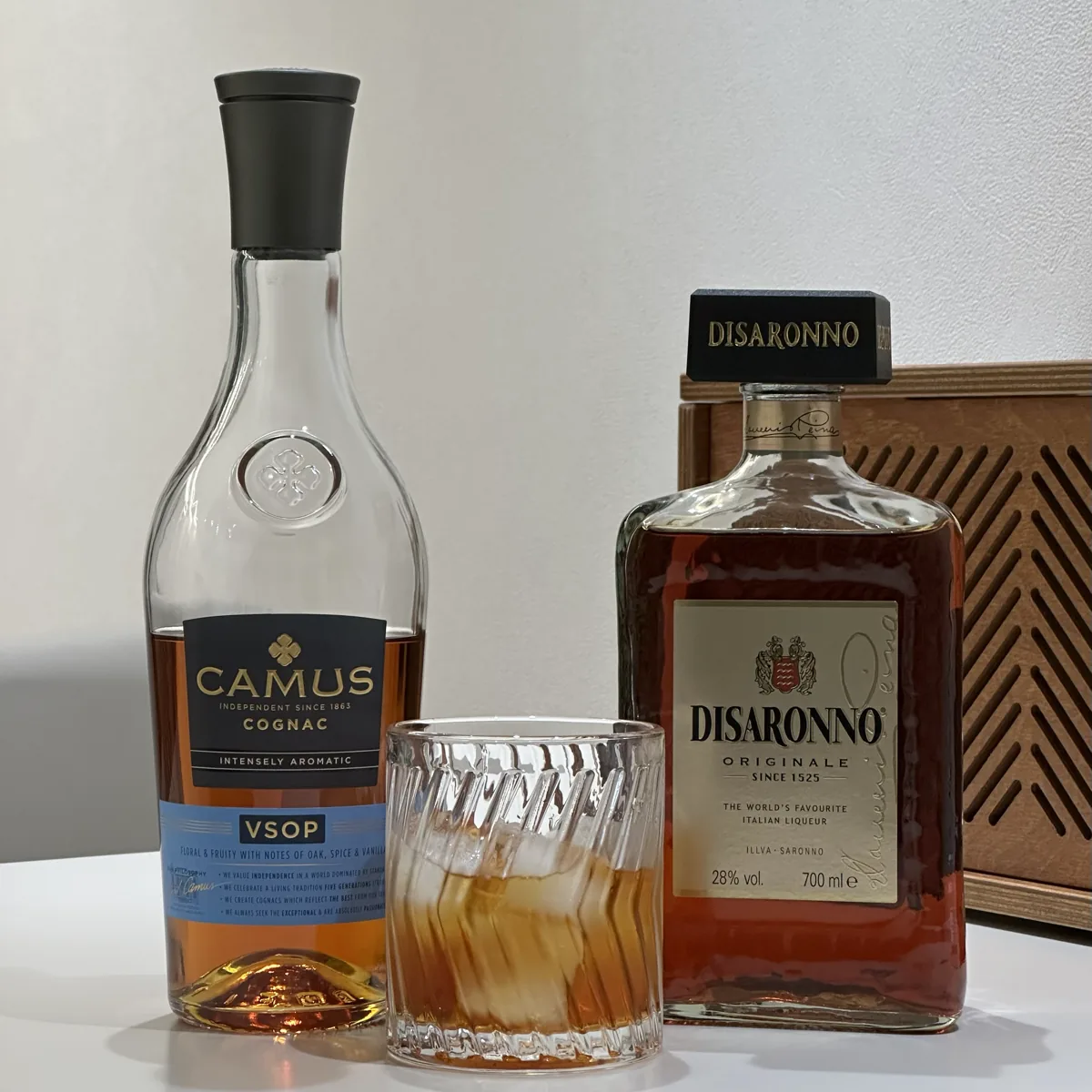
<p>Two bottles on the bench.</p>

<ul>
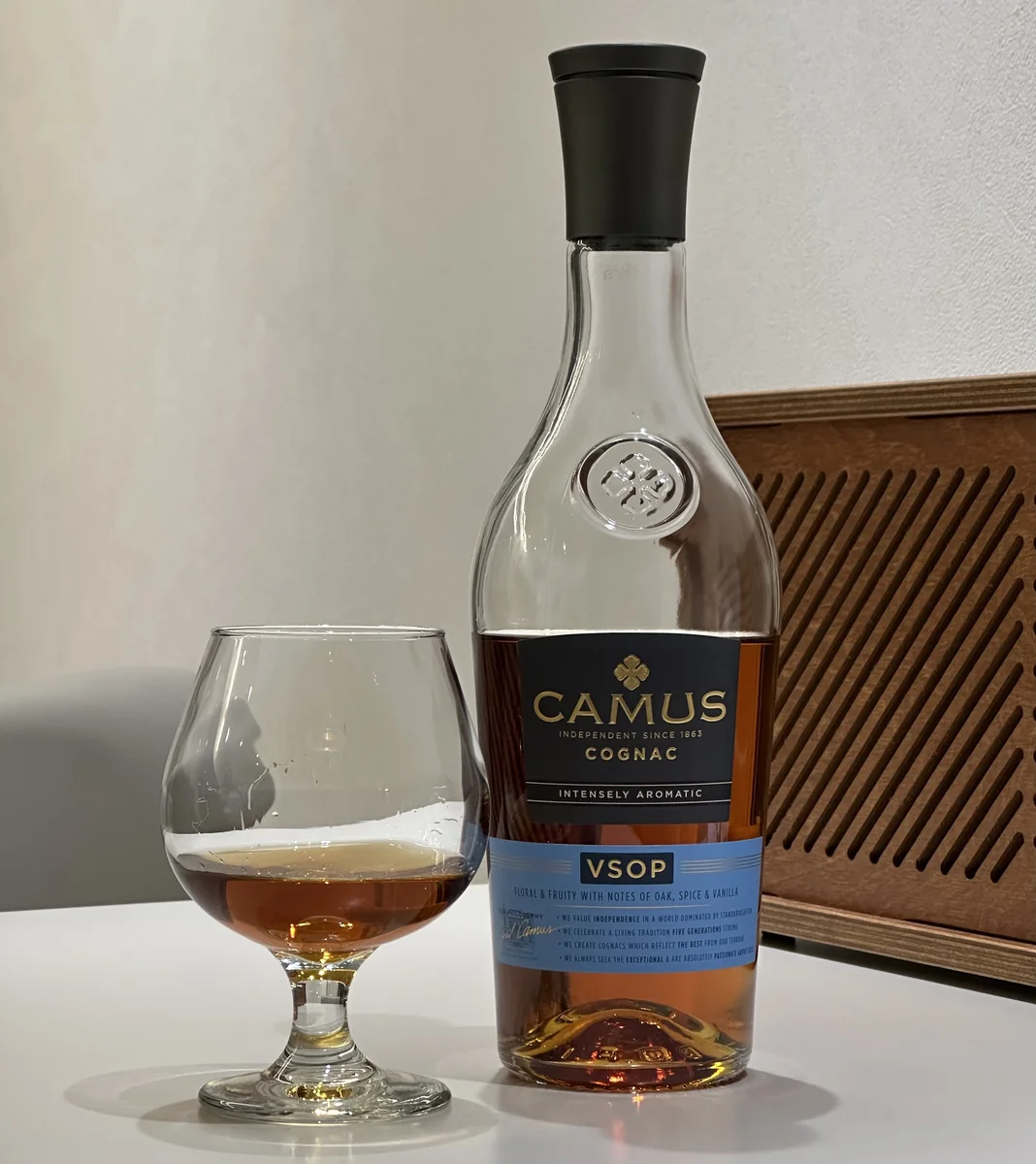
  <li>Cognac: <a href="/en/camus-vsop-review/">Camus VSOP</a>. 40% ABV, Borderies-leaning</li>
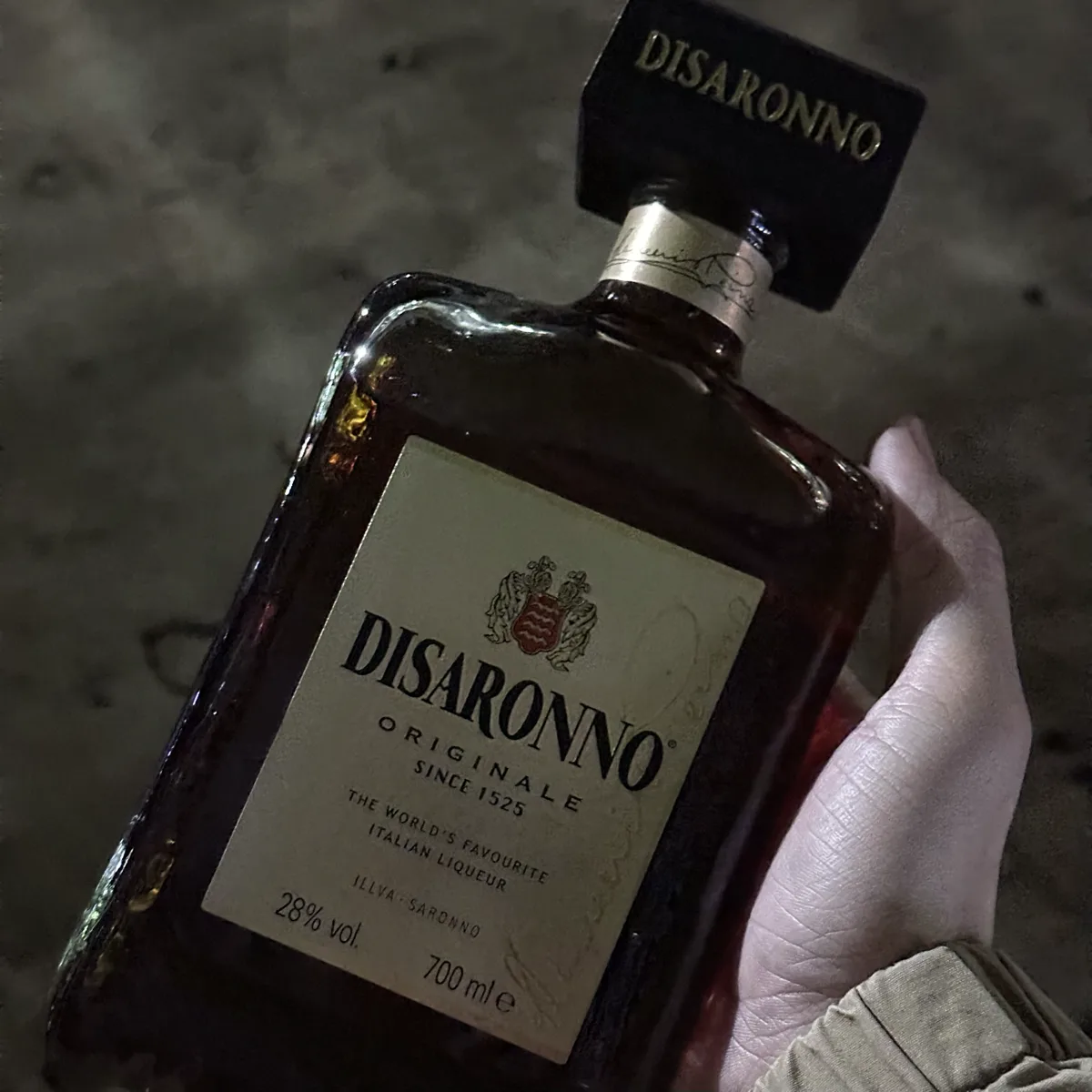
  <li>Amaretto: Disaronno Originale. 28% ABV, made in Saronno, Italy</li>
</ul>

<p>First time opening a Disaronno. I’d heard the name forever but never pulled the trigger. Apricot pits and herbs, no actual almonds in the bottle - that surprised me, because the nose is pure marzipan. The decanter-style bottle has been catching my eye behind bars for years.</p>

<p><img src="/assets/images/posts/2026-05-14-camus-vsop-disaronno-french-connection-cocktail.webp" alt="Camus VSOP and Disaronno French Connection cocktail in a rocks glass" /></p>

<h2 id="the-sweetness-shows-up-on-the-nose">The sweetness shows up on the nose</h2>

<p>Almond hits first. Behind that, herbs, baking spice, something green. Underneath all of it there’s a thin layer of fruit-wine character - that part is Camus pushing through.</p>

<p>Honestly, the nose alone tells you this is a dessert pour. I tried to break it down the way I’d nose a whisky, but the almond sits so thick across the top that anything underneath gets covered. The bright fruit that defines Camus VSOP neat is barely there.</p>

<div class="google-ads-box" data-ad-type="in-article">
  <div class="google-ads" data-ad-type="in-article">
    <ins class="adsbygoogle" style="display: block; text-align: center" data-ad-layout="in-article" data-ad-format="fluid" data-ad-client="ca-pub-3627439872518903" data-ad-slot="5939724010"></ins>
    <script>
      (adsbygoogle = window.adsbygoogle || []).push({});
    </script>
  </div>
</div>

<h2 id="first-sip">First sip</h2>

<p>Too sweet. That’s the headline.</p>

<p>I don’t take syrup in my coffee, and this drink lives in that same lane. Almond runs the show, with a faint brown-sugar-syrup wash trailing behind it. Camus’s vanilla and orchard fruit get flattened almost completely - I kept trying to catch the neat-pour signature and couldn’t find it.</p>

<p>The finish is almond too. Soft, sweet, but more dessert than drink. This is an after-dinner glass, not something to nurse over a meal.</p>

<p>Disaronno at 28% and Camus at 40% pour at similar strengths, but flavor-wise the amaretto runs over the cognac completely. The almond aroma is just heavier. IBA called 1:1 the balanced spec, but with Camus VSOP plus Disaronno specifically, balance tips hard one way.</p>

<h2 id="next-pour-different-ratio">Next pour, different ratio</h2>

<p>The IBA spec is a starting point, not gospel. Different cognacs and different amarettos carry different weight, and with something as aromatic as Disaronno, 1:1 tips the whole drink toward the liqueur.</p>

<p>Next round I’m going 3:1 cognac to amaretto. Camus needs that much room for the fruit and vanilla to survive. You could start at 2:1 and tune from there, but I’d rather knock Disaronno down to a quarter and walk it back up - easier to feel where the line is when you’re climbing instead of guessing.</p>

<p>Rating sits at 3.2 for the 1:1 build. Room to grow once the ratio gets dialed.</p>

<div class="google-ads-box" data-ad-type="in-article">
  <div class="google-ads" data-ad-type="in-article">
    <ins class="adsbygoogle" style="display: block; text-align: center" data-ad-layout="in-article" data-ad-format="fluid" data-ad-client="ca-pub-3627439872518903" data-ad-slot="5939724010"></ins>
    <script>
      (adsbygoogle = window.adsbygoogle || []).push({});
    </script>
  </div>
</div>

<h2 id="the-disaronno-cocktail-family">The Disaronno cocktail family</h2>

<p>One bottle of Disaronno opens up a whole shelf of similar two-ingredient builds. Three classics share the same skeleton.</p>

<ul>
  <li>Cognac + Disaronno = French Connection (tonight’s pour)</li>
  <li>Scotch + Disaronno = Godfather</li>
  <li>Bourbon + Disaronno = The Boss</li>
</ul>

<p>All three live or die on one liqueur. No shaker, no extra modifier. Ice, two pours, stir.</p>

<p>Two more on my list.</p>

<p><a href="/en/lagavulin-distillery-16-years-tasting-review/">Lagavulin 16</a> for the Godfather. Scotch is the default base, but I’ve read peated whisky works here too. Lagavulin’s coal-smoke peat against Disaronno’s sweet almond is a strange picture on paper, and yet the contrast might actually click. Sweetness softening the rougher peat edge could land somewhere interesting.</p>

<div class="google-ads-box" data-ad-type="in-article">
  <div class="google-ads" data-ad-type="in-article">
    <ins class="adsbygoogle" style="display: block; text-align: center" data-ad-layout="in-article" data-ad-format="fluid" data-ad-client="ca-pub-3627439872518903" data-ad-slot="5939724010"></ins>
    <script>
      (adsbygoogle = window.adsbygoogle || []).push({});
    </script>
  </div>
</div>

<p><a href="/en/buffalo-trace-bourbon-review/">Buffalo Trace</a> for The Boss. Bourbon vanilla and corn sweetness meeting amaretto’s almond and herb - I can’t decide whether they’ll fuse or just stack sugar on sugar. Bourbon already brings sweetness of its own, so the ratio probably matters more here than in the cognac version.</p>

<p><img src="/assets/images/posts/2026-05-14-camus-vsop-disaronno-french-connection-cocktail-sub.webp" alt="Bottle of Disaronno Originale" /></p>

<h2 id="next-pour">Next pour</h2>

<p><a href="/en/camus-vsop-review/">Camus VSOP</a> shines on its own with that bright fruit lift, and at 1:1 the signature gets buried. House and grade probably push these cocktails in very different directions - <a href="/en/brandy-cognac-guide/">brandy and cognac guide</a> has the category context.</p>

<p>3:1 rebuild next. Godfather after that.</p>

<div class="google-ads-box" data-ad-type="in-article">
  <div class="google-ads" data-ad-type="in-article">
    <ins class="adsbygoogle" style="display: block; text-align: center" data-ad-layout="in-article" data-ad-format="fluid" data-ad-client="ca-pub-3627439872518903" data-ad-slot="5939724010"></ins>
    <script>
      (adsbygoogle = window.adsbygoogle || []).push({});
    </script>
  </div>
</div>]]></content>
    <author>
      <name>Spemer</name>
    </author>
    
    <summary type="html">French Connection cocktail with Camus VSOP and Disaronno at IBA&apos;s 1:1 spec. Why the cognac gets buried, and the ratio I&apos;m trying next.</summary>
    
    
    <media:thumbnail xmlns:media="http://search.yahoo.com/mrss/" url="/assets/images/posts/2026-05-14-camus-vsop-disaronno-french-connection-cocktail.webp" />
    
    
    <category term="Whisky" />
    
  </entry>
  
  <entry>
    <title type="html">Arran Sherry Cask vs A’bunadh 84</title>
    <link href="https://blog.spemer.com/en/arran-sherry-cask-vs-aberlour-abunadh-batch84-comparison/" rel="alternate" type="text/html" title="Arran Sherry Cask vs A&apos;bunadh 84" />
    <published>2026-05-13T04:00:00+00:00</published>
    <updated>2026-05-13T04:00:00+00:00</updated>
    <id>https://blog.spemer.com/en/arran-sherry-cask-vs-aberlour-abunadh-batch84-comparison</id>
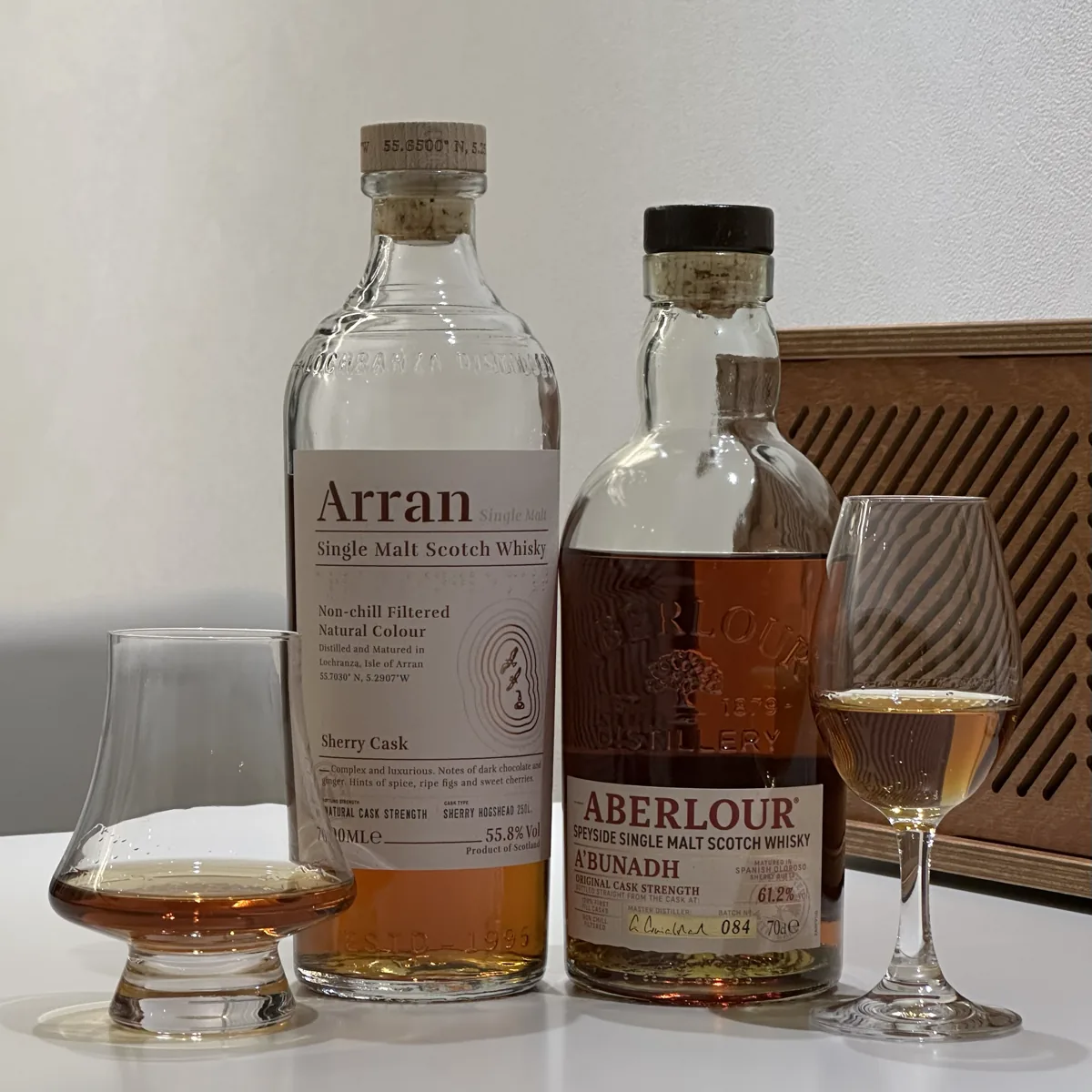
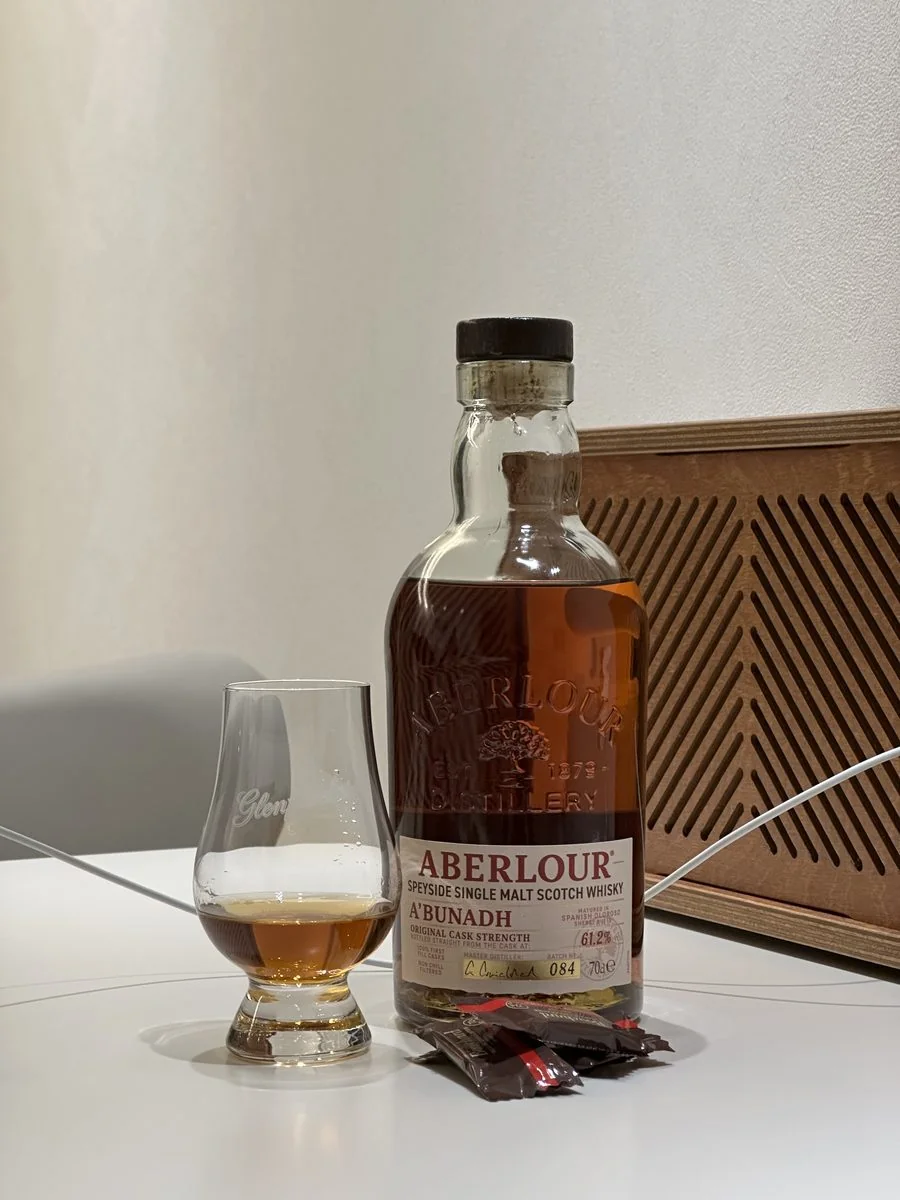
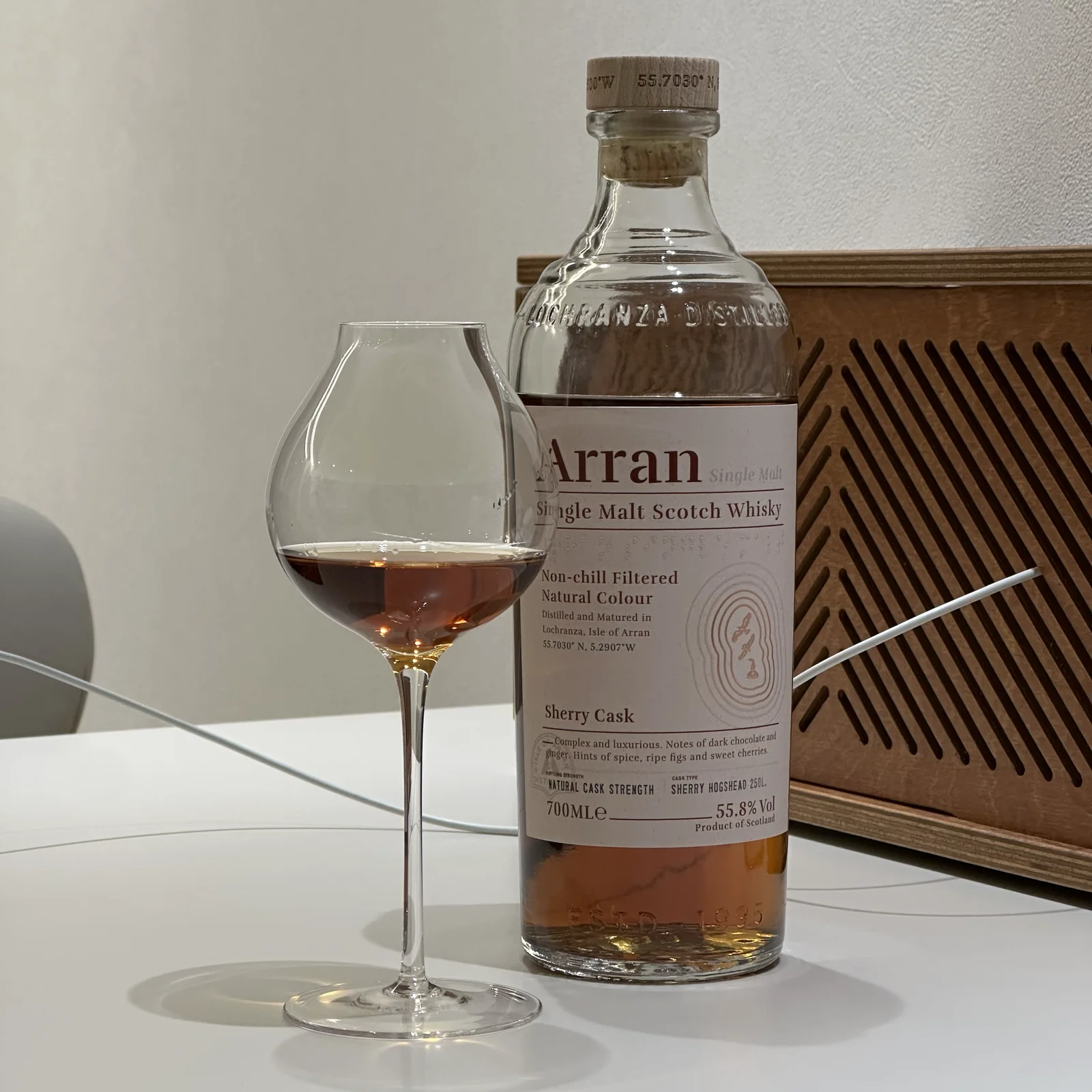
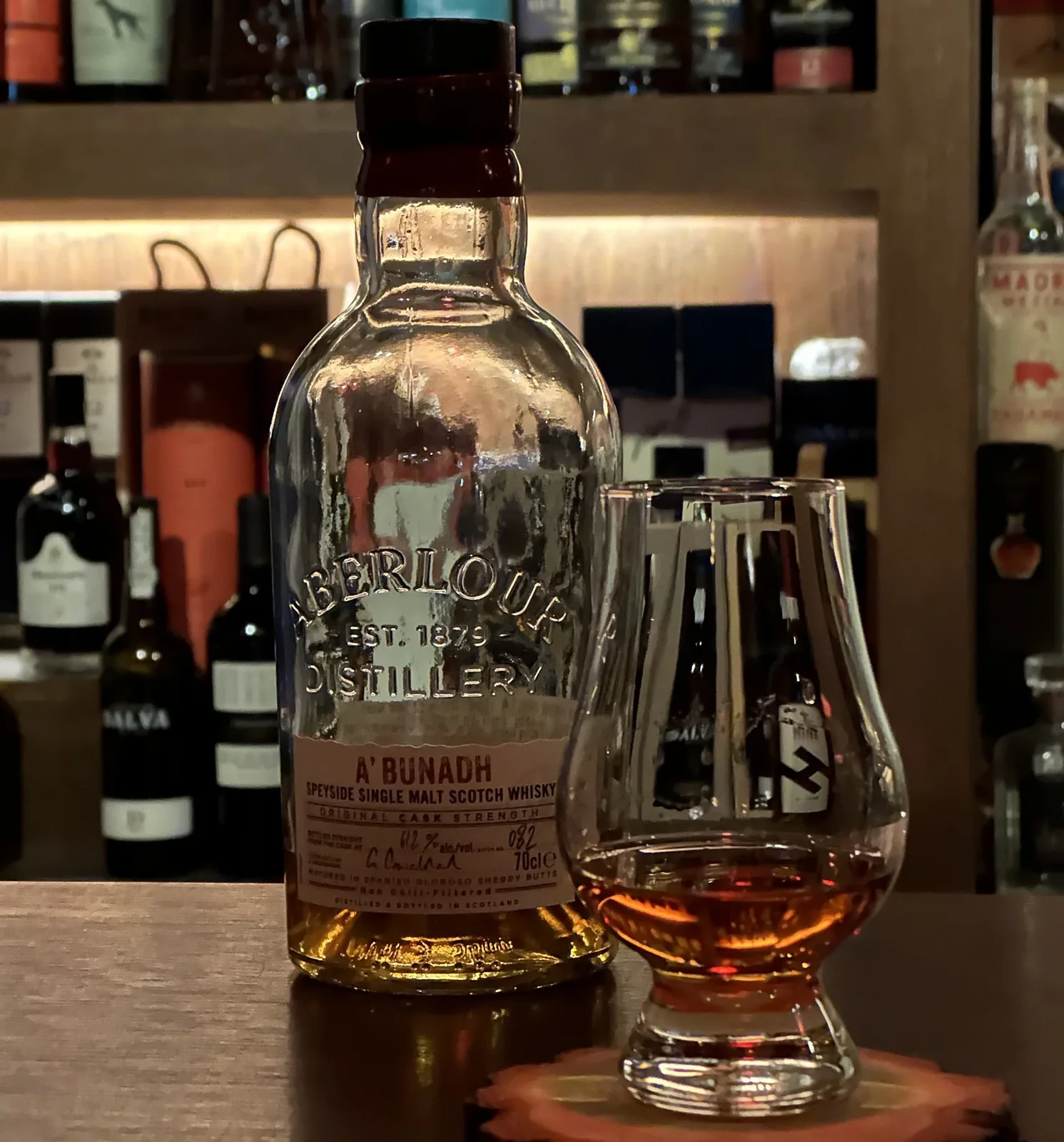
    <content type="html" xml:base="https://blog.spemer.com/en/arran-sherry-cask-vs-aberlour-abunadh-batch84-comparison/"><![CDATA[<p>Two bottles two months into their openings, similar levels in the glass, both cask strength, both first-fill oloroso. Should have read close to each other. They didn’t. Once I put <a href="/en/arran-sherry-cask-strength-review/">Arran Sherry Cask</a> next to <a href="/en/aberlour-abunadh-batch84-review/">Aberlour A’bunadh Batch 84</a> and bounced between the glasses, the gap turned out wide enough to make me almost embarrassed I’d lined them up as a fair fight.</p>

<h2 id="why-these-two">Why these two</h2>

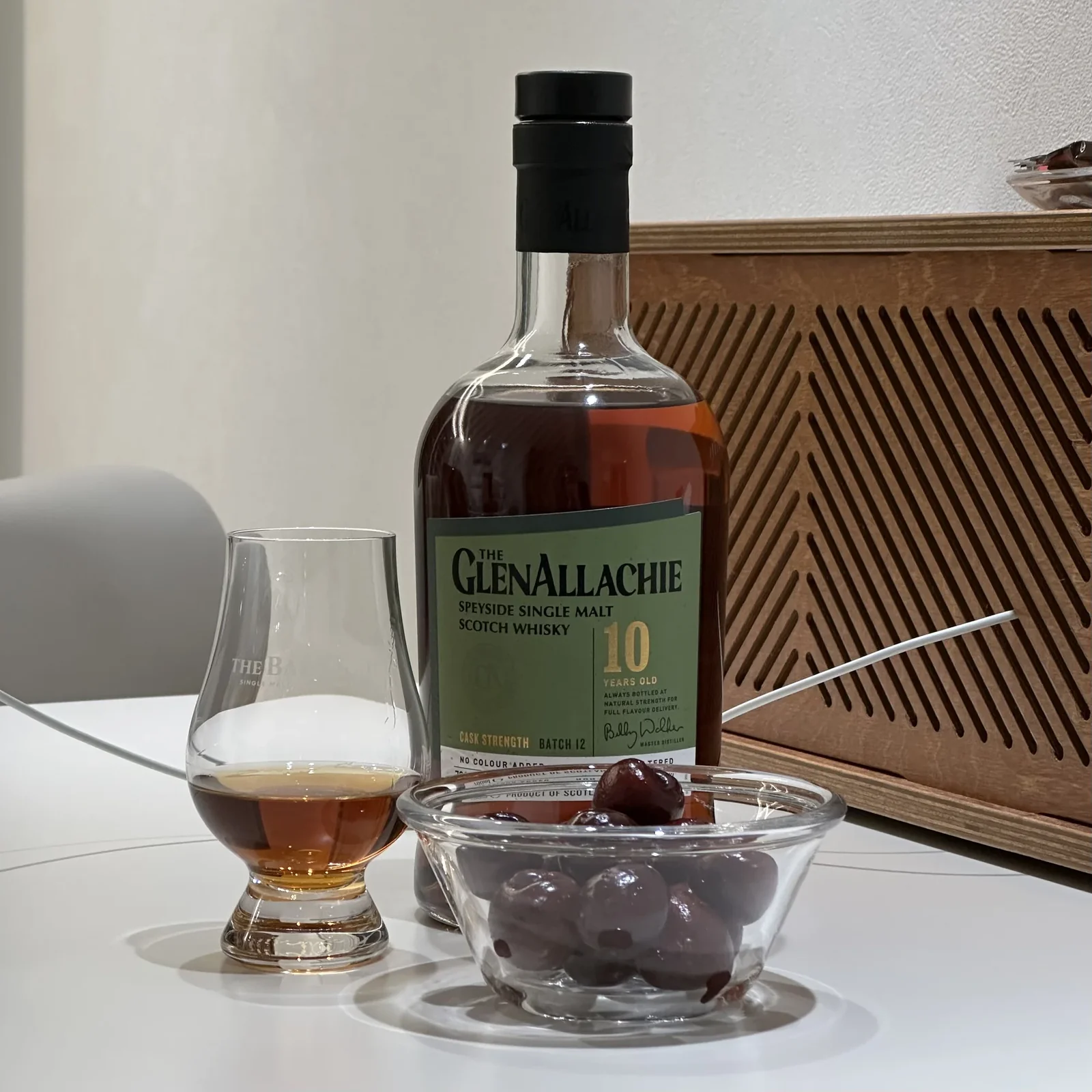
<p>Cask-strength oloroso single malts are a small enough club that the names repeat: <a href="/en/glenallachie-10-years-cask-strength-batch12-review/">GlenAllachie 10 Cask Strength</a>, A’bunadh, and Arran Sherry Cask a step back from the headliners. All three share the basic build - full maturation in oloroso, no chill filtration, no added color, bottled at natural strength. On paper they’re cousins.</p>

<ul>
  <li>Arran Sherry Cask “The Bodega”: first-fill oloroso sherry hogsheads, full maturation, 55.8%</li>
  <li>Aberlour A’bunadh Batch 84: first-fill oloroso sherry butts, full maturation, 61.2%</li>
</ul>

<p>Different cask format (hogshead vs butt) and a 5.4-point ABV gap, but the broad category is the same.</p>

<div class="google-ads-box" data-ad-type="in-article">
  <div class="google-ads" data-ad-type="in-article">
    <ins class="adsbygoogle" style="display: block; text-align: center" data-ad-layout="in-article" data-ad-format="fluid" data-ad-client="ca-pub-3627439872518903" data-ad-slot="5939724010"></ins>
    <script>
      (adsbygoogle = window.adsbygoogle || []).push({});
    </script>
  </div>
</div>

<h2 id="arran-vs-abunadh-84---the-quick-table">Arran vs A’bunadh 84 - the quick table</h2>

<table>
  <thead>
    <tr>
      <th> </th>
      <th>Arran Sherry Cask</th>
      <th>A’bunadh Batch 84</th>
    </tr>
  </thead>
  <tbody>
    <tr>
      <td>Cask</td>
      <td>First-fill oloroso hogshead</td>
      <td>First-fill oloroso butt</td>
    </tr>
    <tr>
      <td>ABV</td>
      <td>55.8%</td>
      <td>61.2%</td>
    </tr>
    <tr>
      <td>Nose direction</td>
      <td>Light sherry, hallabong citrus, faint sulphur</td>
      <td>Citrus, light sweet orange</td>
    </tr>
    <tr>
      <td>Palate direction</td>
      <td>One-note sweetness, limited depth</td>
      <td>Spice into building sweetness, thick body</td>
    </tr>
    <tr>
      <td>Finish</td>
      <td>Carries the nose forward, light dark chocolate</td>
      <td>Heavy, dense oak, layered</td>
    </tr>
    <tr>
      <td>Body</td>
      <td>Light and tidy</td>
      <td>Thick, viscous</td>
    </tr>
  </tbody>
</table>

<p>On paper, 5.4 ABV points. In the glass, the weight difference reads bigger than that.</p>

<div class="google-ads-box" data-ad-type="in-article">
  <div class="google-ads" data-ad-type="in-article">
    <ins class="adsbygoogle" style="display: block; text-align: center" data-ad-layout="in-article" data-ad-format="fluid" data-ad-client="ca-pub-3627439872518903" data-ad-slot="5939724010"></ins>
    <script>
      (adsbygoogle = window.adsbygoogle || []).push({});
    </script>
  </div>
</div>

<h2 id="side-by-side---nose">Side by side - nose</h2>

<p><img src="/assets/images/posts/2026-05-13-arran-sherry-cask-vs-aberlour-abunadh-batch84-comparison.webp" alt="Arran Sherry Cask and Aberlour A'bunadh Batch 84 side by side" /></p>

<p>Arran first. The sherry doesn’t sit heavy. It floats. Above that floats a layer of bright citrus that reads closer to hallabong than orange to my nose - sharper, slightly bittersweet, a little less round than common orange peel. There’s also a faint sulphur thread underneath, the kind of edge that nudges the whole profile half a step off-center.</p>

<p>Switch glasses. A’bunadh runs different from the first sniff. Same broad citrus family, but here the citrus is rounder - light, sweet orange right up front. No sulphur, no dark sherry weight on the nose. The bottle with 5.4 more proof points actually opens cleaner. That was the first surprise.</p>

<p>So nose-only: Arran is hallabong-leaning, A’bunadh is sweet-orange-leaning. Same category, very different opening read.</p>

<h2 id="side-by-side---palate">Side by side - palate</h2>

<p>This is where the gap starts to widen.</p>

<p>A sip of Arran hits with sherry sweetness right away, and that’s almost the whole story. Roll it on the tongue and not much more arrives. The faint sulphur from the nose follows through and slightly bends the sweetness sideways - not unpleasant, just a touch awkward. A one-line whisky on the palate.</p>

<p>Move to A’bunadh and the information density jumps. Spice taps the tongue first, then the sweetness starts climbing - not dumped in all at once, but building in proportion to how long you hold the spirit in the mouth. A viscous body wraps around the tongue and stretches the sip out. By the time you swallow it doesn’t feel like the moment ended yet.</p>

<p>Side by side, the shape reads pretty cleanly: one-note sweetness on the Arran versus a sweetness that builds on the A’bunadh.</p>

<div class="google-ads-box" data-ad-type="in-article">
  <div class="google-ads" data-ad-type="in-article">
    <ins class="adsbygoogle" style="display: block; text-align: center" data-ad-layout="in-article" data-ad-format="fluid" data-ad-client="ca-pub-3627439872518903" data-ad-slot="5939724010"></ins>
    <script>
      (adsbygoogle = window.adsbygoogle || []).push({});
    </script>
  </div>
</div>

<h2 id="side-by-side---finish">Side by side - finish</h2>

<p>This is where the gap is widest.</p>

<p>Arran’s finish just extends its nose. The hallabong line carries through, and a thin streak of dark chocolate shows up at the tail end. Light landing, no fuss - but the nose, palate, and finish wear roughly the same face all the way through. Not much in the way of dimensional shift.</p>

<p>A’bunadh’s finish reads like a different whisky from its own nose. Where the nose was light orange, the finish has heavy oak right in the middle. Dense wood and baking spice stretch out, with a layer of complex aromatics riding on top. Beginning, middle, and end of a single sip each show a different face. This is what you get from oloroso cask whisky when the wood comes forward properly.</p>

<p>Holding them side by side, the finish length on the A’bunadh runs close to twice what the Arran does, and it carries more weight while it stays.</p>

<div class="google-ads-box" data-ad-type="in-article">
  <div class="google-ads" data-ad-type="in-article">
    <ins class="adsbygoogle" style="display: block; text-align: center" data-ad-layout="in-article" data-ad-format="fluid" data-ad-client="ca-pub-3627439872518903" data-ad-slot="5939724010"></ins>
    <script>
      (adsbygoogle = window.adsbygoogle || []).push({});
    </script>
  </div>
</div>

<h2 id="take-price-off-put-it-back-on">Take price off, put it back on</h2>

<p>Complexity, body, finish - A’bunadh wins all three axes. The 5.4 extra proof points sound like they’d be harder to drink, but the proof here translates directly into body, so the trade-off felt like net upside rather than a tax.</p>

<p>Even if you set price aside, A’bunadh is the more interesting glass. Once you put price back in, the gap shrinks somewhat - A’bunadh costs more - but the difference in what arrives per sip more than carried the premium for me. If you specifically want a clean, one-note sherry style at a lower spend, <a href="/en/glendronach-12-years-original-bottling-review/">GlenDronach 12</a> is doing that more cleanly at a step below the Arran’s price point. The Arran ends up in an awkward middle.</p>

<p>The light sulphur thread is going to be a coin flip on taste. If you actively enjoy that note, it’s a feature, not a bug. The sulphur in <a href="/en/glenfarclas-15-years-review/">Glenfarclas 15</a> is more integrated and reads more controlled by comparison. The common patterns across the sherry cask family in general I broke out in <a href="/en/sherry-cask-whisky-common-tasting-notes/">sherry cask common tasting notes</a>.</p>

<div class="google-ads-box" data-ad-type="in-article">
  <div class="google-ads" data-ad-type="in-article">
    <ins class="adsbygoogle" style="display: block; text-align: center" data-ad-layout="in-article" data-ad-format="fluid" data-ad-client="ca-pub-3627439872518903" data-ad-slot="5939724010"></ins>
    <script>
      (adsbygoogle = window.adsbygoogle || []).push({});
    </script>
  </div>
</div>

<h2 id="wrap-up">Wrap-up</h2>

<p>Same category on paper, different drinks in the glass. A’bunadh Batch 84 stretches a single sip across three phases and carries it on a body that justifies the higher proof. Arran Sherry Cask leans on one clean sweet note and stays there. For a closer-matched comparison inside the A’bunadh series itself, <a href="/en/aberlour-abunadh-batch82-review/">Batch 82</a> is the more interesting head-to-head than reaching across to Arran.</p>]]></content>
    <author>
      <name>Spemer</name>
    </author>
    
    <summary type="html">Arran Sherry Cask 55.8% and Aberlour A&apos;bunadh Batch 84 61.2% tasted side by side: cask, body, finish, and the gap between two cask-strength sherry bottles.</summary>
    
    
    <media:thumbnail xmlns:media="http://search.yahoo.com/mrss/" url="/assets/images/posts/2026-05-13-arran-sherry-cask-vs-aberlour-abunadh-batch84-comparison.webp" />
    
    
    <category term="Whisky" />
    
  </entry>
  
  <entry>
    <title type="html">[Taiwan Sherry] Kavalan Solist Oloroso Review</title>
    <link href="https://blog.spemer.com/en/kavalan-solist-oloroso-sherry-cask-review/" rel="alternate" type="text/html" title="[Taiwan Sherry] Kavalan Solist Oloroso Review" />
    <published>2026-05-04T13:49:33+00:00</published>
    <updated>2026-05-04T13:49:33+00:00</updated>
    <id>https://blog.spemer.com/en/kavalan-solist-oloroso-sherry-cask-review</id>
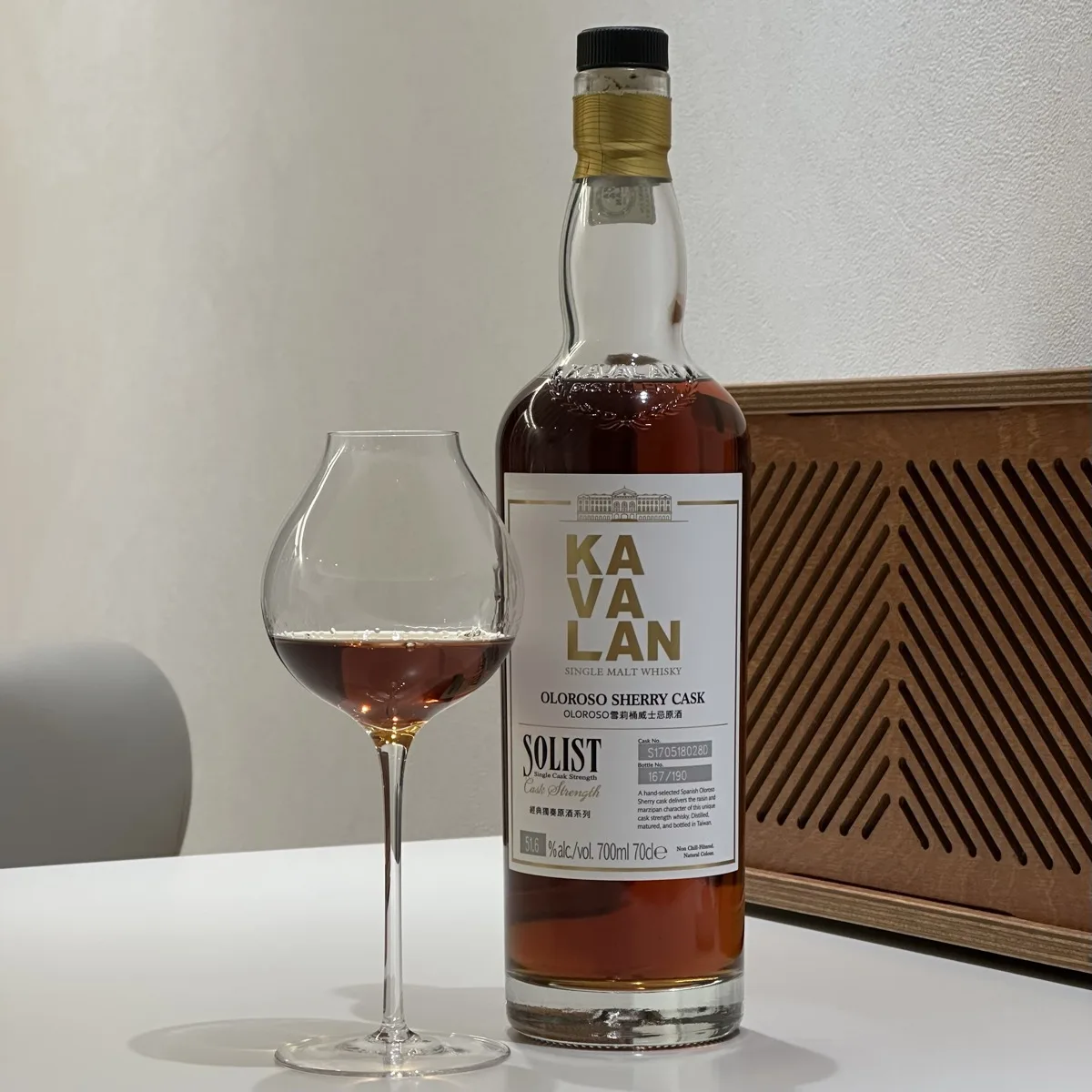
    <content type="html" xml:base="https://blog.spemer.com/en/kavalan-solist-oloroso-sherry-cask-review/"><![CDATA[<p>Kavalan Solist Oloroso Sherry Cask. My first Solist, and also my first Taiwanese whisky. No overseas trip on the calendar to chase a duty-free price, so I just picked it up at home and accepted the premium. Even the colour looked like a flavour guarantee: dark soy sauce.</p>

<p>I went straight home and opened it. The label on my bottle says 51.6%. From what I found, Kavalan describes this bottle around Oloroso sherry casks, deep colour, dried fruit, and nuts. My first glass lined up with some of that, but not all of it.</p>

<p><img src="/assets/images/posts/2026-05-04-kavalan-solist-oloroso-sherry-cask-review.webp" alt="Kavalan Solist Oloroso Sherry Cask whisky" /></p>

<h2 id="lucky-i-made-it-home-first">Lucky I Made It Home First</h2>

<p>By the time I got home, my head was already on the first pour. This is just a first-glass note from a bottle bought at a painful price.</p>

<p>I had a rough idea of why Taiwanese whisky matures fast. Hot country, casks working quickly, that kind of story. But the first thing I felt was the price. At this level, Scotch gives you a lot of choices. <a href="/en/macallan-12-vs-glendronach-12-sherry-comparison/">Macallan 12 and Glendronach 12</a>, or something like <a href="/en/arran-sherry-cask-strength-review/">Arran Sherry Cask</a>, start looking very reasonable.</p>

<p>Still, I wanted to open a Kavalan Solist at least once. I also wanted to know why this bottle gets treated like a duty-free target.</p>

<div class="google-ads-box" data-ad-type="in-article">
  <div class="google-ads" data-ad-type="in-article">
    <ins class="adsbygoogle" style="display: block; text-align: center" data-ad-layout="in-article" data-ad-format="fluid" data-ad-client="ca-pub-3627439872518903" data-ad-slot="5939724010"></ins>
    <script>
      (adsbygoogle = window.adsbygoogle || []).push({});
    </script>
  </div>
</div>

<h2 id="kavalan-solist-oloroso-sherry-cask-in-the-glass">Kavalan Solist Oloroso Sherry Cask in the glass</h2>

<h3 id="kavalan-solist-oloroso-sherry-cask---nose">Kavalan Solist Oloroso Sherry Cask - nose</h3>

<p>The moment the cork comes off, cacao nibs jump out. Not soft chocolate. Drier, darker cacao. Once poured, the first smell is oddly closer to bourbon than sherry. Not because vanilla is loud, but because the wood note is quite present.</p>

<p>For a bottle opened minutes ago and sitting above 50%, the alcohol bite is very low. That was the first surprise. When a strong whisky does not push the nose away, it becomes much easier to keep smelling.</p>

<p>After a short rest, the sherry starts to show. There is a tiny sulphur-like smell, but it does not bother me. It reads more like one of those things I sometimes notice in sherry whisky. The fruit is not clearly tropical to me. I get dried fruit, red berries, and cherry more naturally. If I go deeper, wood passes quietly through the back.</p>

<h3 id="kavalan-solist-oloroso-sherry-cask---palate">Kavalan Solist Oloroso Sherry Cask - palate</h3>

<p>On the palate, this tastes like sherry whisky right away. The wood note that made the nose feel almost bourbon-like steps back, and sweet sherry fills the mouth first. It sits around the pattern I wrote about in <a href="/en/sherry-cask-whisky-common-tasting-notes/">common sherry cask notes</a>: dried fruit, chocolate, nuts, and dark sweetness.</p>

<p>The sulphur-like part is almost gone on the palate. Less than 1%, if I had to put a number on it. Spicy heat is also lower than expected. Instead, it fills the mouth well and leaves a slight dry grip around the gums before and after swallowing. That part fits the 51.6% strength very well.</p>

<div class="google-ads-box" data-ad-type="in-article">
  <div class="google-ads" data-ad-type="in-article">
    <ins class="adsbygoogle" style="display: block; text-align: center" data-ad-layout="in-article" data-ad-format="fluid" data-ad-client="ca-pub-3627439872518903" data-ad-slot="5939724010"></ins>
    <script>
      (adsbygoogle = window.adsbygoogle || []).push({});
    </script>
  </div>
</div>

<p>It is not a thin, sugary sherry whisky. There is a slight dry red wine feeling in the structure. Not wine flavour exactly, more that dry reset after the sweetness. That part worked for me. On taste alone, I would be tempted to score it higher.</p>

<h3 id="kavalan-solist-oloroso-sherry-cask---finish">Kavalan Solist Oloroso Sherry Cask - finish</h3>

<p>The finish is very long and leaves more behind than I expected. A little smoke stays there, but not peat smoke. It feels closer to spice smoke and toasted wood. A nutty note lingers with it, and there is a quiet chocolate note too. A gentle malty note shows itself late.</p>

<p>After some time, there is a faint aftertaste like swallowing something lightly charred. Not unpleasant. It keeps coming back in my head. At first I was not sure about the “tropical fruit” idea people mention with Kavalan. By the finish, I can at least see why that word appears. For my notes, though, I would write dark fruit, toasted wood, and nuts before tropical fruit.</p>

<div class="google-ads-box" data-ad-type="in-article">
  <div class="google-ads" data-ad-type="in-article">
    <ins class="adsbygoogle" style="display: block; text-align: center" data-ad-layout="in-article" data-ad-format="fluid" data-ad-client="ca-pub-3627439872518903" data-ad-slot="5939724010"></ins>
    <script>
      (adsbygoogle = window.adsbygoogle || []).push({});
    </script>
  </div>
</div>

<h2 id="the-awkward-answer-at-this-price">The Awkward Answer at This Price</h2>

<p>As a whisky, I liked it. Maybe I started my Taiwanese whisky path too high up the ladder, but the first impression was strong. There is something in the glass that explains why Kavalan became a name so quickly.</p>

<p>The problem is the price. At its retail level, <a href="/en/glenallachie-15-year-review/">Glenallachie 15</a> and other strong sherry bottles are standing nearby. Glenallachie 15 has concentrated flavour and a good high-strength punch, so it naturally comes to mind once price enters the conversation. So the rating is 4.5. Purely on taste, I would want to go higher. The price pulls it back.</p>

<div class="google-ads-box" data-ad-type="in-article">
  <div class="google-ads" data-ad-type="in-article">
    <ins class="adsbygoogle" style="display: block; text-align: center" data-ad-layout="in-article" data-ad-format="fluid" data-ad-client="ca-pub-3627439872518903" data-ad-slot="5939724010"></ins>
    <script>
      (adsbygoogle = window.adsbygoogle || []).push({});
    </script>
  </div>
</div>

<p>Now I understand why people grab this at duty free when they can. Still, I do not regret opening it. I knew it was expensive, opened it anyway, and the first glass gave me enough back. I want to revisit it after a few days and see whether the sherry side settles in more clearly.</p>]]></content>
    <author>
      <name>Spemer</name>
    </author>
    
    <summary type="html">Kavalan Solist Oloroso Sherry Cask 51.6% first-open review, bought in Korea at a painful price and opened the same day.</summary>
    
    
    <media:thumbnail xmlns:media="http://search.yahoo.com/mrss/" url="/assets/images/posts/2026-05-04-kavalan-solist-oloroso-sherry-cask-review.webp" />
    
    
    <category term="Whisky" />
    
  </entry>
  
  <entry>
    <title type="html">Glenmorangie Nectar 16 vs Infinita 18</title>
    <link href="https://blog.spemer.com/en/glenmorangie-the-nectar-16-vs-the-infinita-18-comparison/" rel="alternate" type="text/html" title="Glenmorangie Nectar 16 vs Infinita 18" />
    <published>2026-05-02T16:00:00+00:00</published>
    <updated>2026-05-02T16:00:00+00:00</updated>
    <id>https://blog.spemer.com/en/glenmorangie-the-nectar-16-vs-the-infinita-18-comparison</id>
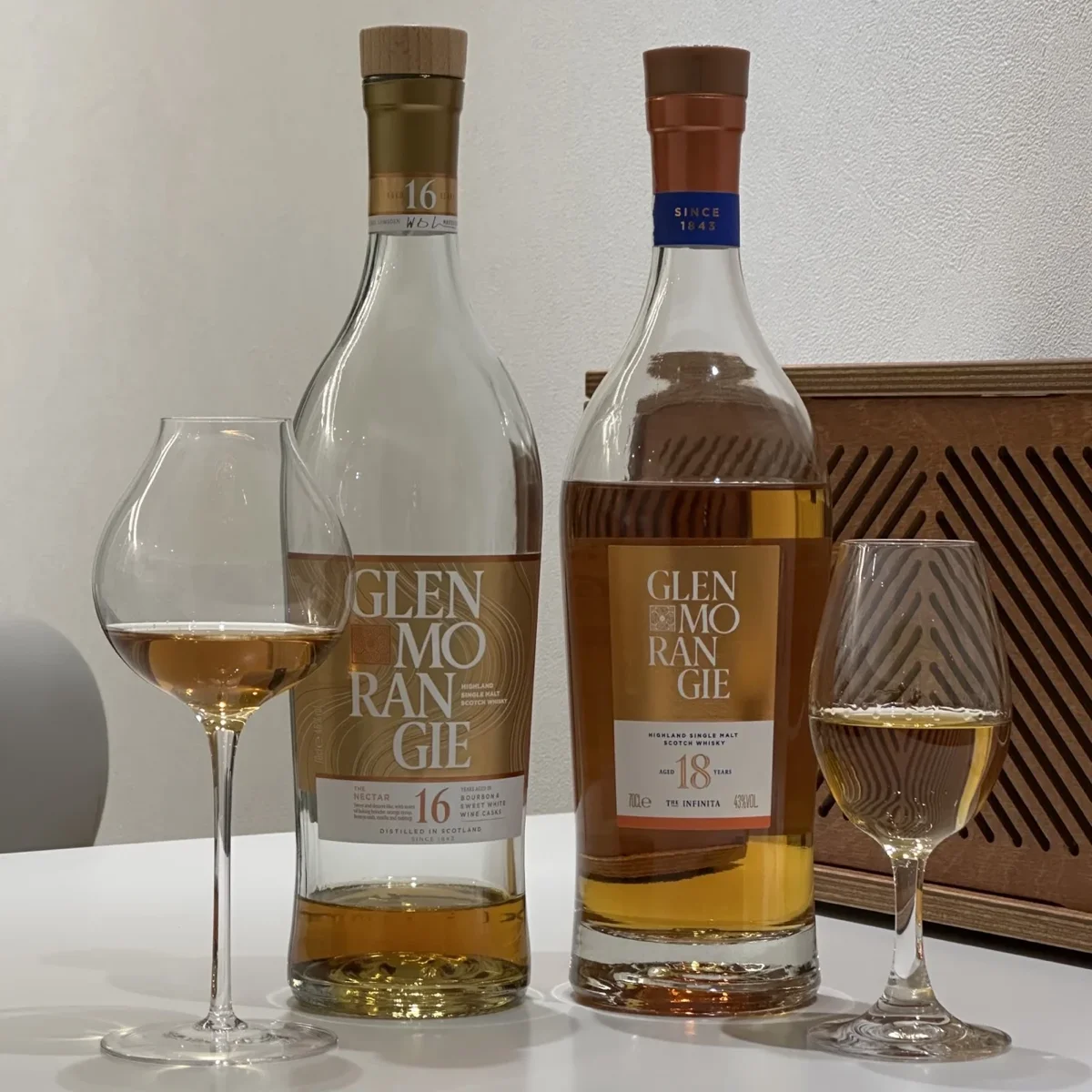
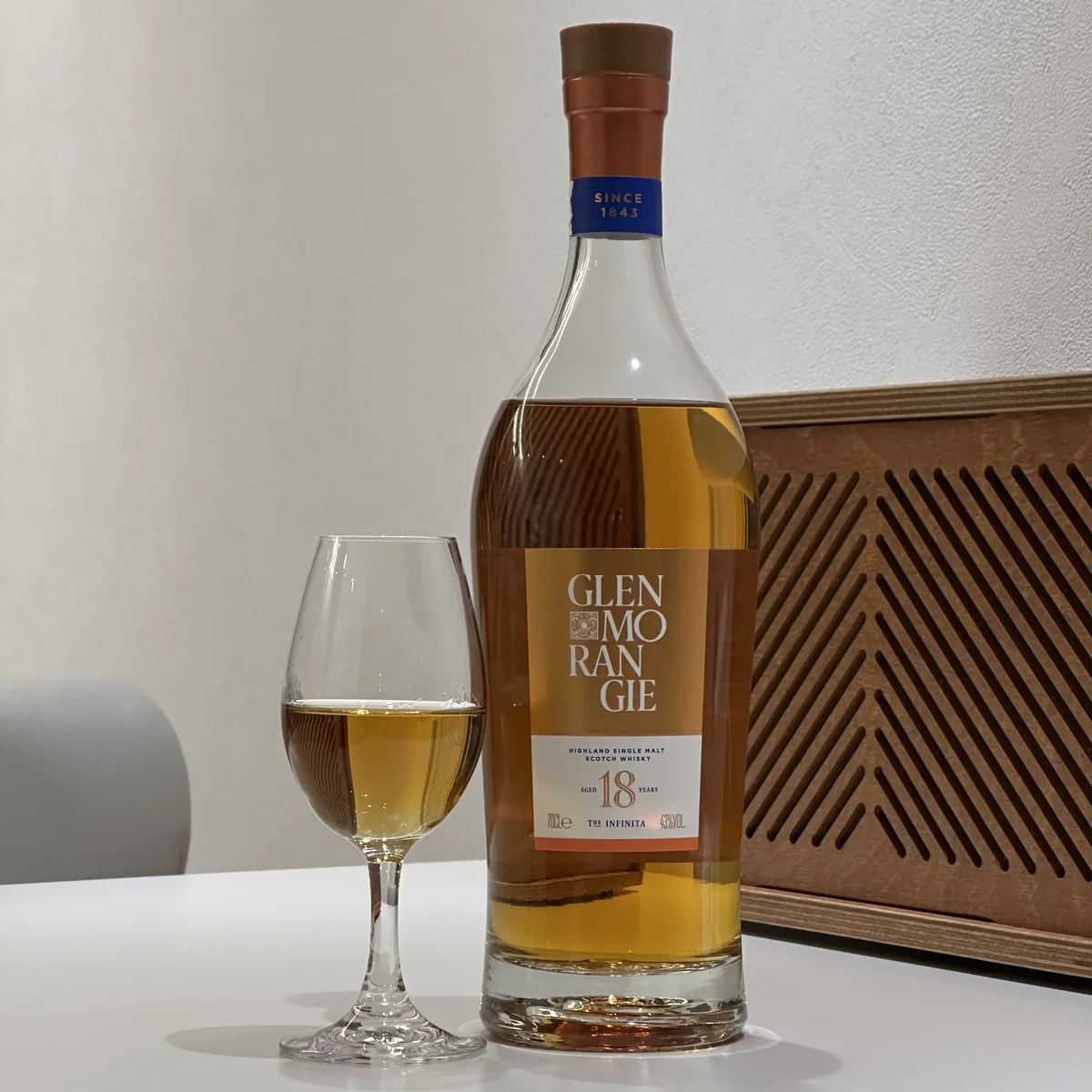
    <content type="html" xml:base="https://blog.spemer.com/en/glenmorangie-the-nectar-16-vs-the-infinita-18-comparison/"><![CDATA[<p>The Nectar bottle was down to maybe two finger-widths when the Infinita arrived. One had been a near-daily pour long enough that I knew where the nose was going before I got there. The other was a fresh pour from a just-opened bottle. I didn’t sit down to do a head-to-head, but once both glasses landed on the table the gap between them was loud enough that I started taking notes.</p>

<p>The two also sit further apart on retail than I’d realised. Same upper shelf of the Glenmorangie lineup, but the Infinita carries a meaningful step up over the Nectar.</p>

<p><img src="/assets/images/posts/2026-05-03-glenmorangie-the-nectar-16-vs-the-infinita-18-comparison.webp" alt="Glenmorangie The Nectar 16 Years and The Infinita 18 Years side by side" /></p>

<h2 id="same-starting-point-different-forks">Same starting point, different forks</h2>

<p>Both bottles come off the same tall stills at Glenmorangie. The fact that those stills sit among the tallest in Scotland is something I already touched on in the <a href="/en/glenmorangie-16-years-the-nectar-dor-review/">Nectar standalone review</a>, and you can taste that shared base when the two glasses sit next to each other. Clean, light Highland tone underneath both.</p>

<p>The fork is the cask. Nectar spends 14 years in bourbon, then gets two extra years across four sweet white wine casks (Sauternes, Monbazillac, Moscatel, Tokaji). The whole batch goes into dessert wine territory. Infinita spends 15 years in bourbon, then pulls 30% of the liquid into oloroso sherry casks for another 3 years before recombining at a 70:30 ratio.</p>

<p>Same source, but one says “let’s coat the whole thing with four dessert wines,” and the other says “let’s add a touch of dry sherry to balance it out.” The two glasses end up pointing in different directions because of that.</p>

<div class="google-ads-box" data-ad-type="in-article">
  <div class="google-ads" data-ad-type="in-article">
    <ins class="adsbygoogle" style="display: block; text-align: center" data-ad-layout="in-article" data-ad-format="fluid" data-ad-client="ca-pub-3627439872518903" data-ad-slot="5939724010"></ins>
    <script>
      (adsbygoogle = window.adsbygoogle || []).push({});
    </script>
  </div>
</div>

<h2 id="the-nectar-16-years---brightness-as-the-base">The Nectar 16 Years - brightness as the base</h2>

<p>First thing on the nose is malt. Fig sits on top of that, then floral notes and herbs, with a faint orange peel at the tail. It’s a wine-finished whisky that doesn’t push sweetness to the front. The grain note runs the show, and that’s what gives this one its character to me.</p>

<p>On the palate, malt and honey water lead, a small spice run passes through, and dried fruit shows up behind that. Not a full sherry-bomb thickness, but a thin sherry-adjacent ribbon does come through. I’d guess that’s the gradient those four wine casks build together.</p>

<p>The finish is where this whisky earns its keep. Malt stays as the floor, and a layered floral-fruit bouquet hangs around for a long time. Pour a glass on a weeknight, set it down, and let it ride - this one is built for that.</p>

<p>Take another sip and what stays with you is brightness and fruit. Fig sets a firm sweet base, and ripe stone-fruit tones - apricot, in particular - take turns with a soft citrus lift on top. It reads like a fruit basket on top of a flowering field. Whatever those four white wine casks pull from the spirit, the thread runs through nose, palate, and finish without breaking. As a beginner I’d happily hand someone this glass if they asked what a fruity whisky is supposed to taste like.</p>

<div class="google-ads-box" data-ad-type="in-article">
  <div class="google-ads" data-ad-type="in-article">
    <ins class="adsbygoogle" style="display: block; text-align: center" data-ad-layout="in-article" data-ad-format="fluid" data-ad-client="ca-pub-3627439872518903" data-ad-slot="5939724010"></ins>
    <script>
      (adsbygoogle = window.adsbygoogle || []).push({});
    </script>
  </div>
</div>

<h2 id="the-infinita-18-years---the-body-whisky">The Infinita 18 Years - the body whisky</h2>

<p>The nose was tidier than I expected. Orange peel sits up front, herbs underneath. A lot of people describe this whisky’s nose as deeply complex, but with my beginner’s nose it didn’t open up that wide for me. There’s depth, but the lateral spread on the nose isn’t huge.</p>

<p>Things shift on the palate. A faint smoke runs underneath, and malt and nut tones fan out across it. Same impression I had during the <a href="/en/glenmorangie-the-infinita-18-years-review/">Infinita standalone review</a> - the longer you hold it in the mouth, the more layers separate.</p>

<p>Dried fruit and a quiet sherry note come up on the finish, with wood and a thread of soft smoke trailing. So that’s what 30% sherry inclusion looks like in this house. If you walk in expecting a sherry bomb, this one will read off-target. It pulls a thread from the dry-sherry side of <a href="/en/sherry-cask-whisky-common-tasting-notes/">common sherry cask tasting notes</a> rather than the rich PX side.</p>

<p>In a line: less brightness than the Nectar, but with an extra layer of creamy sweetness and smoke. Same Glenmorangie base, pulled heavier and darker.</p>

<div class="google-ads-box" data-ad-type="in-article">
  <div class="google-ads" data-ad-type="in-article">
    <ins class="adsbygoogle" style="display: block; text-align: center" data-ad-layout="in-article" data-ad-format="fluid" data-ad-client="ca-pub-3627439872518903" data-ad-slot="5939724010"></ins>
    <script>
      (adsbygoogle = window.adsbygoogle || []).push({});
    </script>
  </div>
</div>

<h2 id="abv-and-body-run-in-opposite-directions">ABV and body run in opposite directions</h2>

<p>Switching between the two glasses, one thing kept feeling backwards. Nectar is at 46%, Infinita at 43% - so Nectar is the higher-proof one. Usually higher ABV means a heavier mouthfeel. Here it goes the other way. Infinita sits heavier on the tongue. Nectar moves lighter.</p>

<p>Thinking about it, the cask split is doing the work. Nectar takes the full batch through four dessert wine casks - that lifts the aromatics and brightness, but it doesn’t add weight. Infinita has 18 years of time plus that 30% oloroso slice loading texture into the body. I’m a beginner so I can’t claim to know the exact mechanism, but the difference in the mouth was clear.</p>

<p>I got the same read in the <a href="/en/macallan-12-vs-glendronach-12-sherry-comparison/">Macallan 12 vs GlenDronach 12 comparison</a> - cask makeup leans on body more directly than ABV does, at least to my palate.</p>

<div class="google-ads-box" data-ad-type="in-article">
  <div class="google-ads" data-ad-type="in-article">
    <ins class="adsbygoogle" style="display: block; text-align: center" data-ad-layout="in-article" data-ad-format="fluid" data-ad-client="ca-pub-3627439872518903" data-ad-slot="5939724010"></ins>
    <script>
      (adsbygoogle = window.adsbygoogle || []).push({});
    </script>
  </div>
</div>

<h2 id="setting-price-aside">Setting price aside</h2>

<p>On complexity alone, Infinita edges out by a hair. There’s an extra layer that opens up when you roll it on the tongue. 18 years plus the 30% sherry slice earned that.</p>

<p>But even price-aside, the Nectar matched my taste better. The brightness and the long finish hit closer to what I want from a glass. Infinita might be the technically better-built whisky, but over an hour of slow sipping the glass I kept reaching for was Nectar.</p>

<p>Value isn’t even close. Whether the Infinita justifies the premium over the Nectar - it didn’t, not for me. That gap is basically another bottle of Nectar back in the cabinet.</p>

<div class="google-ads-box" data-ad-type="in-article">
  <div class="google-ads" data-ad-type="in-article">
    <ins class="adsbygoogle" style="display: block; text-align: center" data-ad-layout="in-article" data-ad-format="fluid" data-ad-client="ca-pub-3627439872518903" data-ad-slot="5939724010"></ins>
    <script>
      (adsbygoogle = window.adsbygoogle || []).push({});
    </script>
  </div>
</div>

<h2 id="wrap-up">Wrap-up</h2>

<p>When the Nectar runs out, odds are I’ll just buy another Nectar. Infinita I’ll keep slow-sipping. Both are good whiskies, just good in different directions. For someone stepping into the Glenmorangie upper shelf for the first time, the Nectar feels like the safer landing point.</p>]]></content>
    <author>
      <name>Spemer</name>
    </author>
    
    <summary type="html">The Nectar 16 and Infinita 18 tasted side by side: cask style, body, ABV, price, and the gap in the glass.</summary>
    
    
    <media:thumbnail xmlns:media="http://search.yahoo.com/mrss/" url="/assets/images/posts/2026-05-03-glenmorangie-the-nectar-16-vs-the-infinita-18-comparison.webp" />
    
    
    <category term="Whisky" />
    
  </entry>
  
  <entry>
    <title type="html">[Bourbon] Knob Creek vs Russell’s</title>
    <link href="https://blog.spemer.com/en/knob-creek-9-vs-russells-reserve-single-barrel-comparison/" rel="alternate" type="text/html" title="[Bourbon] Knob Creek vs Russell&apos;s" />
    <published>2026-04-25T18:23:23+00:00</published>
    <updated>2026-04-25T18:23:23+00:00</updated>
    <id>https://blog.spemer.com/en/knob-creek-9-vs-russells-reserve-single-barrel-comparison</id>
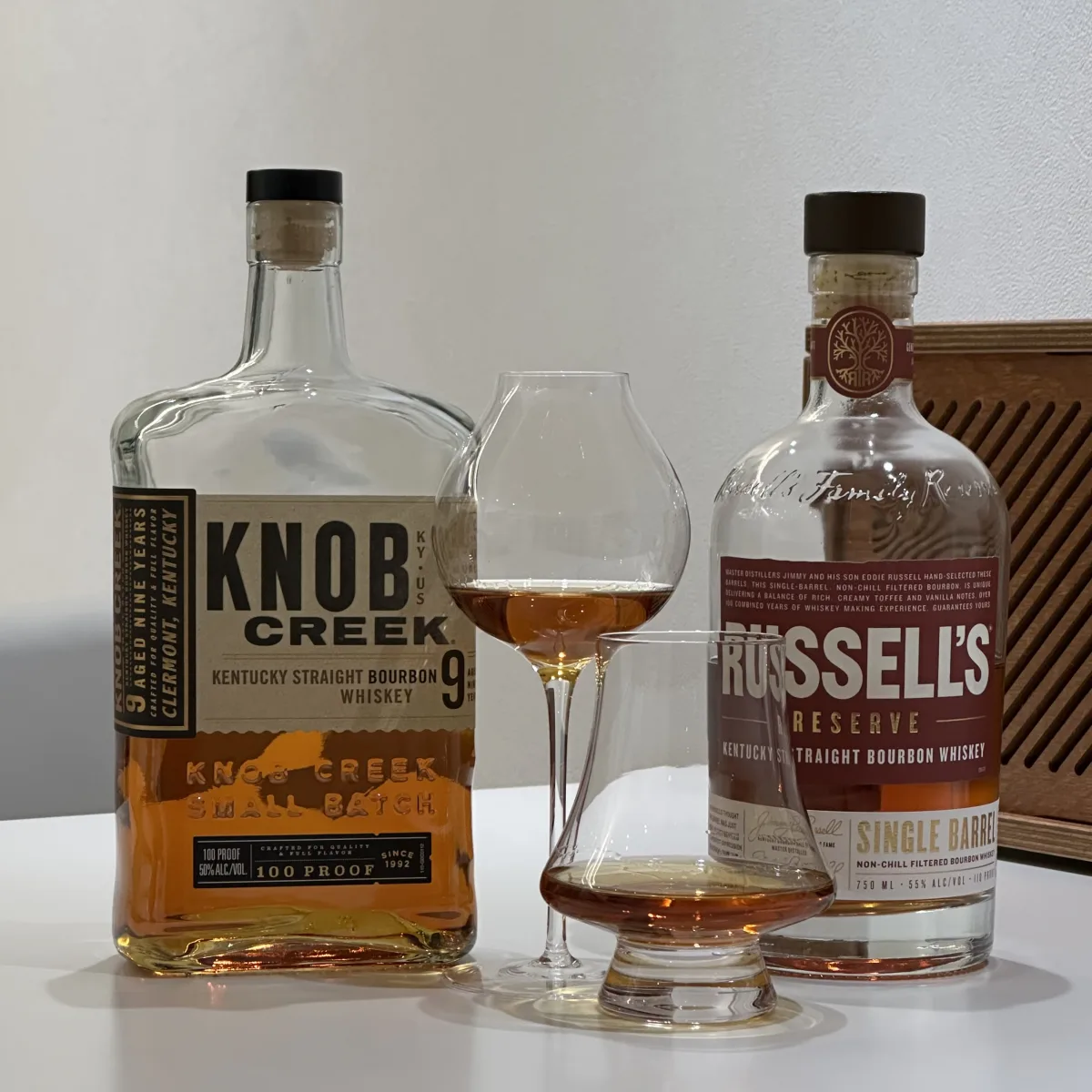
    <content type="html" xml:base="https://blog.spemer.com/en/knob-creek-9-vs-russells-reserve-single-barrel-comparison/"><![CDATA[<p>When I drank <a href="/en/knob-creek-9-year-bourbon-review/">Knob Creek 9 Year</a> on its own, the peanut finish was the thing that stayed with me. Put it next to <a href="/en/russells-reserve-single-barrel-review/">Russell’s Reserve Single Barrel</a>, though, and the texture gap shows up first. One feels creamy and rounded. The other pushes into the mouth with more weight right away.</p>

<p>Both are over 50%, so neither feels thin. Russell’s Single Barrel runs noticeably pricier than Knob Creek where I shop. The Russell’s bottle had also been open about a month longer, so that’s a small variable. Even with that, the two bottles go in different enough directions to make the comparison useful.</p>

<p><img src="/assets/images/posts/2026-04-26-knob-creek-9-vs-russells-reserve-single-barrel-comparison.webp" alt="Knob Creek 9 Year and Russell's Reserve Single Barrel side by side" /></p>

<h2 id="where-they-split-first">Where they split first</h2>

<p>Knob Creek has the nutty side I expected from the Jim Beam family. But the “peanut bomb” part came through much more on the finish than on the nose or palate. On the nose, I get oiliness, mixed nuts, peanut butter, oak, and a dry wood note. It feels broader than just peanut.</p>

<p>Russell’s lands heavier from the start. Caramel, oak, vanilla, banana, then something like cacao nibs or dark chocolate in the back. Knob Creek leans nutty and creamy. Russell’s feels darker, denser, and more caramel-oak driven.</p>

<div class="google-ads-box" data-ad-type="in-article">
  <div class="google-ads" data-ad-type="in-article">
    <ins class="adsbygoogle" style="display: block; text-align: center" data-ad-layout="in-article" data-ad-format="fluid" data-ad-client="ca-pub-3627439872518903" data-ad-slot="5939724010"></ins>
    <script>
      (adsbygoogle = window.adsbygoogle || []).push({});
    </script>
  </div>
</div>

<h2 id="knob-creek-9-year">Knob Creek 9 Year</h2>

<h3 id="knob-creek-vs-russells---nose">Knob Creek vs Russell’s - nose</h3>

<p>There is a bit of alcohol buzz at first. Not shocking for a 50% <a href="/en/bourbon-whiskey-characteristics-guide/">bourbon</a>, but it does show up on the nose. After that come the oily note, mixed nuts, peanut butter, and wood. The oak does not feel like plain vanilla oak. It has more of a dry wooden smell. On the nose, I’d call it mixed nuts more than straight peanut.</p>

<h3 id="knob-creek-vs-russells---palate">Knob Creek vs Russell’s - palate</h3>

<p>The alcohol from the nose almost disappears on the palate. That was the surprise. The texture is creamy, and next to Russell’s it feels much softer. Less spice, easier sweetness, rounder edges. It does not feel like a bourbon trying to overpower the glass. It fills the mouth in a calmer way.</p>

<h3 id="knob-creek-vs-russells---finish">Knob Creek vs Russell’s - finish</h3>

<p>This is where the peanut shows up. The nose says “nuts”, but the finish says peanut. That’s the part I was curious about before buying the bottle, and it lands here more than anywhere else. It is not an especially complex finish, but the aftertaste is easy to remember.</p>

<div class="google-ads-box" data-ad-type="in-article">
  <div class="google-ads" data-ad-type="in-article">
    <ins class="adsbygoogle" style="display: block; text-align: center" data-ad-layout="in-article" data-ad-format="fluid" data-ad-client="ca-pub-3627439872518903" data-ad-slot="5939724010"></ins>
    <script>
      (adsbygoogle = window.adsbygoogle || []).push({});
    </script>
  </div>
</div>

<h2 id="russells-single-barrel">Russell’s Single Barrel</h2>

<h3 id="knob-creek-vs-russells---nose-1">Knob Creek vs Russell’s - nose</h3>

<p>Russell’s feels heavy as soon as it hits the nose. Caramel and oak come first, then vanilla and banana. The dark chocolate note is there too, closer to cacao nibs than sweet chocolate. It is higher proof than Knob Creek, but the weight comes through before the alcohol does, so the nose does not feel especially harsh to me.</p>

<h3 id="knob-creek-vs-russells---palate-1">Knob Creek vs Russell’s - palate</h3>

<p>The first sip has a very satisfying texture. The 55% hit is immediate, and body plus tannin show up first. Spice follows. After the spice fades, a dark chocolate kind of sweetness comes in. I liked that order. It does not start sweet and simply finish spicy. Structure comes first, then the sweetness arrives later.</p>

<h3 id="knob-creek-vs-russells---finish-1">Knob Creek vs Russell’s - finish</h3>

<p>Oak stays the longest. There is also a small apple-like fruit note, and a faint temple-incense kind of smell. I am not sure if that is the right description, but it feels like wood and incense overlapping. Knob Creek’s finish points straight at peanut. Russell’s keeps moving through oak, fruit, and that slightly aromatic trace.</p>

<div class="google-ads-box" data-ad-type="in-article">
  <div class="google-ads" data-ad-type="in-article">
    <ins class="adsbygoogle" style="display: block; text-align: center" data-ad-layout="in-article" data-ad-format="fluid" data-ad-client="ca-pub-3627439872518903" data-ad-slot="5939724010"></ins>
    <script>
      (adsbygoogle = window.adsbygoogle || []).push({});
    </script>
  </div>
</div>

<h2 id="if-this-were-blind">If this were blind</h2>

<p>I once tasted Russell’s against <a href="/en/wild-turkey-rare-breed-barrel-proof-review/">Wild Turkey Rare Breed</a> blind with friends. That one was not easy. Both sit in the same Wild Turkey family direction, with dense bourbon sweetness, proof, and texture close enough to confuse me.</p>

<p>Russell’s and Knob Creek would probably be easier. Knob Creek has that nutty character, especially the peanut finish. Russell’s moves more through oak, caramel, spice, and dark chocolate. Both are good bottles. I would not frame this as one being simply better on the same line. They are built differently.</p>

<p>Price changes the read a little. Knob Creek makes a lot of sense at its tier. The proof and texture are hard to complain about there. Russell’s costs more, but the first sip and the 55% punch make the premium feel understandable. If I had to pick one glass today, I’d take Russell’s. If I had to keep one bottle around for casual pours, Knob Creek might make more sense.</p>

<p>Because both sit over 50%, neither has that thin feeling I sometimes get from lower-proof bourbon. Knob Creek sticks in memory because of the peanut finish. Russell’s sticks because of the texture the moment it hits the mouth. Next time, I want to line these up with Wild Turkey Rare Breed too. That comparison may leave me stuck between Russell’s and Rare Breed for longer.</p>

<div class="google-ads-box" data-ad-type="in-article">
  <div class="google-ads" data-ad-type="in-article">
    <ins class="adsbygoogle" style="display: block; text-align: center" data-ad-layout="in-article" data-ad-format="fluid" data-ad-client="ca-pub-3627439872518903" data-ad-slot="5939724010"></ins>
    <script>
      (adsbygoogle = window.adsbygoogle || []).push({});
    </script>
  </div>
</div>]]></content>
    <author>
      <name>Spemer</name>
    </author>
    
    <summary type="html">Knob Creek 9 and Russell&apos;s Single Barrel side by side: peanut finish, texture, oak, spice, and value.</summary>
    
    
    <media:thumbnail xmlns:media="http://search.yahoo.com/mrss/" url="/assets/images/posts/2026-04-26-knob-creek-9-vs-russells-reserve-single-barrel-comparison.webp" />
    
    
    <category term="Whisky" />
    
  </entry>
  
  <entry>
    <title type="html">[Highland] Glenmorangie Infinita 18</title>
    <link href="https://blog.spemer.com/en/glenmorangie-the-infinita-18-years-review/" rel="alternate" type="text/html" title="[Highland] Glenmorangie Infinita 18" />
    <published>2026-04-24T13:00:00+00:00</published>
    <updated>2026-05-14T15:00:00+00:00</updated>
    <id>https://blog.spemer.com/en/glenmorangie-the-infinita-18-years-review</id>
    <content type="html" xml:base="https://blog.spemer.com/en/glenmorangie-the-infinita-18-years-review/"><![CDATA[<p>Picked up Glenmorangie The Infinita 18 Years after falling for the <a href="/en/glenmorangie-16-years-the-nectar-dor-review/">16-year Nectar</a> from the same distillery. Wanted to see how far up the range it scales. Cracked the box the moment I got home and poured straight away.</p>

<p>No buyer’s remorse here. I would buy it again.</p>

<h2 id="from-extremely-rare-to-the-infinita">From Extremely Rare to The Infinita</h2>

<p>This bottle got a name change in late 2023. The old “Extremely Rare 18 Years Old” became “The Infinita 18 Years Old,” and the packaging moved to a cobalt-blue gift box. The public recipe remains the familiar Glenmorangie 18 structure: 15 years in bourbon casks, then a portion finished in Oloroso sherry casks before blending back.</p>

<p>The recipe itself is a weirdly specific build. Distilled at the Glenmorangie distillery in Tain, Highland, matured in ex-bourbon (American white oak) casks for 15 years. About 30% of that stock gets moved into Oloroso sherry casks for another 3 years, then blended back. 43% ABV, 700ml. Same broad liquid profile as the old 18, just wearing a new name now.</p>

<div class="google-ads-box" data-ad-type="in-article">
  <div class="google-ads" data-ad-type="in-article">
    <ins class="adsbygoogle" style="display: block; text-align: center" data-ad-layout="in-article" data-ad-format="fluid" data-ad-client="ca-pub-3627439872518903" data-ad-slot="5939724010"></ins>
    <script>
      (adsbygoogle = window.adsbygoogle || []).push({});
    </script>
  </div>
</div>

<h2 id="glenmorangie-the-infinita-18-years-in-the-glass">Glenmorangie The Infinita 18 Years in the glass</h2>

<p><img src="/assets/images/posts/2026-04-24-glenmorangie-the-infinita-18-years-review.webp" alt="Glenmorangie The Infinita 18 single malt whisky" /></p>

<p>Poured into a copita, left for about 10 minutes, then went in.</p>

<h3 id="glenmorangie-the-infinita-18-years---nose">Glenmorangie The Infinita 18 Years - nose</h3>

<p>Zero alcohol burn, which surprised me the most. 43% obviously helps, but opening this cleanly on pour one wasn’t what I expected.</p>

<p>Cool orange and citrus sweetness leads. Behind it, a lighter honey-water sugar, and a faint wisp of smoke drifting past. Feels a bit like a more refined <a href="/en/benromach-10-year-review/">Benromach 10</a> - same backbone of sweet smoke, but a few steps smoother. Where Benromach runs young and rough around the edges, this one has the same shape sanded down.</p>

<div class="google-ads-box" data-ad-type="in-article">
  <div class="google-ads" data-ad-type="in-article">
    <ins class="adsbygoogle" style="display: block; text-align: center" data-ad-layout="in-article" data-ad-format="fluid" data-ad-client="ca-pub-3627439872518903" data-ad-slot="5939724010"></ins>
    <script>
      (adsbygoogle = window.adsbygoogle || []).push({});
    </script>
  </div>
</div>

<h3 id="glenmorangie-the-infinita-18-years---palate">Glenmorangie The Infinita 18 Years - palate</h3>

<p>Glazed doughnut. Straight up. Sugary glaze, the slight oiliness, the doughy middle - all of it.</p>

<p>A little nut follows, and the malt carries enough weight to hold the sweetness up. The smoke that only brushed past on the nose gets more room here. Nowhere near peated-whisky territory - it’s one layer of smoke threading under the sweetness, not smothering it.</p>

<h3 id="glenmorangie-the-infinita-18-years---finish">Glenmorangie The Infinita 18 Years - finish</h3>

<p>This was the unexpected bit. The sherry finally shows up properly. I’d assumed the 70% bourbon share meant vanilla and coconut would dominate the tail, but the last thing on the palate is sherry.</p>

<p>Not a heavy, sticky sherry either. It’s sherry with the weight lifted off. Not as syrupy as PX, not as dense as a full-maturation oloroso. The 30% ratio feels exactly right for the balance it pulls off.</p>

<p>The smoke that showed up earlier mostly burns off here. What lingers is a quiet malty tail that keeps going a while. Smoke rises, peaks on the palate, then drops out, and you’re left with sherry and malt. A lot of moving parts for a single pour.</p>

<div class="google-ads-box" data-ad-type="in-article">
  <div class="google-ads" data-ad-type="in-article">
    <ins class="adsbygoogle" style="display: block; text-align: center" data-ad-layout="in-article" data-ad-format="fluid" data-ad-client="ca-pub-3627439872518903" data-ad-slot="5939724010"></ins>
    <script>
      (adsbygoogle = window.adsbygoogle || []).push({});
    </script>
  </div>
</div>

<h2 id="where-it-sits-in-the-glenmorangie-lineup">Where it sits in the Glenmorangie lineup</h2>

<p>The entry is The Original 10, then Lasanta 15 (oloroso, refreshed in March 2025), Quinta Ruban 14 (port finish), The Nectar 16 (Sauternes / white wine finish), The Infinita 18, and Signet at the top.</p>

<p>Infinita is bourbon-led with only a 30% sherry share, so the opening is citrus and vanilla and the sherry only catches you on the back end. If you want something heavier on the sherry side, Lasanta 15 sitting below it is full sherry maturation - I haven’t tried that one myself, so I can’t compare directly.</p>

<p>If you want oloroso finishes at a lower price point, I wrote up <a href="/en/royal-brackla-12-years-review/">Royal Brackla 12</a> earlier - the sherry is pushed out more up-front there, where Infinita keeps every element thin and stacked. For something actually sherry-forward, <a href="/en/glenallachie-15-year-after-opening-review/">GlenAllachie 15</a> is on a completely different level. <a href="/en/benriach-12-years-the-twelve-review/">Benriach 12 The Twelve</a> is a multi-cask bourbon/sherry/port build - different direction again, different price tier, but worth a read if complexity is the angle you care about.</p>

<div class="google-ads-box" data-ad-type="in-article">
  <div class="google-ads" data-ad-type="in-article">
    <ins class="adsbygoogle" style="display: block; text-align: center" data-ad-layout="in-article" data-ad-format="fluid" data-ad-client="ca-pub-3627439872518903" data-ad-slot="5939724010"></ins>
    <script>
      (adsbygoogle = window.adsbygoogle || []).push({});
    </script>
  </div>
</div>

<h2 id="wrap-up">Wrap-up</h2>

<p>An 18-year single malt this balanced on the very first pour isn’t common. No alcohol bite out of the gate, and the nose/palate/finish each show a different face without breaking apart. Price aside, the liquid stands on its own.</p>

<p>Rating 4.3. Going from the 16-year Nectar up to the 18 was the right call. I’ll pour another two or three weeks in and take notes again, curious whether the sherry deepens further, or whether the bourbon vanilla climbs up instead.</p>]]></content>
    <author>
      <name>Spemer</name>
    </author>
    
    <summary type="html">Glenmorangie Infinita 18 first pour: bourbon cask base, oloroso sherry layer, citrus, smoke, and finish.</summary>
    
    
    <media:thumbnail xmlns:media="http://search.yahoo.com/mrss/" url="/assets/images/posts/2026-04-24-glenmorangie-the-infinita-18-years-review.webp" />
    
    
    <category term="Whisky" />
    
  </entry>
  
  <entry>
    <title type="html">[Sherry] Macallan 12 vs GlenDronach 12</title>
    <link href="https://blog.spemer.com/en/macallan-12-vs-glendronach-12-sherry-comparison/" rel="alternate" type="text/html" title="[Sherry] Macallan 12 vs GlenDronach 12" />
    <published>2026-04-20T06:00:00+00:00</published>
    <updated>2026-04-26T15:00:00+00:00</updated>
    <id>https://blog.spemer.com/en/macallan-12-vs-glendronach-12-sherry-comparison</id>
    <content type="html" xml:base="https://blog.spemer.com/en/macallan-12-vs-glendronach-12-sherry-comparison/"><![CDATA[<p>Two months into both bottles, my Macallan 12 Sherry Oak and <a href="/en/glendronach-12-years-original-bottling-review/">GlenDronach 12 Original</a> (old bottling) were sitting next to each other on the shelf, so I pulled out two glasses and ran them head to head. I’ve written up each one on its own, but once you’re bouncing between them in the same sitting, the differences read a lot sharper than anything you’d get off the page. This post is only about what shows up when you drink them side by side.</p>

<h2 id="why-these-two">Why these two</h2>

<p>There’s a trio that tends to get called the go-to sherry starter bottles: Macallan 12, GlenDronach 12, and Glenfarclas 15. Similar price bracket, easy to find, sherry-forward across the board.</p>

<p>I left Glenfarclas out of this comparison on purpose. It leans hard into sulphur, which pulls it onto a different axis if you’re trying to line things up on the “sweet sherry” side. Glenfarclas feels like it wants to be compared to Royal Brackla 12 instead. This comparison stays in the sweet-sherry lane.</p>

<ul>
  <li>Macallan 12 Sherry Oak: 100% oloroso-seasoned European oak, 40%</li>
  <li>GlenDronach 12 Original (old bottling): oloroso + PX mix, 43%</li>
</ul>

<p>Individual reviews are up already for the <a href="/en/macallan-12-year-sherry-oak-review/">Macallan 12 Sherry Oak</a> if you want the long form on that one.</p>

<h2 id="macallan-12-vs-glendronach-12---quick-table">Macallan 12 vs GlenDronach 12 - quick table</h2>

<table>
  <thead>
    <tr>
      <th> </th>
      <th>Macallan 12 Sherry Oak</th>
      <th>GlenDronach 12 Original (old)</th>
    </tr>
  </thead>
  <tbody>
    <tr>
      <td>Cask</td>
      <td>100% oloroso-seasoned European oak</td>
      <td>Oloroso + PX mix</td>
    </tr>
    <tr>
      <td>ABV</td>
      <td>40%</td>
      <td>43%</td>
    </tr>
    <tr>
      <td>Nose</td>
      <td>Soft sherry, dried fruit, spice</td>
      <td>Apple, cream soda, cool sweetness, vanilla</td>
    </tr>
    <tr>
      <td>Palate</td>
      <td>Sherry sweetness, smooth all the way</td>
      <td>Heavy sherry sweetness, apple, oak</td>
    </tr>
    <tr>
      <td>Finish</td>
      <td>Long and warm, light spice</td>
      <td>Long, dried fruit and raisin</td>
    </tr>
    <tr>
      <td>Body</td>
      <td>Light and slick</td>
      <td>Oily and heavy</td>
    </tr>
  </tbody>
</table>

<p>On paper it’s a 3% ABV gap. Side by side, it feels bigger than that.</p>

<div class="google-ads-box" data-ad-type="in-article">
  <div class="google-ads" data-ad-type="in-article">
    <ins class="adsbygoogle" style="display: block; text-align: center" data-ad-layout="in-article" data-ad-format="fluid" data-ad-client="ca-pub-3627439872518903" data-ad-slot="5939724010"></ins>
    <script>
      (adsbygoogle = window.adsbygoogle || []).push({});
    </script>
  </div>
</div>

<h2 id="side-by-side---nose">Side by side - nose</h2>

<p><img src="/assets/images/posts/2026-04-20-macallan-12-vs-glendronach-12-sherry-comparison.webp" alt="Macallan 12 Sherry Oak vs GlenDronach 12 Original side by side" /></p>

<p>Swapping glasses back to back, the direction of the nose isn’t even close. Macallan reads as “soft sherry” - that’s the phrase that keeps landing. Dried fruit and a quiet spice, nothing loud. Swirl it as long as you want and it doesn’t really open up any further. Holds one steady tone.</p>

<p>Switch to the GlenDronach old bottling and it lands differently from the first sniff. Apple. And something like cream soda - cool, a little fizzy, sweet. Vanilla trails in behind. Where Macallan has sherry right up front, GlenDronach pushes fresh fruit forward, to the point where on the nose alone it almost feels like the lighter of the two.</p>

<p>On the nose, Macallan sits on the dried-fruit side while the old GlenDronach leans fresher. Same sherry cask category, but the oloroso-only vs oloroso+PX split shows up before you’ve even taken a sip.</p>

<div class="google-ads-box" data-ad-type="in-article">
  <div class="google-ads" data-ad-type="in-article">
    <ins class="adsbygoogle" style="display: block; text-align: center" data-ad-layout="in-article" data-ad-format="fluid" data-ad-client="ca-pub-3627439872518903" data-ad-slot="5939724010"></ins>
    <script>
      (adsbygoogle = window.adsbygoogle || []).push({});
    </script>
  </div>
</div>

<h2 id="side-by-side---palate">Side by side - palate</h2>

<p>Palate flips half of that impression.</p>

<p>First sip of Macallan, the sherry sweetness spreads cleanly and slides across without catching on anything. That 40% ABV shows up here - texture is thin and slick. If “smooth” is the one axis you care about, Macallan 12 Sherry Oak is hard to beat at this price. But that’s where it stops. If someone asked what else is layered in there, I’d struggle to name it.</p>

<p>Move to the GlenDronach old bottling and the cool sweetness from the nose basically disappears. What takes its place is a heavier sherry sweetness, fresh apple, and an oak structure underneath. Could be the 43% doing some of the work - feels like there’s slightly more body to it, maybe. One sip just carries more information than the Macallan does. That’s the PX talking.</p>

<p>Drinking them together, the shape is pretty clear: Macallan for smoothness, GlenDronach for layers.</p>

<div class="google-ads-box" data-ad-type="in-article">
  <div class="google-ads" data-ad-type="in-article">
    <ins class="adsbygoogle" style="display: block; text-align: center" data-ad-layout="in-article" data-ad-format="fluid" data-ad-client="ca-pub-3627439872518903" data-ad-slot="5939724010"></ins>
    <script>
      (adsbygoogle = window.adsbygoogle || []).push({});
    </script>
  </div>
</div>

<h2 id="side-by-side---finish">Side by side - finish</h2>

<p>Both are long on the finish. What stays behind is where they split.</p>

<p>Macallan is all about warmth. After the sip goes down there’s this slow heat spreading through the chest, and a very faint spice hanging on the back of the tongue. Where it gets interesting is with food. Bite of Iberico ham, sip of Macallan right after, and the finish flips into pure dark chocolate. That pairing worked because the salty fat landed on the sherry sweetness and pulled a cacao note out of nowhere.</p>

<p>GlenDronach old has a more tangible finish. Dried fruit and raisin hanging in the mouth for a while. If Macallan’s finish is about temperature, this one’s about flavor that literally lingers. I tend to like a finish I can chew on, so the glass I keep sticking my nose back into after it’s empty is the GlenDronach.</p>

<div class="google-ads-box" data-ad-type="in-article">
  <div class="google-ads" data-ad-type="in-article">
    <ins class="adsbygoogle" style="display: block; text-align: center" data-ad-layout="in-article" data-ad-format="fluid" data-ad-client="ca-pub-3627439872518903" data-ad-slot="5939724010"></ins>
    <script>
      (adsbygoogle = window.adsbygoogle || []).push({});
    </script>
  </div>
</div>

<h2 id="narrow-call---glendronach-takes-it">Narrow call - GlenDronach takes it</h2>

<p>Both were early bottles in my shelf. Honestly, neither gets poured much these days. Part of that is that sherry sweetness itself has drifted off my taste map - when I want something sweet now, it’s the fruit-and-honey direction of <a href="/en/glenmorangie-16-years-the-nectar-dor-review/">Glenmorangie 16 Nectar d’Or</a> that lands closer to what I actually want.</p>

<p>Still, if I have to rank just these two, it’s a narrow win for the GlenDronach 12 old bottling. Macallan has one virtue - smoothness - and it’s a real one, but the information cap from 40% shows up fast when you’ve got something heavier in the next glass. GlenDronach fits more into a single sip.</p>

<p>Old bottling vs recipe change - I can’t say for sure which one’s actually doing it. What I can say is that paying a premium for the old GlenDronach 12 when I was starting out wasn’t a smart move in hindsight. If I were doing it over, I’d just grab the current release with a Glencairn set from a big-box retailer. The old bottling isn’t some magic upgrade, and once you factor in the price gap, the value isn’t there.</p>

<p>The shared DNA across sherry cask whiskies is something I broke out separately in <a href="/en/sherry-cask-whisky-common-tasting-notes/">sherry cask whisky common tasting notes</a> - helpful if you’re trying to tell cask styles apart. If you can only buy one of these two: GlenDronach for value and depth, Macallan if warmth and smoothness are the priority. That’s the call after two months of bouncing between them.</p>

<div class="google-ads-box" data-ad-type="in-article">
  <div class="google-ads" data-ad-type="in-article">
    <ins class="adsbygoogle" style="display: block; text-align: center" data-ad-layout="in-article" data-ad-format="fluid" data-ad-client="ca-pub-3627439872518903" data-ad-slot="5939724010"></ins>
    <script>
      (adsbygoogle = window.adsbygoogle || []).push({});
    </script>
  </div>
</div>]]></content>
    <author>
      <name>Spemer</name>
    </author>
    
    <summary type="html">Macallan 12 and GlenDronach 12 tasted side by side: sherry style, texture, finish, and value.</summary>
    
    
    <media:thumbnail xmlns:media="http://search.yahoo.com/mrss/" url="/assets/images/posts/2026-04-20-macallan-12-vs-glendronach-12-sherry-comparison.webp" />
    
    
    <category term="Whisky" />
    
  </entry>
  
  <entry>
    <title type="html">[Tennessee] Jack Single Barrel Month 1</title>
    <link href="https://blog.spemer.com/en/jack-daniels-single-barrel-100proof-1month-review/" rel="alternate" type="text/html" title="[Tennessee] Jack Single Barrel Month 1" />
    <published>2026-04-17T12:00:00+00:00</published>
    <updated>2026-05-14T15:00:00+00:00</updated>
    <id>https://blog.spemer.com/en/jack-daniels-single-barrel-100proof-1month-review</id>
    <content type="html" xml:base="https://blog.spemer.com/en/jack-daniels-single-barrel-100proof-1month-review/"><![CDATA[<p>Opened this bottle a month ago and it’s almost gone. Kept the last couple of pours for tasting notes, but the rest disappeared over four weeks. That probably says more than a neat score ever could: I kept reaching for it.</p>

<p>50% ABV single barrel out of Lynchburg. Each bottle pulled from upper warehouse floors where the temperature swings hit hardest. The charcoal mellowing step - dripping the spirit through sugar maple charcoal before barreling - is what puts it in the <a href="/en/bourbon-whiskey-characteristics-guide/">Tennessee whiskey column instead of bourbon</a>.</p>

<div class="google-ads-box" data-ad-type="in-article">
  <div class="google-ads" data-ad-type="in-article">
    <ins class="adsbygoogle" style="display: block; text-align: center" data-ad-layout="in-article" data-ad-format="fluid" data-ad-client="ca-pub-3627439872518903" data-ad-slot="5939724010"></ins>
    <script>
      (adsbygoogle = window.adsbygoogle || []).push({});
    </script>
  </div>
</div>

<h2 id="what-a-month-changed">What a month changed</h2>

<p>Opening day, the 50% showed. Alcohol punch right up front. The charcoal mellowing kept things from turning rough, but the booze was clearly sitting on the nose. A month in, that punch has stepped back. Same ABV, but oxidation pulled it down and let vanilla and banana come forward more cleanly.</p>

<p>Not a dramatic shift. <a href="/en/glenallachie-15-year-after-opening-review/">GlenAllachie 15 after one month</a> is basically a different whisky by week four. The Jack Single Barrel 100 is going in the same direction, just with the edges sanded off. Day-one impression, toned down a notch. More integrated is the best way to put it.</p>

<div class="google-ads-box" data-ad-type="in-article">
  <div class="google-ads" data-ad-type="in-article">
    <ins class="adsbygoogle" style="display: block; text-align: center" data-ad-layout="in-article" data-ad-format="fluid" data-ad-client="ca-pub-3627439872518903" data-ad-slot="5939724010"></ins>
    <script>
      (adsbygoogle = window.adsbygoogle || []).push({});
    </script>
  </div>
</div>

<h2 id="glass-notes---month-one">Glass notes - month one</h2>

<p><img src="/assets/images/posts/2026-04-17-jack-daniels-single-barrel-100proof-1month-review.webp" alt="Jack Daniel's Single Barrel 100 Proof one month after opening" /></p>

<h3 id="jack-daniels-single-barrel-100-proof---nose">Jack Daniel’s Single Barrel 100 Proof - nose</h3>

<p>Vanilla and banana lead. Same as day one, but softer and more natural now - less alcohol shouldering its way in. Dark chocolate sits underneath, heavier and slightly bitter. Oak and woody notes hold the background steady. Easier to sit with than the fresh pour was.</p>

<h3 id="jack-daniels-single-barrel-100-proof---palate">Jack Daniel’s Single Barrel 100 Proof - palate</h3>

<p>Nuttiness first. A more polished kind than the blunt oak weight of <a href="/en/knob-creek-9-year-bourbon-review/">Knob Creek 9 Year</a>. Mid-palate an apple note passes through, then a spicy kick climbs with banana sweetness trailing behind. The sweet-vs-spice tug-of-war from day one is still there, but neither side pushes the other around now - they blend. To me the balance feels cleaner than the fresh pour.</p>

<h3 id="jack-daniels-single-barrel-100-proof---finish">Jack Daniel’s Single Barrel 100 Proof - finish</h3>

<p>Vanilla and banana linger softly. Woody notes run underneath and stretch a little longer than day one. Nothing harsh. Just carries the length it needs and wraps up clean.</p>

<div class="google-ads-box" data-ad-type="in-article">
  <div class="google-ads" data-ad-type="in-article">
    <ins class="adsbygoogle" style="display: block; text-align: center" data-ad-layout="in-article" data-ad-format="fluid" data-ad-client="ca-pub-3627439872518903" data-ad-slot="5939724010"></ins>
    <script>
      (adsbygoogle = window.adsbygoogle || []).push({});
    </script>
  </div>
</div>

<h2 id="verdict-on-jack-daniels-single-barrel-100-proof">Verdict on Jack Daniel’s Single Barrel 100 Proof</h2>

<p>4.7. The fact that the bottle is nearly gone in a month is the review.</p>

<p>Sits next to <a href="/en/russells-reserve-single-barrel-review/">Russell’s Reserve Single Barrel</a> or <a href="/en/wild-turkey-rare-breed-barrel-proof-review/">Wild Turkey Rare Breed</a> without flinching. The charcoal mellowing plus vanilla, banana, and dark chocolate - its own corner of the American whiskey space.</p>

<p>Month-one is better than the fresh pour. Would 100% buy again.</p>]]></content>
    <author>
      <name>Spemer</name>
    </author>
    
    <summary type="html">Jack Daniel&apos;s Single Barrel 100 Proof after one month: vanilla, banana, dark chocolate, and softer edges.</summary>
    
    
    <media:thumbnail xmlns:media="http://search.yahoo.com/mrss/" url="/assets/images/posts/2026-04-17-jack-daniels-single-barrel-100proof-1month-review.webp" />
    
    
    <category term="Whisky" />
    
  </entry>
  
  <entry>
    <title type="html">[Blended] Dewar’s 18 Mizunara Review</title>
    <link href="https://blog.spemer.com/en/dewars-18-years-mizunara-cask-finish-review/" rel="alternate" type="text/html" title="[Blended] Dewar&apos;s 18 Mizunara Review" />
    <published>2026-04-14T13:45:00+00:00</published>
    <updated>2026-04-14T13:45:00+00:00</updated>
    <id>https://blog.spemer.com/en/dewars-18-years-mizunara-cask-finish-review</id>
    <content type="html" xml:base="https://blog.spemer.com/en/dewars-18-years-mizunara-cask-finish-review/"><![CDATA[<p>Picked this one up on curiosity. Dewar’s 18 Year Mizunara Cask Finish - an Asian market limited edition. <a href="/en/dewars-double-double-21-years-review/">Dewar’s Double Double 21</a> had been on heavy rotation for me, so expectations were set reasonably high.</p>

<h2 id="dewars-18-year-mizunara-cask-finish-basics">Dewar’s 18 Year Mizunara Cask Finish basics</h2>

<ul>
  <li><strong>ABV</strong>: 40%</li>
  <li><strong>Volume</strong>: 700ml</li>
  <li><strong>Maturation</strong>: oak casks -&gt; mizunara cask finish</li>
  <li><strong>Release</strong>: Asian market limited edition. Japanese mizunara (water oak) finish</li>
</ul>

<p>Blended Scotch finished in Japanese mizunara casks - that’s the pitch. Mizunara is a cask that carries serious weight inside <a href="/en/nikka-taketsuru-pure-malt-review/">Japanese whisky</a>, and seeing it show up on a blended Scotch is what makes this bottle interesting on paper.</p>

<p><img src="/assets/images/posts/2026-04-14-dewars-18-years-mizunara-cask-finish-review.webp" alt="Dewar's 18 Year Mizunara Cask Finish blended Scotch whisky" /></p>

<h2 id="what-mizunara-is">What mizunara is</h2>

<p>Mizunara is the Japanese word for “water oak” (<em>Quercus crispula</em>). Native to Hokkaido and parts of East Asia. Slower-growing than European or American oak, with a rougher grain - which apparently makes it a pain to turn into casks.</p>

<p>The flavor signature it tends to lay down:</p>
<ul>
  <li>Sandalwood, incense-like notes</li>
  <li>Coconut, honey, vanilla</li>
  <li>Oriental spice nuances</li>
</ul>

<p>Rare enough that even Japanese distilleries don’t run it in volume. A blended Scotch using it is a premium positioning move.</p>

<div class="google-ads-box" data-ad-type="in-article">
  <div class="google-ads" data-ad-type="in-article">
    <ins class="adsbygoogle" style="display: block; text-align: center" data-ad-layout="in-article" data-ad-format="fluid" data-ad-client="ca-pub-3627439872518903" data-ad-slot="5939724010"></ins>
    <script>
      (adsbygoogle = window.adsbygoogle || []).push({});
    </script>
  </div>
</div>

<h2 id="dewars-18-year-mizunara-cask-finish-in-the-glass">Dewar’s 18 Year Mizunara Cask Finish in the glass</h2>

<p>The color jumps out first. It’s pale. Lighter than honey. The label design, for what it’s worth, is nicely done.</p>

<h3 id="dewars-18-year-mizunara-cask-finish---nose">Dewar’s 18 Year Mizunara Cask Finish - nose</h3>

<p>Zero alcohol burn. Some of that is the 40%, but this kind of clean nose isn’t a given on a blended. Honey and vanilla lead, then quiet oak and sherry settle in behind. The sandalwood you’d expect from mizunara is unexpectedly subdued, but bury your nose in the glass long enough and a temple-incense quality drifts up from underneath. Round, soft overall - no sharp edges.</p>

<h3 id="dewars-18-year-mizunara-cask-finish---palate">Dewar’s 18 Year Mizunara Cask Finish - palate</h3>

<p>Very smooth. Honey-water sweetness first, then a light nutty layer - almond and hazelnut territory. That’s the oak talking. The sherry from the nose carries through the palate consistently, which I like. Body sits between medium and light. 40% is doing what 40% does - the flavor has a ceiling it can’t quite push past.</p>

<div class="google-ads-box" data-ad-type="in-article">
  <div class="google-ads" data-ad-type="in-article">
    <ins class="adsbygoogle" style="display: block; text-align: center" data-ad-layout="in-article" data-ad-format="fluid" data-ad-client="ca-pub-3627439872518903" data-ad-slot="5939724010"></ins>
    <script>
      (adsbygoogle = window.adsbygoogle || []).push({});
    </script>
  </div>
</div>

<h3 id="dewars-18-year-mizunara-cask-finish---finish">Dewar’s 18 Year Mizunara Cask Finish - finish</h3>

<p>A layered close. Sherry, soft spice, oak, and a whisper of mizunara’s incense note all show up together. There’s a grainy, juice-box sweetness that drifts through, and the tail carries a mild bitterness that comes up with time. Medium length.</p>

<h2 id="vs-dewars-double-double-21">Vs. Dewar’s Double Double 21</h2>

<p>Using Double Double 21 as the benchmark, the 18 Mizunara doesn’t quite land in the same weight class. Not a knock on the whisky - it’s a solid pour for what it is. But Double Double 21 has a structured, layered quality that this bottle trades away for softness. The 40% ABV reads like a deliberate choice aimed at an easy-drinking profile. Three more points of ABV would’ve given this a different center of gravity.</p>

<p>Pouring both side by side made the gap more obvious. Double Double 21 unrolls sherry, oak, and spice in sequence across a single sip. The 18 Mizunara lays the same sherry tone evenly across the palate and ends there. Different amounts of information per sip.</p>

<p>The other thing - the sherry runs evenly from nose through finish, which is a plus and a problem at the same time. For a bottle sold on a <em>mizunara cask finish</em>, the sandalwood and incense notes you’d show up for are mostly sitting behind the sherry. If you came for the mizunara signature, that’s the part that stings a little.</p>

<div class="google-ads-box" data-ad-type="in-article">
  <div class="google-ads" data-ad-type="in-article">
    <ins class="adsbygoogle" style="display: block; text-align: center" data-ad-layout="in-article" data-ad-format="fluid" data-ad-client="ca-pub-3627439872518903" data-ad-slot="5939724010"></ins>
    <script>
      (adsbygoogle = window.adsbygoogle || []).push({});
    </script>
  </div>
</div>

<h2 id="pairings-for-dewars-18-year-mizunara-cask-finish">Pairings for Dewar’s 18 Year Mizunara Cask Finish</h2>

<ul>
  <li><strong>Almonds, hazelnuts</strong> - the nutty side of the mizunara finish lines up cleanly</li>
  <li><strong>Clean Japanese bites (sashimi, light pickles)</strong> - mizunara’s Japanese DNA plays well here, and the 40% ABV suits lighter food</li>
</ul>

<h2 id="final-read-on-dewars-18-year-mizunara-cask-finish">Final read on Dewar’s 18 Year Mizunara Cask Finish</h2>

<p>Rating: <strong>3.9</strong>. The hit against it isn’t that it’s bad - expectations were just set high. As a proposition, “18-year blend with a mizunara cask finish” delivers a reasonable amount of what it advertises.</p>

<p>Would I reach for it often? Probably not. Nothing wrong with it, but nothing pulls me back either. I’d sooner reach for the <a href="/en/johnnie-walker-green-label-15-years-review/">Johnnie Walker Green Label 15</a> on a blended night, or step laterally into something like <a href="/en/bushmills-12-years-review/">Bushmills 12</a> if the mood is softer. Still, an 18-year bottling with a mizunara finish isn’t something you run into often - worth a try if you see it.</p>

<div class="google-ads-box" data-ad-type="in-article">
  <div class="google-ads" data-ad-type="in-article">
    <ins class="adsbygoogle" style="display: block; text-align: center" data-ad-layout="in-article" data-ad-format="fluid" data-ad-client="ca-pub-3627439872518903" data-ad-slot="5939724010"></ins>
    <script>
      (adsbygoogle = window.adsbygoogle || []).push({});
    </script>
  </div>
</div>]]></content>
    <author>
      <name>Spemer</name>
    </author>
    
    <summary type="html">Dewar&apos;s 18 Mizunara review: 40% blended Scotch with Japanese oak finish, honey, vanilla, and soft spice.</summary>
    
    
    <media:thumbnail xmlns:media="http://search.yahoo.com/mrss/" url="/assets/images/posts/2026-04-14-dewars-18-years-mizunara-cask-finish-review.webp" />
    
    
    <category term="Whisky" />
    
  </entry>
  
  <entry>
    <title type="html">Sherry Cask Whisky: Common Notes</title>
    <link href="https://blog.spemer.com/en/sherry-cask-whisky-common-tasting-notes/" rel="alternate" type="text/html" title="Sherry Cask Whisky: Common Notes" />
    <published>2026-04-13T06:30:00+00:00</published>
    <updated>2026-05-14T15:00:00+00:00</updated>
    <id>https://blog.spemer.com/en/sherry-cask-whisky-common-tasting-notes</id>
    <content type="html" xml:base="https://blog.spemer.com/en/sherry-cask-whisky-common-tasting-notes/"><![CDATA[<p>Drink enough sherry cask whisky and the patterns start to show. Different distilleries, different ages, different ABVs - and yet there’s a shared skeleton that hits the second you put your nose in the glass. “Ah, sherry.”</p>

<h2 id="nose---its-always-dried-fruit">Nose - it’s always dried fruit</h2>

<p>Dried fruit dominates the nose of any sherry cask whisky. Raisin, dried fig, dried plum. The names change but that family of aromas is the first thing up on nearly every sherry cask I’ve had. <a href="/en/glenfarclas-15-years-review/">Glenfarclas 15</a> reads as Christmas cake. <a href="/en/aberlour-abunadh-batch84-review/">Aberlour A’bunadh Batch 84</a> - also Christmas cake. The descriptors are going to overlap.</p>

<p><img src="/assets/images/posts/2026-03-10-glenfarclas-15-year-review.webp" alt="Glenfarclas 15 Year sherry whisky" /></p>

<p><img src="/assets/images/posts/2026-03-20-aberlour-abunadh-batch84-review.webp" alt="Aberlour A'bunadh Batch 84 sherry cask strength" /></p>

<p>Dark chocolate sits under the dried fruit. In GlenAllachie 10 CS it was almost 80% cacao territory - dominant. In <a href="/en/macallan-12-year-sherry-oak-review/">Macallan 12 Sherry Oak</a> the sweet sherry top note buried the chocolate underneath. Spices like cinnamon, ginger, and clove show up with almost no exception - only the intensity changes.</p>

<p><img src="/assets/images/posts/2026-03-08-glenallachie-10-year-cask-strength-batch12-review.webp" alt="GlenAllachie 10 CS sherry whisky" /></p>

<p><img src="/assets/images/posts/2026-03-16-macallan-12-year-sherry-oak-review.webp" alt="Macallan 12 Sherry Oak whisky" /></p>

<p>The surprise common thread is orange peel. <a href="/en/arran-sherry-cask-strength-review/">Arran Sherry Cask CS</a>, <a href="/en/glenallachie-15-year-after-opening-review/">GlenAllachie 15 a month after opening</a>, <a href="/en/aberlour-abunadh-batch82-review/">Aberlour A’bunadh Batch 82</a> - citrus nuance pushed through the sherry sweetness on all of them.</p>

<p><img src="/assets/images/posts/2026-03-25-arran-sherry-cask-strength-review.webp" alt="Arran Sherry Cask CS whisky" /></p>

<p><img src="/assets/images/posts/2026-03-31-aberlour-abunadh-batch82-review.webp" alt="Aberlour A'bunadh Batch 82 sherry CS whisky" /></p>

<div class="google-ads-box" data-ad-type="in-article">
  <div class="google-ads" data-ad-type="in-article">
    <ins class="adsbygoogle" style="display: block; text-align: center" data-ad-layout="in-article" data-ad-format="fluid" data-ad-client="ca-pub-3627439872518903" data-ad-slot="5939724010"></ins>
    <script>
      (adsbygoogle = window.adsbygoogle || []).push({});
    </script>
  </div>
</div>

<h2 id="palate---cs-or-not-thats-the-split">Palate - CS or not, that’s the split</h2>

<p>On the palate, heavy fruit hits first. Cherry, plum, raisin. The dark chocolate or mocha bitterness sitting on top of that is near-identical across the board.</p>

<p>Where they diverge is body. A’bunadh or GlenAllachie 10 CS at cask strength is syrup-thick. <a href="/en/macallan-12-year-sherry-oak-review/">Macallan 12</a> or Glendronach 12 at 40-43% is noticeably lighter. Even between two CS bottles the shape splits - <a href="/en/arran-sherry-cask-vs-aberlour-abunadh-batch84-comparison/">pouring Arran Sherry Cask CS next to A’bunadh Batch 84</a> made the 5.4 point ABV gap show up directly in body and information per sip. If you want to actually feel the depth of the sherry, CS is the way to go.</p>

<p><img src="/assets/images/posts/2026-03-06-glendronach-12-year-original-bottling-review.webp" alt="Glendronach 12 sherry cask whisky" /></p>

<p><img src="/assets/images/posts/2026-04-03-glenallachie-15-year-after-opening-review.webp" alt="GlenAllachie 15 after opening - sherry whisky evolution" /></p>

<h2 id="finish---warm-spice-to-close">Finish - warm spice to close</h2>

<p>Cinnamon, clove, ginger warmth trailing down the throat with a dark chocolate blanket over the top. That’s common too. Glenfarclas 15 carried a dry sherry finish for a long time. <a href="/en/macallan-12-year-sherry-oak-review/">Macallan 12</a> cut off clean. Royal Brackla 12 held a faint sulphur note right into the finish - that one’s going to be divisive.</p>

<p><img src="/assets/images/posts/2026-04-01-royal-brackla-12-year-review.webp" alt="Royal Brackla 12 sherry whisky" /></p>

<p>When peat meets sherry, the finish changes entirely. <a href="/en/laphroaig-10-years-sherry-oak-finish-review/">Laphroaig Sherry Oak</a> rode peat smoke over the sherry and let new-leather notes stretch out for a long time. <a href="/en/benromach-10-year-review/">Benromach 10</a> only poked a bit of light peat out from behind the sherry sweetness.</p>

<p><img src="/assets/images/posts/2026-04-05-laphroaig-10-years-sherry-oak-finish.webp" alt="Laphroaig 10 Sherry Oak Finish whisky" /></p>

<p><img src="/assets/images/posts/2026-03-18-benromach-10-year-review.webp" alt="Benromach 10 lightly peated sherry whisky" /></p>

<div class="google-ads-box" data-ad-type="in-article">
  <div class="google-ads" data-ad-type="in-article">
    <ins class="adsbygoogle" style="display: block; text-align: center" data-ad-layout="in-article" data-ad-format="fluid" data-ad-client="ca-pub-3627439872518903" data-ad-slot="5939724010"></ins>
    <script>
      (adsbygoogle = window.adsbygoogle || []).push({});
    </script>
  </div>
</div>

<h2 id="my-sherry-cask-picks">My sherry cask picks</h2>

<p>Best one I’ve had so far is <a href="/en/glenallachie-15-year-review/">GlenAllachie 15</a>. Butterscotch and honey, silky mouthfeel. The most comfortable expression of what a sherry cask can do, to me. If value comes into it, <a href="/en/benromach-10-year-review/">Benromach 10</a> is hard to beat, and if you want a sherry bomb it’s <a href="/en/aberlour-abunadh-batch84-review/">A’bunadh</a>.</p>

<p>Across these bottles, the same triangle keeps coming back: dried fruit, dark chocolate, warm spice. Cask strength changes the body more than the basic flavor family, and peat changes the finish most of all. If you want the sherry character to show clearly, pour the glass and let it breathe for about 10 minutes. Sweet sherry dominates on the first pass, but chocolate and spice climb forward as it opens up.</p>

<div class="google-ads-box" data-ad-type="in-article">
  <div class="google-ads" data-ad-type="in-article">
    <ins class="adsbygoogle" style="display: block; text-align: center" data-ad-layout="in-article" data-ad-format="fluid" data-ad-client="ca-pub-3627439872518903" data-ad-slot="5939724010"></ins>
    <script>
      (adsbygoogle = window.adsbygoogle || []).push({});
    </script>
  </div>
</div>]]></content>
    <author>
      <name>Spemer</name>
    </author>
    
    <summary type="html">Tasting notes from 12 sherry cask whiskies, grouped by recurring nose, palate, and finish patterns.</summary>
    
    
    <media:thumbnail xmlns:media="http://search.yahoo.com/mrss/" url="/assets/images/posts/2026-03-09-glenallachie-15-year-review.webp" />
    
    
    <category term="Whisky" />
    
  </entry>
  
  <entry>
    <title type="html">[Islay] Ileach Cask Strength Review</title>
    <link href="https://blog.spemer.com/en/ileach-cs-review/" rel="alternate" type="text/html" title="[Islay] Ileach Cask Strength Review" />
    <published>2026-04-11T12:30:00+00:00</published>
    <updated>2026-04-26T15:00:00+00:00</updated>
    <id>https://blog.spemer.com/en/ileach-cs-review</id>
    <content type="html" xml:base="https://blog.spemer.com/en/ileach-cs-review/"><![CDATA[<p>Scoring a 58% cask strength Islay peated whisky in the mid-$50 range is a genuine stroke of luck. This is the bottle Jim Murray famously handed a 97 in his Whisky Bible - Ileach Cask Strength.</p>

<h2 id="ileach-cask-strength-basics">Ileach Cask Strength basics</h2>

<ul>
  <li><strong>ABV</strong>: 58%</li>
  <li><strong>Volume</strong>: 700ml</li>
  <li><strong>Age</strong>: NAS (no age statement)</li>
  <li><strong>Region</strong>: <a href="/en/islay-whisky-characteristics-guide/">Islay single malt</a></li>
  <li><strong>Price I paid</strong>: about $50</li>
</ul>

<p>I first heard about this in a whisky chat group. Jim Murray gave it a 97 at one point, which is the same score he’d give to <a href="/en/lagavulin-distillery-16-years-tasting-review/">Lagavulin 16</a>. On paper alone, that’s not a number you dismiss. Add that it’s a 58% cask strength at this price and it’s an outlier in today’s whisky market.</p>

<p>I’d actually had this bottle once before. Someone I knew gave me a pour from a bottle that had been open about a year, and the nutty richness that came off it stuck in my head. When I saw it at the shop this time, I grabbed it without thinking. I knew a freshly-opened bottle wouldn’t give me the same nuance as that aged pour, but still.</p>

<div class="google-ads-box" data-ad-type="in-article">
  <div class="google-ads" data-ad-type="in-article">
    <ins class="adsbygoogle" style="display: block; text-align: center" data-ad-layout="in-article" data-ad-format="fluid" data-ad-client="ca-pub-3627439872518903" data-ad-slot="5939724010"></ins>
    <script>
      (adsbygoogle = window.adsbygoogle || []).push({});
    </script>
  </div>
</div>

<h2 id="tasting">Tasting</h2>

<p><img src="/assets/images/posts/2026-04-11-ileach-cs-review.webp" alt="Ileach Cask Strength Islay single malt whisky" /></p>

<h3 id="nose">Nose</h3>

<p>For 58%, there’s almost no alcohol burn. You can put your nose right in the glass and it doesn’t prickle. First thing up is sea air - wet rock, seaweed, a slight iodine edge. Peat smoke follows, layered rather than sharp. The oily texture is already readable on the nose. Sit with it longer and a nutty richness settles in behind - roasted almond, maybe roasted peanut. At this point I’m already thinking about oysters. A whisper of leather trails behind. The nose alone is deeply satisfying.</p>

<h3 id="palate">Palate</h3>

<p>Saltiness hits first. Could be actual salt, could be the 58% tingling the tongue into reading as salty - hard to say. Either way it reads as coastal, and I like it. Texture is as oily as the nose suggested. The peat spreads slowly across the tongue, which is the atmospheric part. If <a href="/en/ardbeg-uigeadail-review/">Ardbeg Uigeadail</a> rolls peat and sherry together into one ball, Ileach layers peat thinly over a malty base. Malty sweetness sits quietly in the background at the back end.</p>

<h3 id="finish">Finish</h3>

<p>Finish is nuts and smoke. The nutty richness from the nose carries all the way through. Malt rides along in the tail, and at the very end there’s that dry-leaf smell you get from the inside of a cigarette pack. Medium length, dialed in exactly right. The type of finish that pulls you into the next sip - hard to put the glass down.</p>

<div class="google-ads-box" data-ad-type="in-article">
  <div class="google-ads" data-ad-type="in-article">
    <ins class="adsbygoogle" style="display: block; text-align: center" data-ad-layout="in-article" data-ad-format="fluid" data-ad-client="ca-pub-3627439872518903" data-ad-slot="5939724010"></ins>
    <script>
      (adsbygoogle = window.adsbygoogle || []).push({});
    </script>
  </div>
</div>

<h2 id="a-lagavulin-16-downgrade">A Lagavulin 16 downgrade?</h2>

<p>I’ll be honest - Ileach Cask Strength does feel like a downgrade version of Lagavulin 16. Lagavulin has an elegant, pressed peat and layered complexity that Ileach can’t quite match. Jim Murray’s matching 97 is a number. Pour the two side by side and the grain of the whisky is different.</p>

<p>But then I look at the price tag. Lagavulin 16 is around $100 even on a good day. Ileach is less than half that. And Lagavulin 16 is 43%, Ileach is 58% cask strength. Less than half the price, 15 percentage points more ABV. Stack those together and you can’t not score it high. “Downgrade” sounds dismissive, but what I really mean is “gets close to Lagavulin 16 at this price.” That’s the more accurate read.</p>

<h2 id="after-two-bottles">After Two Bottles</h2>

<p>A mid-$50 NAS 58% Islay CS. That combination is getting harder to find in the current market. Ileach isn’t just good value - it’s undervalued.</p>

<p>The nutty character I remembered from that aged pour was slightly less present on this fresh bottle, but the aromas were sharper and the peat more defined. A few months in, it’ll shift again. I’d buy another one. 4.5.</p>

<p>For a peat-plus-sherry contrast, <a href="/en/ardbeg-uigeadail-review/">Ardbeg Uigeadail</a> and <a href="/en/laphroaig-10-years-sherry-oak-finish-review/">Laphroaig 10 Sherry Oak Finish</a> sit in a different lane - Ileach is cleaner, peat-forward.</p>

<div class="google-ads-box" data-ad-type="in-article">
  <div class="google-ads" data-ad-type="in-article">
    <ins class="adsbygoogle" style="display: block; text-align: center" data-ad-layout="in-article" data-ad-format="fluid" data-ad-client="ca-pub-3627439872518903" data-ad-slot="5939724010"></ins>
    <script>
      (adsbygoogle = window.adsbygoogle || []).push({});
    </script>
  </div>
</div>]]></content>
    <author>
      <name>Spemer</name>
    </author>
    
    <summary type="html">Ileach Cask Strength review: 58% NAS Islay peat, oily texture, sea air, smoke, and value.</summary>
    
    
    <media:thumbnail xmlns:media="http://search.yahoo.com/mrss/" url="/assets/images/posts/2026-04-11-ileach-cs-review.webp" />
    
    
    <category term="Whisky" />
    
  </entry>
  
  <entry>
    <title type="html">[Cognac] Camus VSOP Tasting Notes</title>
    <link href="https://blog.spemer.com/en/camus-vsop-review/" rel="alternate" type="text/html" title="[Cognac] Camus VSOP Tasting Notes" />
    <published>2026-04-10T12:00:00+00:00</published>
    <updated>2026-04-10T12:00:00+00:00</updated>
    <id>https://blog.spemer.com/en/camus-vsop-review</id>
    <content type="html" xml:base="https://blog.spemer.com/en/camus-vsop-review/"><![CDATA[<p>Bright fruit rises off the glass before you’ve even poured - nothing about it reads like single malt.</p>

<h2 id="camus-vsop---the-basics">Camus VSOP - the basics</h2>

<ul>
  <li><strong>ABV</strong>: 40%</li>
  <li><strong>Grape</strong>: 100% Ugni Blanc</li>
  <li><strong>Region</strong>: Cognac, France. Centered on the Borderies cru</li>
  <li><strong>Aging</strong>: minimum 4 years, French oak</li>
  <li><strong>House</strong>: Camus, founded 1863. Fifth-generation independent family-run cognac house</li>
</ul>

<p>Borderies is the smallest of the six cognac crus, and Camus has its own vineyards there. If you want the wider map, I wrote up a <a href="/en/brandy-cognac-guide/">brandy and cognac guide</a> as a companion piece.</p>

<p><img src="/assets/images/posts/2026-04-10-camus-vsop-review.webp" alt="Camus VSOP cognac" /></p>

<div class="google-ads-box" data-ad-type="in-article">
  <div class="google-ads" data-ad-type="in-article">
    <ins class="adsbygoogle" style="display: block; text-align: center" data-ad-layout="in-article" data-ad-format="fluid" data-ad-client="ca-pub-3627439872518903" data-ad-slot="5939724010"></ins>
    <script>
      (adsbygoogle = window.adsbygoogle || []).push({});
    </script>
  </div>
</div>

<h2 id="camus-vsop-in-the-glass">Camus VSOP in the glass</h2>

<h3 id="camus-vsop---nose">Camus VSOP - nose</h3>

<p>Bright fruit bursts out the second the cap moves. Vanilla, oak, and spice sit underneath, but the texture of the whole thing is different from whisky - softer, rounder. There’s a sweet-white-wine quality floating in there too. That’s the grape base making itself known; wine’s aromatic structure is sitting in the background of the spirit. At 40% the alcohol barely registers, so you can stick your nose right in the glass and not get burned. None of the struck-match or mineral notes you sometimes catch on single malts. Fruit takes over - sulphur or mineral notes don’t register.</p>

<h3 id="camus-vsop---palate">Camus VSOP - palate</h3>

<p>Soft and sweet. First sip, something close to fruit jam spreads across the tongue, and mid-palate a clean spice lifts behind it. More like white pepper than cinnamon. Body isn’t light, isn’t heavy - somewhere in the middle. Reads like a dense fruit liqueur.</p>

<h3 id="camus-vsop---finish">Camus VSOP - finish</h3>

<p>Vanilla. Lands on vanilla, soft oak underneath. Medium length. Not dry, stays soft all the way out. No harsh edge or bitter turn, which makes this an easy one to spend time with.</p>

<div class="google-ads-box" data-ad-type="in-article">
  <div class="google-ads" data-ad-type="in-article">
    <ins class="adsbygoogle" style="display: block; text-align: center" data-ad-layout="in-article" data-ad-format="fluid" data-ad-client="ca-pub-3627439872518903" data-ad-slot="5939724010"></ins>
    <script>
      (adsbygoogle = window.adsbygoogle || []).push({});
    </script>
  </div>
</div>

<h2 id="side-by-side-with-glenlivet-18">Side by side with Glenlivet 18</h2>

<p>Same session, I poured <a href="/en/the-glenlivet-18-years-review/">Glenlivet 18</a> next to it to see how they’d line up. Completely different direction.</p>

<p>Glenlivet 18 is malty. Grain-derived nuttiness sits on the floor of the glass, and dried apricot, orange peel, and toffee stack on top. The age shows. Camus VSOP has none of that grain floor. What it has instead is that dense fruit-liqueur quality pushed to the front. Both qualify as “fruity” but in different modes - Glenlivet is dried fruit, Camus is fresh fruit.</p>

<p>Pouring them side by side is where cognac finally made sense. Whisky is a grain-based spirit. Cognac is a grape-based spirit. The skeleton has to come out different. When I tried <a href="/en/angels-envy-port-cask-finish-review/">Angel’s Envy port cask finish</a> I wrote that it’d land better with wine or brandy drinkers than with Scotch drinkers - Camus more or less confirmed that instinct.</p>

<h2 id="on-the-40-question">On the 40% question</h2>

<p>On a single malt, 40% tends to feel thin. Nose and palate both flatten out. Cognac at 40% is a different situation. The whole point of the category is to sit with the aroma in a glass for a while, and 40% actually fits that use case. You get the fruit open and full without alcohol sharpness stepping on it.</p>

<div class="google-ads-box" data-ad-type="in-article">
  <div class="google-ads" data-ad-type="in-article">
    <ins class="adsbygoogle" style="display: block; text-align: center" data-ad-layout="in-article" data-ad-format="fluid" data-ad-client="ca-pub-3627439872518903" data-ad-slot="5939724010"></ins>
    <script>
      (adsbygoogle = window.adsbygoogle || []).push({});
    </script>
  </div>
</div>

<h2 id="what-pairs-with-it">What pairs with it</h2>

<ul>
  <li><strong>Dark chocolate</strong> - Camus’s fruit sweetness meeting cacao bitterness is basically dessert in a glass. You want 70% cacao or higher to balance it</li>
  <li><strong>Dried fruit</strong> - dried apricot, fig. Extends the fruit character of the cognac cleanly</li>
</ul>

<h2 id="camus-lineup">Camus lineup</h2>

<ul>
  <li><strong>VSOP</strong> - today’s bottle. 40%, Borderies-focused</li>
  <li><strong>VSOP Borderies Single Estate</strong> - from Camus’s own estate vineyards. More premium</li>
  <li><strong>XO</strong> - minimum 10 years, Intensely Aromatic range</li>
  <li><strong>XO Borderies Family Reserve</strong> - single-estate XO</li>
  <li><strong>Ile de Re</strong> - aged on an island off the French west coast, marine character</li>
</ul>

<p>Coming from whisky my cognac reference points are thin - Hennessy and Remy Martin are still ahead. For what’s in the glass, Camus VSOP is a solid after-dinner pour.</p>

<p>Also tried it in a <a href="/en/camus-vsop-disaronno-french-connection-cocktail/">French Connection cocktail</a> - 1:1 with Disaronno. At that ratio the bright fruit gets buried under the almond. Neat is where this bottle shows its character.</p>

<div class="google-ads-box" data-ad-type="in-article">
  <div class="google-ads" data-ad-type="in-article">
    <ins class="adsbygoogle" style="display: block; text-align: center" data-ad-layout="in-article" data-ad-format="fluid" data-ad-client="ca-pub-3627439872518903" data-ad-slot="5939724010"></ins>
    <script>
      (adsbygoogle = window.adsbygoogle || []).push({});
    </script>
  </div>
</div>]]></content>
    <author>
      <name>Spemer</name>
    </author>
    
    <summary type="html">Camus VSOP review: 40% cognac with bright fruit, soft vanilla, and side-by-side notes against Glenlivet 18.</summary>
    
    
    <media:thumbnail xmlns:media="http://search.yahoo.com/mrss/" url="/assets/images/posts/2026-04-10-camus-vsop-review.webp" />
    
    
    <category term="Whisky" />
    
  </entry>
  
  <entry>
    <title type="html">Brandy vs Cognac: Grades Explained</title>
    <link href="https://blog.spemer.com/en/brandy-cognac-guide/" rel="alternate" type="text/html" title="Brandy vs Cognac: Grades Explained" />
    <published>2026-04-09T13:00:00+00:00</published>
    <updated>2026-04-26T15:00:00+00:00</updated>
    <id>https://blog.spemer.com/en/brandy-cognac-guide</id>
    <content type="html" xml:base="https://blog.spemer.com/en/brandy-cognac-guide/"><![CDATA[<p>Coming from whisky, opening a bottle of <a href="/en/camus-vsop-review/">Camus VSOP</a> threw me a little. The nose was sweet and soft, but the grain note I usually expect from whisky was basically gone. That sent me down the brandy and cognac rabbit hole.</p>

<p>The big structure is not that complicated. The labels are the noisy part. VS, VSOP, XO, Napoleon - those can look like code the first time around. This is the short version I would have wanted before opening the bottle.</p>

<h2 id="the-one-line-version">The one-line version</h2>

<p>Brandy is a spirit distilled from fermented fruit. Cognac is brandy made under the rules of the Cognac region in France.</p>

<p>So all cognac is brandy. Not all brandy is cognac. Hold on to that and the category gets much easier.</p>

<div class="google-ads-box" data-ad-type="in-article">
  <div class="google-ads" data-ad-type="in-article">
    <ins class="adsbygoogle" style="display: block; text-align: center" data-ad-layout="in-article" data-ad-format="fluid" data-ad-client="ca-pub-3627439872518903" data-ad-slot="5939724010"></ins>
    <script>
      (adsbygoogle = window.adsbygoogle || []).push({});
    </script>
  </div>
</div>

<h2 id="brandy-and-cognac-in-relation">Brandy And Cognac In Relation</h2>

<p>Brandy is distilled from fermented fruit. The key detail is the raw material: fruit, not grain. If <a href="/en/bourbon-whiskey-characteristics-guide/">bourbon</a> starts with corn and Scotch starts with barley, brandy usually starts with grapes, though other fruit can be used too.</p>

<p>The name comes from Dutch “brandewijn,” literally “burnt wine.” Distilled wine. Once I saw that, the category made a lot more sense.</p>

<p>By raw material, the main types look like this:</p>

<ul>
  <li><strong>Grape brandy</strong> - the big one. Cognac and Armagnac live here</li>
  <li><strong>Apple brandy</strong> - Calvados, from Normandy in France</li>
  <li><strong>Cherry brandy</strong> - Kirschwasser, mostly German and Swiss</li>
  <li><strong>Pomace brandy</strong> - grappa in Italy, marc in France. Made from the skins and seeds left after winemaking</li>
</ul>

<p>The one most people are likely to run into first is grape brandy, and within that, cognac.</p>

<h2 id="cognac-has-rules-attached">Cognac has rules attached</h2>

<p>Cognac is one type of brandy, but the name is protected. Same way only whiskey that passes through the <a href="/en/charcoal-mellowing-lincoln-county-process/">Lincoln County charcoal mellowing process</a> can be called Tennessee whiskey, cognac has its own rules.</p>

<ul>
  <li><strong>Region</strong>: produced only in the Cognac region of France</li>
  <li><strong>Grape</strong>: Ugni Blanc makes up the bulk of it, over 90%</li>
  <li><strong>Distillation</strong>: twice, in copper pot stills</li>
  <li><strong>Aging</strong>: minimum two years in French oak</li>
</ul>

<p>The Cognac region is split into six crus. Grande Champagne and Petite Champagne are the famous names near the top, while Borderies is the smallest cru. That is why Camus talks so much about its Borderies estate vineyards on the label.</p>

<div class="google-ads-box" data-ad-type="in-article">
  <div class="google-ads" data-ad-type="in-article">
    <ins class="adsbygoogle" style="display: block; text-align: center" data-ad-layout="in-article" data-ad-format="fluid" data-ad-client="ca-pub-3627439872518903" data-ad-slot="5939724010"></ins>
    <script>
      (adsbygoogle = window.adsbygoogle || []).push({});
    </script>
  </div>
</div>

<h2 id="the-letters-are-minimum-age-grades">The letters are minimum age grades</h2>

<p>VS, VSOP, XO and the rest can look like alphabet soup, but they are basically minimum-age grades. The youngest spirit in the blend sets the grade.</p>

<table>
  <thead>
    <tr>
      <th>Grade</th>
      <th>Full name</th>
      <th>Minimum age</th>
      <th>Where it sits</th>
    </tr>
  </thead>
  <tbody>
    <tr>
      <td>VS</td>
      <td>Very Special</td>
      <td>2 years</td>
      <td>Entry level</td>
    </tr>
    <tr>
      <td>VSOP</td>
      <td>Very Superior Old Pale</td>
      <td>4 years</td>
      <td>Solid starting point. <a href="/en/camus-vsop-review/">Camus VSOP</a> sits here</td>
    </tr>
    <tr>
      <td>Napoleon</td>
      <td>Napoleon</td>
      <td>6 years</td>
      <td>Middle ground between VSOP and XO</td>
    </tr>
    <tr>
      <td>XO</td>
      <td>Extra Old</td>
      <td>10 years</td>
      <td>Bumped from 6 to 10 in 2018</td>
    </tr>
    <tr>
      <td>Hors d’Age</td>
      <td>Hors d’Age</td>
      <td>10 years (official)</td>
      <td>Used for expressions beyond XO</td>
    </tr>
  </tbody>
</table>

<p>The important detail: the label does not mean every spirit in the blend is that age. VSOP means the youngest component is at least 4 years old. Older stock can be in there too, and often is.</p>

<h2 id="napoleon">Napoleon</h2>

<p>The Napoleon grade started as a marketing line and later became an official grade. The name comes from the story that Napoleon Bonaparte enjoyed cognac. In the lineup, it sits between VSOP and XO.</p>

<p>Worth knowing: Napoleon isn’t cognac-exclusive. Armagnac and other brandies use it too.</p>

<div class="google-ads-box" data-ad-type="in-article">
  <div class="google-ads" data-ad-type="in-article">
    <ins class="adsbygoogle" style="display: block; text-align: center" data-ad-layout="in-article" data-ad-format="fluid" data-ad-client="ca-pub-3627439872518903" data-ad-slot="5939724010"></ins>
    <script>
      (adsbygoogle = window.adsbygoogle || []).push({});
    </script>
  </div>
</div>

<h2 id="how-it-lands-for-a-whisky-drinker">How It Lands For A Whisky Drinker</h2>

<p>If you are walking in from whisky, the first difference is the direction the flavor comes from.</p>

<p>Whisky is grain-based, so there is usually a malty or grainy backbone underneath everything. Bourbon leans on corn sweetness, Scotch often on barley and nuttiness. Brandy is grape-based, so fruit sits much further forward. Pouring <a href="/en/camus-vsop-review/">Camus VSOP</a> next to Glenlivet 18 made that contrast obvious. Glenlivet had grain underneath the fruit. Camus was fruit as the structure.</p>

<p>The casks are different too. Whisky mostly uses ex-bourbon and ex-sherry casks. Cognac leans on French oak - Limousin or Troncais. When I reviewed <a href="/en/angels-envy-port-cask-finish-review/">Angel’s Envy port cask finish</a> I remember thinking it’d land with wine or brandy drinkers - turns out that was the right read.</p>

<div class="google-ads-box" data-ad-type="in-article">
  <div class="google-ads" data-ad-type="in-article">
    <ins class="adsbygoogle" style="display: block; text-align: center" data-ad-layout="in-article" data-ad-format="fluid" data-ad-client="ca-pub-3627439872518903" data-ad-slot="5939724010"></ins>
    <script>
      (adsbygoogle = window.adsbygoogle || []).push({});
    </script>
  </div>
</div>

<p>Proof is the other thing. 40% on a single malt can feel underpowered. 40% on cognac feels normal, and after sitting with a glass for a while, I get why. The point is to spend time with the aroma, and too much alcohol would get in the way.</p>

<h2 id="where-i-would-start-again">Where I Would Start Again</h2>

<p>If I were picking a first bottle again, I would probably start at VSOP rather than VS. It sits before the prices get too ambitious, but it still gives enough of that soft fruit and oak character to understand the category. XO is interesting, of course, but I do not think it needs to be the first stop.</p>

<p>VSOP also doubles as a cocktail base. 1:1 with Disaronno makes a <a href="/en/camus-vsop-disaronno-french-connection-cocktail/">French Connection</a>, an IBA official since 1987.</p>

<div class="google-ads-box" data-ad-type="in-article">
  <div class="google-ads" data-ad-type="in-article">
    <ins class="adsbygoogle" style="display: block; text-align: center" data-ad-layout="in-article" data-ad-format="fluid" data-ad-client="ca-pub-3627439872518903" data-ad-slot="5939724010"></ins>
    <script>
      (adsbygoogle = window.adsbygoogle || []).push({});
    </script>
  </div>
</div>]]></content>
    <author>
      <name>Spemer</name>
    </author>
    
    <summary type="html">Brandy vs cognac, plus what VS, VSOP, Napoleon, and XO mean for whisky drinkers crossing over.</summary>
    
    
    <media:thumbnail xmlns:media="http://search.yahoo.com/mrss/" url="/assets/images/posts/2026-04-09-brandy-cognac-guide-en.webp" />
    
    
    <category term="Whisky" />
    
  </entry>
  
  <entry>
    <title type="html">[Blended Malt] Green Label 15 Review</title>
    <link href="https://blog.spemer.com/en/johnnie-walker-green-label-15-years-review/" rel="alternate" type="text/html" title="[Blended Malt] Green Label 15 Review" />
    <published>2026-04-08T13:00:00+00:00</published>
    <updated>2026-04-08T13:00:00+00:00</updated>
    <id>https://blog.spemer.com/en/johnnie-walker-green-label-15-years-review</id>
    <content type="html" xml:base="https://blog.spemer.com/en/johnnie-walker-green-label-15-years-review/"><![CDATA[<p>Picked this up in a holiday decanter set for around $50. I got into whisky through Johnnie Walker Black a long time ago, and Black left a bad impression that had me hesitating on this one. Two months after opening Green, the thought that keeps surfacing is: where else do you get this kind of value. Had no idea Green was this good.</p>

<h2 id="johnnie-walker-green-label-15-year-basics">Johnnie Walker Green Label 15 Year basics</h2>

<ul>
  <li><strong>ABV</strong>: 43%</li>
  <li><strong>Type</strong>: Blended malt (no grain whisky)</li>
  <li><strong>Age</strong>: 15 years</li>
  <li><strong>Component malts</strong>: Talisker, Caol Ila, Cragganmore, Linkwood</li>
  <li><strong>Owner</strong>: Diageo</li>
  <li><strong>Price</strong>: MSRP around $65-70, holiday decanter set around $50</li>
</ul>

<p>The only blended malt in the Johnnie Walker lineup. No grain, just four single malts - all 15-year. Built from Diageo’s own distilleries, which gives it a distinct character.</p>

<p><img src="/assets/images/posts/2026-04-08-johnnie-walker-green-label-15-years-review.webp" alt="Johnnie Walker Green Label 15 decanter set" /></p>

<div class="google-ads-box" data-ad-type="in-article">
  <div class="google-ads" data-ad-type="in-article">
    <ins class="adsbygoogle" style="display: block; text-align: center" data-ad-layout="in-article" data-ad-format="fluid" data-ad-client="ca-pub-3627439872518903" data-ad-slot="5939724010"></ins>
    <script>
      (adsbygoogle = window.adsbygoogle || []).push({});
    </script>
  </div>
</div>

<h2 id="johnnie-walker-green-label-15-year-in-the-glass">Johnnie Walker Green Label 15 Year in the glass</h2>

<h3 id="johnnie-walker-green-label-15-year---nose">Johnnie Walker Green Label 15 Year - nose</h3>

<p>Grass first. Fresh-cut lawn, a green brightness. Behind it, a dense malt note settles in, with herbal touches and a sliver of smoke. Not peat - more like the dying edge of a campfire. Pull back slightly instead of plunging your nose in, and the grass and malt open together. That’s the sweet spot.</p>

<h3 id="johnnie-walker-green-label-15-year---palate">Johnnie Walker Green Label 15 Year - palate</h3>

<p>Unexpected peat right on arrival. Not strong but clearly there. Caol Ila and Talisker are working. Then malt sweetness follows - not sticky sherry sweetness, more the grain’s own sweetness, which keeps things clean. Tastes like a light version of an Islay whisky. 43% keeps it easy.</p>

<h3 id="johnnie-walker-green-label-15-year---finish">Johnnie Walker Green Label 15 Year - finish</h3>

<p>Wood hangs on. Smoke carries through to the end, soft rather than rough. The finish runs longer than I expected. Two months in, the spice has mostly faded and what’s left is smoothness, which I think is Green at its best.</p>

<div class="google-ads-box" data-ad-type="in-article">
  <div class="google-ads" data-ad-type="in-article">
    <ins class="adsbygoogle" style="display: block; text-align: center" data-ad-layout="in-article" data-ad-format="fluid" data-ad-client="ca-pub-3627439872518903" data-ad-slot="5939724010"></ins>
    <script>
      (adsbygoogle = window.adsbygoogle || []).push({});
    </script>
  </div>
</div>

<h2 id="green-not-black-for-beginners">Green, not Black, for beginners</h2>

<p>People usually recommend Johnnie Walker Black as the entry point. I disagree. Black has grain in it - lighter, but also a bit blurry in character. Green is four single malts doing actual work, and the maltiness punches above its weight. “Doesn’t lose to a single malt” isn’t an exaggeration here.</p>

<p>For your first experience with what a whisky actually smells like, Green is the better starting point. The peat is just enough to get a toe into Islay territory without getting hit in the face. It’s a good stepping stone before moving to full-on peated bottles like <a href="/en/ardbeg-uigeadail-review/">Ardbeg Uigeadail</a> or <a href="/en/ileach-cs-review/">Ileach Cask Strength</a>.</p>

<p>MSRP around $65-70 holds up against 12-year single malts at the same price. At the holiday decanter price of $50, it’s honestly a steal.</p>

<div class="google-ads-box" data-ad-type="in-article">
  <div class="google-ads" data-ad-type="in-article">
    <ins class="adsbygoogle" style="display: block; text-align: center" data-ad-layout="in-article" data-ad-format="fluid" data-ad-client="ca-pub-3627439872518903" data-ad-slot="5939724010"></ins>
    <script>
      (adsbygoogle = window.adsbygoogle || []).push({});
    </script>
  </div>
</div>

<h2 id="two-months-in">Two months in</h2>

<p>Opened it a little over two months ago and the evolution is interesting. Day one had some bite. That’s mostly gone now. Smoothness moved in. The subtle smoke is still there - maybe even sharper. Probably the Talisker doing the work. Pepper faded; the sea-air mineral note held on.</p>

<p>One session I poured <a href="/en/lagavulin-distillery-16-years-tasting-review/">Lagavulin 16</a> next to it. With Lagavulin’s heavy peat sitting next to it, the “subtle” in Green’s smoke suddenly made sense - same Diageo family, but the Caol Ila character feels diluted into Green rather than running through it.</p>

<p>Grabbed this as a casual pickup during the holidays and it’s ended up as the bottle I reach for most. At $50, no complaints. Probably no complaints at full price either. Next decanter season, I’m grabbing another one.</p>

<p>If you want to stay in single malt territory at a similar price, <a href="/en/macallan-12-year-sherry-oak-review/">Macallan 12 Sherry Oak</a> or <a href="/en/benromach-10-year-review/">Benromach 10</a> are worth a look - different direction, similar value.</p>

<div class="google-ads-box" data-ad-type="in-article">
  <div class="google-ads" data-ad-type="in-article">
    <ins class="adsbygoogle" style="display: block; text-align: center" data-ad-layout="in-article" data-ad-format="fluid" data-ad-client="ca-pub-3627439872518903" data-ad-slot="5939724010"></ins>
    <script>
      (adsbygoogle = window.adsbygoogle || []).push({});
    </script>
  </div>
</div>]]></content>
    <author>
      <name>Spemer</name>
    </author>
    
    <summary type="html">Johnnie Walker Green Label 15 review: Talisker, Caol Ila, Cragganmore, Linkwood, malt, and gentle smoke.</summary>
    
    
    <media:thumbnail xmlns:media="http://search.yahoo.com/mrss/" url="/assets/images/posts/2026-04-08-johnnie-walker-green-label-15-years-review.webp" />
    
    
    <category term="Whisky" />
    
  </entry>
  
  <entry>
    <title type="html">[Irish] Bushmills 12 Year Review</title>
    <link href="https://blog.spemer.com/en/bushmills-12-years-review/" rel="alternate" type="text/html" title="[Irish] Bushmills 12 Year Review" />
    <published>2026-04-08T11:00:00+00:00</published>
    <updated>2026-04-26T15:00:00+00:00</updated>
    <id>https://blog.spemer.com/en/bushmills-12-years-review</id>
    <content type="html" xml:base="https://blog.spemer.com/en/bushmills-12-years-review/"><![CDATA[<p>Bushmills 12 is the only Irish whiskey I own. I stick to Scotch mostly, so I rarely reach for Irish, but I found this one on sale around $50 and picked it up out of curiosity. The nose made a better first impression than the palate ever managed to keep.</p>

<h2 id="bushmills-12-year-basics">Bushmills 12 Year basics</h2>

<ul>
  <li><strong>ABV</strong>: 40%</li>
  <li><strong>Maturation</strong>: Bourbon + Oloroso sherry casks → Marsala wine cask finish (6-9 months)</li>
  <li><strong>Age</strong>: 12 years</li>
  <li><strong>Distillery</strong>: Bushmills, Northern Ireland</li>
  <li><strong>Price</strong>: MSRP around $65, around $50 on sale</li>
</ul>

<p>Bushmills claims to be the oldest licensed distillery in the world - licensed in 1608. The 12 sits between the 10 and the 16 in their single malt range.</p>

<p><img src="/assets/images/posts/2026-04-08-bushmills-12-years-review.webp" alt="Bushmills 12 Year Irish whiskey" /></p>

<h2 id="bushmills-12-year-in-the-glass">Bushmills 12 Year in the glass</h2>

<h3 id="bushmills-12-year---nose">Bushmills 12 Year - nose</h3>

<p>Strongest part of this whiskey. Apple and pear come up clearly. Fruity and malty grain notes underneath, with a soda-pop brightness layered on top. Push your nose in deeper and there’s a faint acetone note - not distracting, just the kind of thing you get from a younger spirit. The nose alone gets you thinking “okay, this might be something.”</p>

<div class="google-ads-box" data-ad-type="in-article">
  <div class="google-ads" data-ad-type="in-article">
    <ins class="adsbygoogle" style="display: block; text-align: center" data-ad-layout="in-article" data-ad-format="fluid" data-ad-client="ca-pub-3627439872518903" data-ad-slot="5939724010"></ins>
    <script>
      (adsbygoogle = window.adsbygoogle || []).push({});
    </script>
  </div>
</div>

<h3 id="bushmills-12-year---palate">Bushmills 12 Year - palate</h3>

<p>This is where it falls off. Malt sweetness on entry. Dried fruit follows - the sherry and Marsala cask influence. Spice is almost absent, and overall it’s watery. Not just light - actually reads a bit like “whisky with water added.” The 40% is working against it here. Body and density are both low. The palate can’t live up to what the nose promised.</p>

<h3 id="bushmills-12-year---finish">Bushmills 12 Year - finish</h3>

<p>The finish is short. The 40% limit showing itself. It’s soft and sweet while it lasts, with a touch of sherry at the tail. Not offensive, but not memorable. Grouping this in the same sherry cask category as something like <a href="/en/macallan-12-year-sherry-oak-review/">Macallan 12 Sherry Oak</a> or a sherry cask strength bottle is a stretch.</p>

<div class="google-ads-box" data-ad-type="in-article">
  <div class="google-ads" data-ad-type="in-article">
    <ins class="adsbygoogle" style="display: block; text-align: center" data-ad-layout="in-article" data-ad-format="fluid" data-ad-client="ca-pub-3627439872518903" data-ad-slot="5939724010"></ins>
    <script>
      (adsbygoogle = window.adsbygoogle || []).push({});
    </script>
  </div>
</div>

<h2 id="final-read-on-bushmills-12-year">Final read on Bushmills 12 Year</h2>

<p>The nose is good. Enough to justify the price, really. But whisky is meant to be drunk, and if the palate and finish don’t hold up, the impression suffers. Bushmills 12 is exactly that kind of bottle - the strong nose inflates your expectations and the rest can’t catch up.</p>

<p>At $50 on sale the value is fine, but I don’t see myself reaching for it often. It’s a reasonable entry to Irish whiskey, but once this bottle is done I’ll be back to heavier Scotches. I grabbed it on the same trip as <a href="/en/johnnie-walker-green-label-15-years-review/">Johnnie Green</a>, more out of curiosity than intent. If you want sherry-forward Scotch in this range, <a href="/en/macallan-12-year-sherry-oak-review/">Macallan 12 Sherry Oak</a> does what Bushmills 12 is trying to do, only sharper. Not buying Bushmills 12 again.</p>

<p><img src="/assets/images/posts/2026-04-08-bushmills-12-years-review-sub.webp" alt="Bushmills 12 Year with Johnnie Green, purchase shot" /></p>

<p>For a clearer look at what sherry casks usually bring to whisky - the dried fruit, chocolate, and spice that Bushmills 12 only hints at - I put the patterns together here: <a href="/en/sherry-cask-whisky-common-tasting-notes/">sherry cask common tasting notes</a>.</p>

<div class="google-ads-box" data-ad-type="in-article">
  <div class="google-ads" data-ad-type="in-article">
    <ins class="adsbygoogle" style="display: block; text-align: center" data-ad-layout="in-article" data-ad-format="fluid" data-ad-client="ca-pub-3627439872518903" data-ad-slot="5939724010"></ins>
    <script>
      (adsbygoogle = window.adsbygoogle || []).push({});
    </script>
  </div>
</div>]]></content>
    <author>
      <name>Spemer</name>
    </author>
    
    <summary type="html">Bushmills 12 review: Irish single malt with soft fruit, vanilla, and an honest read on value.</summary>
    
    
    <media:thumbnail xmlns:media="http://search.yahoo.com/mrss/" url="/assets/images/posts/2026-04-08-bushmills-12-years-review.webp" />
    
    
    <category term="Whisky" />
    
  </entry>
  
  <entry>
    <title type="html">[Peated] Ardbeg Uigeadail Review</title>
    <link href="https://blog.spemer.com/en/ardbeg-uigeadail-review/" rel="alternate" type="text/html" title="[Peated] Ardbeg Uigeadail Review" />
    <published>2026-04-07T11:30:00+00:00</published>
    <updated>2026-04-07T11:30:00+00:00</updated>
    <id>https://blog.spemer.com/en/ardbeg-uigeadail-review</id>
    <content type="html" xml:base="https://blog.spemer.com/en/ardbeg-uigeadail-review/"><![CDATA[<p>Uigeadail is the Ardbeg I reach for most often. The 10 is great, but Uigeadail is a different animal. Sherry’s in there, and that makes it darker and stickier.</p>

<h2 id="ardbeg-uigeadail-basics">Ardbeg Uigeadail basics</h2>

<ul>
  <li><strong>ABV</strong>: 54.2%</li>
  <li><strong>Maturation</strong>: Bourbon + Oloroso sherry casks (vatted)</li>
  <li><strong>Age</strong>: NAS</li>
  <li><strong>Distillery</strong>: Ardbeg (Islay)</li>
  <li><strong>Price</strong>: around $100-120</li>
</ul>

<p>“Uigeadail” is Gaelic for “dark and mysterious place.” Named after the loch that supplies water to Ardbeg. Looking at the sherry tint, the name fits.</p>

<p><img src="/assets/images/posts/2026-04-07-ardbeg-uigeadail-review.webp" alt="Ardbeg Uigeadail peated whisky" /></p>

<h2 id="ardbeg-uigeadail-in-the-glass">Ardbeg Uigeadail in the glass</h2>

<h3 id="ardbeg-uigeadail---nose">Ardbeg Uigeadail - nose</h3>

<p>Peat first. If <a href="/en/lagavulin-distillery-16-years-tasting-review/">Lagavulin 16</a> is ironed-flat peat, Uigeadail is a rougher texture. Raisin and prune sweetness settle behind it, heavy. 54.2% means the alcohol pushes up - give it a minute and leather and tobacco leaf start showing. Don’t bury your nose too deep in the glass; it actually closes up. Back off a bit.</p>

<h3 id="ardbeg-uigeadail---palate">Ardbeg Uigeadail - palate</h3>

<p>Sherry sweetness arrives first. Then peat rolls right over it. They aren’t separate things - they move as one, and that’s the core of Uigeadail. Dark chocolate, a touch of coffee, salt at the end. Full-bodied and oily enough to stick in the mouth for a while. 54.2% should be hot, but somehow it isn’t. If <a href="/en/laphroaig-10-years-sherry-oak-finish-review/">Laphroaig Sherry Oak Finish</a> layers sherry onto peat, Uigeadail vats them from the start - different result.</p>

<h3 id="ardbeg-uigeadail---finish">Ardbeg Uigeadail - finish</h3>

<p>Long. Smoke and sweetness ride out together, with salt and leather closing things out.</p>

<div class="google-ads-box" data-ad-type="in-article">
  <div class="google-ads" data-ad-type="in-article">
    <ins class="adsbygoogle" style="display: block; text-align: center" data-ad-layout="in-article" data-ad-format="fluid" data-ad-client="ca-pub-3627439872518903" data-ad-slot="5939724010"></ins>
    <script>
      (adsbygoogle = window.adsbygoogle || []).push({});
    </script>
  </div>
</div>

<h2 id="pairing-experiment---korean-raw-beef-tartare">Pairing experiment - Korean raw beef tartare</h2>

<p>This pour happened at a raw beef tartare spot in Incheon. Corkage was around $14. On the pricier side, but the beef is worth it.</p>

<p><img src="/assets/images/posts/2026-04-07-ardbeg-uigeadail-review-01.webp" alt="Raw beef tartare with Ardbeg Uigeadail" /></p>

<p>The tartare here is top-tier for Incheon. Owner sources the beef from Daegu directly, which is why it sells out early. If you want to go, go early. No delivery, dine-in only.</p>

<p>Pairing tartare with peated whisky sounds odd on paper but works in practice. Sesame oil, garlic, and chili are so aggressive that the peat doesn’t get overwhelmed. The raw meat’s slight bloodiness and the smoke meet in an unexpectedly balanced place. The sherry sweetness also connects to the sesame oil’s richness. Genuinely good.</p>

<h2 id="whisky-highball-with-lager">Whisky highball with lager</h2>

<p>Midway through, I mixed a pour into a draft lager. Peated whisky highball (whisky + beer) is surprisingly great. If you haven’t tried it, try it once. The carbonation lifts the peat and pushes the aroma up through your nose harder. Alcohol thins out, but the flavor actually sharpens. Strange but good.</p>

<div class="google-ads-box" data-ad-type="in-article">
  <div class="google-ads" data-ad-type="in-article">
    <ins class="adsbygoogle" style="display: block; text-align: center" data-ad-layout="in-article" data-ad-format="fluid" data-ad-client="ca-pub-3627439872518903" data-ad-slot="5939724010"></ins>
    <script>
      (adsbygoogle = window.adsbygoogle || []).push({});
    </script>
  </div>
</div>

<p>The lager on tap at this spot is also legit. The owner clearly keeps the lines in shape. Works as a highball base, works on its own.</p>

<h2 id="food-with-ardbeg-uigeadail">Food with Ardbeg Uigeadail</h2>

<ul>
  <li><strong>Korean raw beef tartare</strong> - Sesame oil and garlic connect to the sherry sweetness, and raw beef’s texture coexists with the peat rather than fighting it. Weird on paper, works in practice</li>
  <li><strong>Dark chocolate</strong> - The safest bet - plays straight into Uigeadail’s sherry character</li>
</ul>

<p>If you’re new to <a href="/en/islay-whisky-characteristics-guide/">Islay</a>, start with something lighter-peated first. Uigeadail comes after. At $100-120 it’s not cheap, but as a bottle to sip slowly over a month, it earns its keep. For a lower-priced cask strength peat, <a href="/en/ileach-cs-review/">Ileach CS</a> comes from a very different angle. And next time I open Uigeadail, the food’s going to be tartare again.</p>

<div class="google-ads-box" data-ad-type="in-article">
  <div class="google-ads" data-ad-type="in-article">
    <ins class="adsbygoogle" style="display: block; text-align: center" data-ad-layout="in-article" data-ad-format="fluid" data-ad-client="ca-pub-3627439872518903" data-ad-slot="5939724010"></ins>
    <script>
      (adsbygoogle = window.adsbygoogle || []).push({});
    </script>
  </div>
</div>]]></content>
    <author>
      <name>Spemer</name>
    </author>
    
    <summary type="html">Ardbeg Uigeadail review: 54.2% NAS Islay peat, sherry depth, tartare pairing, and highball notes.</summary>
    
    
    <media:thumbnail xmlns:media="http://search.yahoo.com/mrss/" url="/assets/images/posts/2026-04-07-ardbeg-uigeadail-review.webp" />
    
    
    <category term="Whisky" />
    
  </entry>
  
  <entry>
    <title type="html">[Sherry &amp;amp; Peat] Laphroaig 10 SOF</title>
    <link href="https://blog.spemer.com/en/laphroaig-10-years-sherry-oak-finish-review/" rel="alternate" type="text/html" title="[Sherry &amp; Peat] Laphroaig 10 SOF" />
    <published>2026-04-05T13:45:00+00:00</published>
    <updated>2026-04-05T13:45:00+00:00</updated>
    <id>https://blog.spemer.com/en/laphroaig-10-years-sherry-oak-finish-review</id>
    <content type="html" xml:base="https://blog.spemer.com/en/laphroaig-10-years-sherry-oak-finish-review/"><![CDATA[<p>What people remember about Laphroaig is that distinctive hospital smell. Medicine, iodine, disinfectant. People are either in or out - the fans drink Laphroaig specifically because of it. I’m in that camp. So when the Sherry Oak Finish came out, I was curious. What does that medicinal character do when sherry gets added on top?</p>

<h2 id="laphroaig-10-year-sherry-oak-finish-basics">Laphroaig 10 Year Sherry Oak Finish basics</h2>

<p>One thing to clarify upfront: this is not the standard Laphroaig 10. The regular 10 is bourbon cask matured and bottled at 40%. The Sherry Oak Finish adds an Oloroso sherry cask finish on top of bourbon cask maturation and bottles at 48%.</p>

<ul>
  <li><strong>ABV</strong>: 48%</li>
  <li><strong>Maturation</strong>: American oak bourbon cask → Oloroso sherry cask finish (12-18 months)</li>
  <li><strong>Age</strong>: 10 years</li>
  <li><strong>Distillery</strong>: Laphroaig, Islay</li>
  <li><strong>Price</strong>: around $80-90</li>
</ul>

<p>Released as a limited edition in 2021, now part of the core range. Just jumping from 40% to 48% changes the character meaningfully.</p>

<div class="google-ads-box" data-ad-type="in-article">
  <div class="google-ads" data-ad-type="in-article">
    <ins class="adsbygoogle" style="display: block; text-align: center" data-ad-layout="in-article" data-ad-format="fluid" data-ad-client="ca-pub-3627439872518903" data-ad-slot="5939724010"></ins>
    <script>
      (adsbygoogle = window.adsbygoogle || []).push({});
    </script>
  </div>
</div>

<h2 id="laphroaig-10-year-sherry-oak-finish-in-the-glass">Laphroaig 10 Year Sherry Oak Finish in the glass</h2>

<p><img src="/assets/images/posts/2026-04-05-laphroaig-10-years-sherry-oak-finish.webp" alt="Laphroaig 10 Sherry Oak Finish whisky" /></p>

<h3 id="laphroaig-10-year-sherry-oak-finish---nose">Laphroaig 10 Year Sherry Oak Finish - nose</h3>

<p>Smoke first. Laphroaig’s signature hospital-disinfectant note follows right behind. I drink Laphroaig for that medicinal thing personally, and the Sherry Oak Finish preserves it - no question. If Lagavulin 16 is smooth, elegant smoke, this is rougher, more unrefined peat. Clove and leather cut through the smoke. The sherry cask leaving traces. <a href="/en/ardbeg-uigeadail-review/">Ardbeg Uigeadail</a> hits similar notes but vats the sherry into the maturation instead of finishing - the result reads tighter.</p>

<h3 id="laphroaig-10-year-sherry-oak-finish---palate">Laphroaig 10 Year Sherry Oak Finish - palate</h3>

<p>Unexpectedly sweet. Didn’t expect this level of sweetness from a peated whisky. Malty flavor at the base, syrup-like sweetness wrapping the tongue. The sherry finish is doing obvious work here. Toffee, dark chocolate, and an overall waxy texture filling the mouth. 48% feels exactly right for this whisky. Not sure all this complexity would have survived at 40%.</p>

<div class="google-ads-box" data-ad-type="in-article">
  <div class="google-ads" data-ad-type="in-article">
    <ins class="adsbygoogle" style="display: block; text-align: center" data-ad-layout="in-article" data-ad-format="fluid" data-ad-client="ca-pub-3627439872518903" data-ad-slot="5939724010"></ins>
    <script>
      (adsbygoogle = window.adsbygoogle || []).push({});
    </script>
  </div>
</div>

<h3 id="laphroaig-10-year-sherry-oak-finish---finish">Laphroaig 10 Year Sherry Oak Finish - finish</h3>

<p>The finish is long. Peat and smoke linger, with sherry brushing faintly over the top. Sherry isn’t asserting itself - it’s adding complexity from behind. The most striking thing is a subtle new leather note that stays for a long time. It comes up through the back of the nose and the leather nuance is distinctive. For me, this is the biggest difference from the standard Laphroaig 10.</p>

<p>I was worried the sherry cask would smother Laphroaig’s medicinal character. It didn’t. Laphroaig is still Laphroaig. Sherry just adds another layer of complexity. At $80-90 for a 48% sherry-finished single malt, the price isn’t unreasonable.</p>

<p>If <a href="/en/islay-whisky-characteristics-guide/">Islay whisky</a> is new to you, this isn’t where to start - it’s too much. Go lighter peat first. Something like <a href="/en/benromach-10-year-review/">Benromach 10</a> - light peat on Speyside sherry - is a much easier on-ramp. But if you already like that Laphroaig hospital smell, the Sherry Oak Finish is a satisfying variation. For a pure sherry angle without peat, <a href="/en/aberlour-abunadh-batch84-review/">Aberlour A’bunadh</a> shows what an Oloroso cask strength can do on its own.</p>

<p>The sherry-over-peat layering here is its own subgenre. If you want to see how the sherry cask signatures behave in general, I collected the shared patterns here: <a href="/en/sherry-cask-whisky-common-tasting-notes/">sherry cask common tasting notes</a>.</p>

<div class="google-ads-box" data-ad-type="in-article">
  <div class="google-ads" data-ad-type="in-article">
    <ins class="adsbygoogle" style="display: block; text-align: center" data-ad-layout="in-article" data-ad-format="fluid" data-ad-client="ca-pub-3627439872518903" data-ad-slot="5939724010"></ins>
    <script>
      (adsbygoogle = window.adsbygoogle || []).push({});
    </script>
  </div>
</div>]]></content>
    <author>
      <name>Spemer</name>
    </author>
    
    <summary type="html">Laphroaig 10 Sherry Oak Finish review: 48% Islay peat with oloroso cask sweetness and medicinal smoke.</summary>
    
    
    <media:thumbnail xmlns:media="http://search.yahoo.com/mrss/" url="/assets/images/posts/2026-04-05-laphroaig-10-years-sherry-oak-finish.webp" />
    
    
    <category term="Whisky" />
    
  </entry>
  
</feed>