 위린이
위린이
Balvenie 12 Years DoubleWood shows up on beginner whisky lists all the time. At first I thought that made it a little too obvious. Then I poured a glass again and, well, the recommendation makes sense. It is not a dramatic whisky. It is sweet, soft, and balanced in a way that is hard to argue with.
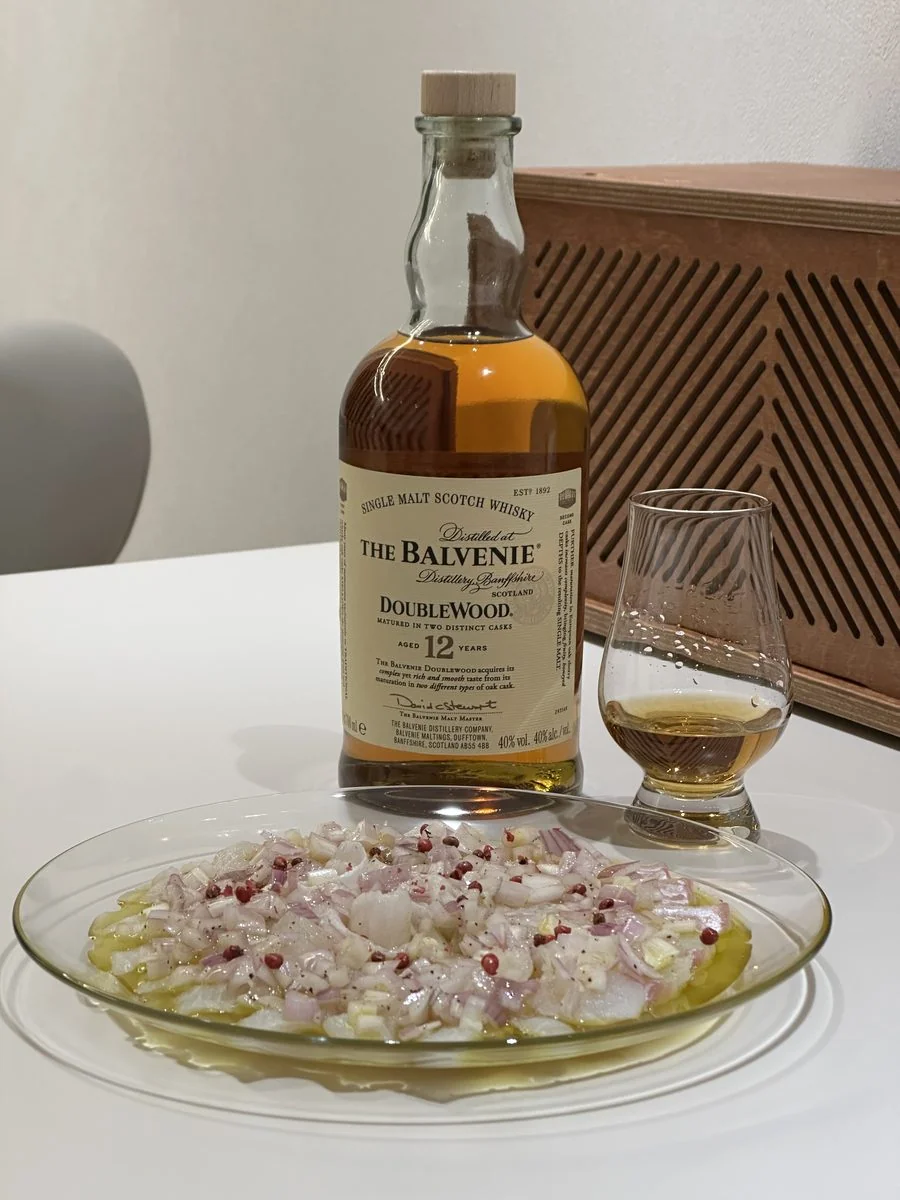
What comes out of the glass first
The nose opens with honey water. Not heavy honey poured straight from a jar, more like honey thinned out and brightened up. A little citrus follows, almost orange juice, and the whole thing stays easy. If you expect the thick sherry weight of Macallan 12 Sherry Oak, this goes in a different direction.
On the palate it is soft right away. Clearly sweet, but not sticky. After two or three seconds a small touch of spice comes up, and that is probably the part I like most. Without it, the whisky could feel too polite. With it, the sweetness gets a little shape.
The finish is medium at best. Cinnamon, maybe a little nutmeg, then a clean oak note at the end. This is not a whisky I want to sit with for an hour and dissect. It is better as an easy glass that keeps its balance.
What DoubleWood actually means
Balvenie sits in Dufftown, Speyside, in the same William Grant family as Glenfiddich. Glenfiddich tends to read lighter and fruitier to me. Balvenie leans more toward honey and vanilla.
DoubleWood means the whisky sees two types of oak. It starts in bourbon casks, then moves into sherry casks for an additional finish. Bourbon cask vanilla and honey on the base, sherry cask fruit and spice over the top.
Balvenie DoubleWood is often mentioned as one of the bottles that made cask finishing famous in Scotch. That history is interesting, but I do not think you need to treat the glass like a lecture. The useful part is simple: it shows how two cask styles can overlap without either one taking over.
The lineup follows the same idea
Most of the Balvenie range has some version of that cask-finishing mindset. If the 12 Years DoubleWood works for you, the rest of the lineup is easy to understand from there.
| Expression | Cask | ABV | Notes |
|---|---|---|---|
| 12 Years DoubleWood | Bourbon + sherry finish | 40% | The original, today’s bottle |
| 14 Years Caribbean Cask | Rum cask finish | 43% | Tropical sweetness |
| 17 Years DoubleWood | Bourbon + sherry finish | 43% | The 12 dialed up |
| 21 Years PortWood | Port wine cask finish | 40% | Deep berry notes |
| 25 Years | Single barrel / long maturation | ~40% | Premium limited release |
Why it keeps getting recommended
“What should I try first?” This bottle keeps coming up for a reason. It is soft, sweet, and has enough going on without asking too much from the drinker. Someone new to whisky can take a sip and simply think, “that works.”
The weak point is also obvious. At 40%, I do wish there were a little more density. A slightly higher ABV would probably give the palate more grip. Still, the easy texture is part of why the bottle works. This is the kind of whisky I would reach for on a normal evening, not just when I want to analyze something.
![[Bourbon] Knob Creek vs Russell's Single Barrel](/assets/images/posts/2026-04-26-knob-creek-9-vs-russells-reserve-single-barrel-comparison.webp)
![[Highland] Glenmorangie Infinita 18 First Pour Review](/assets/images/posts/2026-04-24-glenmorangie-the-infinita-18-years-review.webp)
![[Sherry] Macallan 12 vs GlenDronach 12 - Side by Side](/assets/images/posts/2026-04-20-macallan-12-vs-glendronach-12-sherry-comparison.webp)