 위린이
위린이
The Benromach 10 bottle was almost done - two pours left - when Benromach 15 showed up. Set one pour of the 10 aside, opened the 15, and put the two glasses next to each other. Same label, same 43% ABV, same light peat plus sherry profile. The point was to see what five extra years in cask actually do to the same starting point.
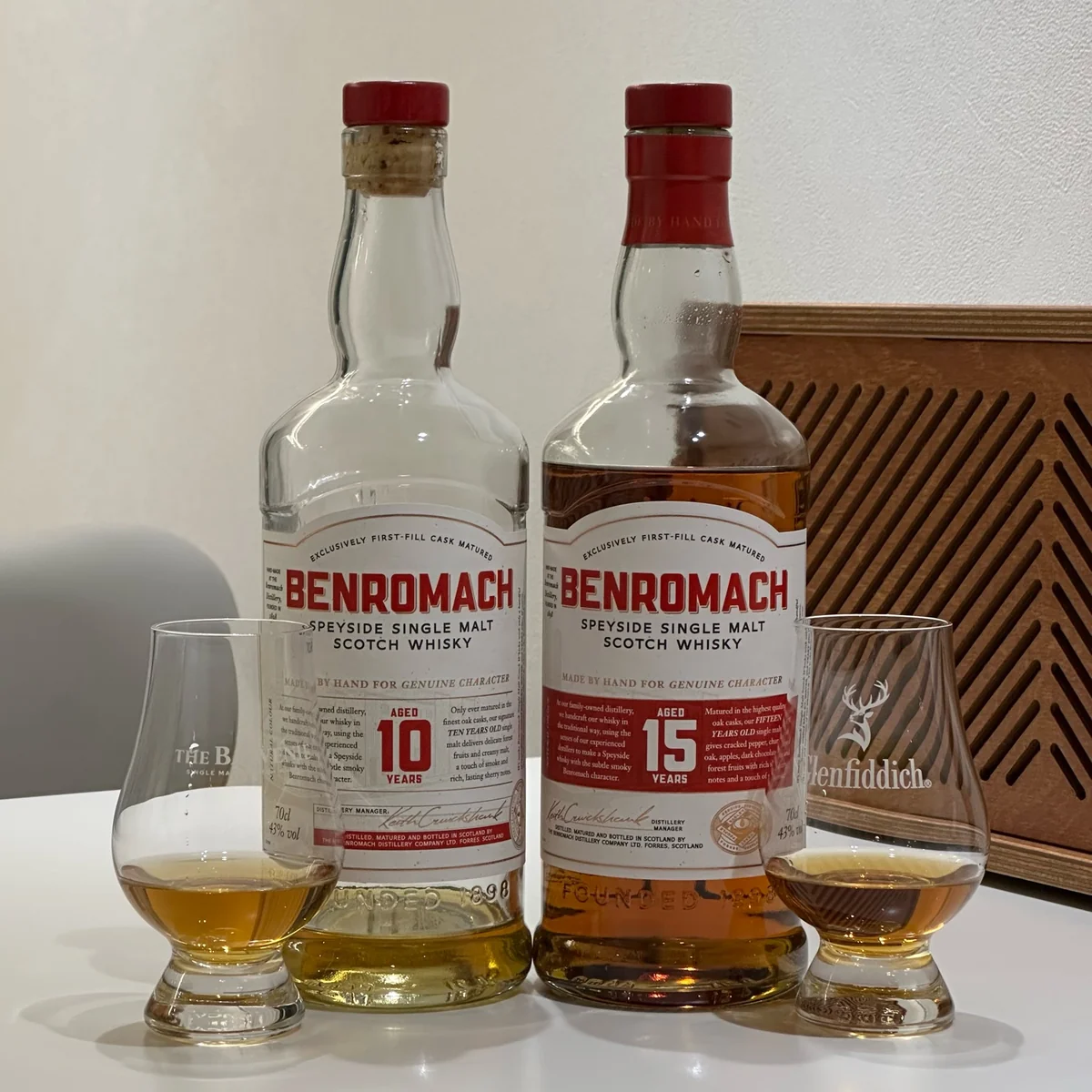
The 10 had been open about three months. The 15 came out of the box days earlier. Not a strictly fair lineup, but the 10 was well aerated by that point and the 15 had had enough time to settle off the freshly-opened sting, so both glasses were sitting in their honest zone.
What’s actually different between them
Same light peat (10 to 12ppm), same first-fill bourbon and sherry cask lane underneath. The 15 keeps that broad construction for five more years. Same 43% ABV, natural colour on both. This is less a cask-step comparison and more a time-and-concentration comparison.
| Benromach 10 | Benromach 15 | |
|---|---|---|
| Cask | First-fill bourbon + sherry | First-fill bourbon + sherry, 15 years |
| ABV | 43% | 43% |
| Color | Bright gold | One shade deeper amber |
| Nose direction | Faint sulphur, green apple, light peat, sherry all at once | Honey apple, syrup, spice, balanced |
| Palate direction | Malt sweetness leads, almost no spice | Sherry + malt sweetness together, oily body |
| Finish | New leather plus quiet smoke | Smoke forward, peaty at the back |
Benromach 10 - the face of light-peat Speyside
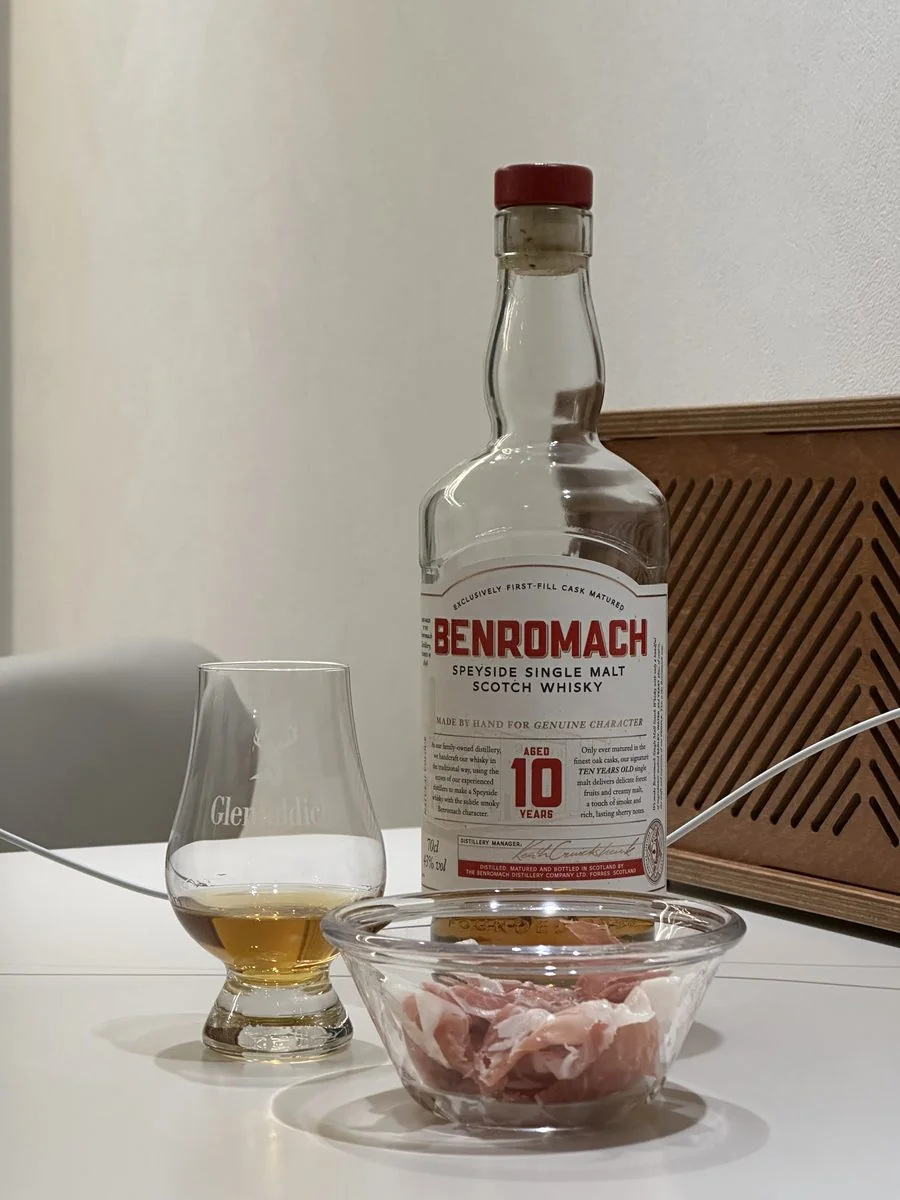
Flagship from one of the only Speyside distilleries still running light peat. Founded 1898, mothballed 1983, reopened by Gordon & MacPhail in 1998, and the 10 was the first core release after reopening. Full single review is over here. The identity of this bottle is having a light-peat-plus-sherry profile sit in an accessible price tier.
Benromach 15 - the same outline, pulled one shade deeper
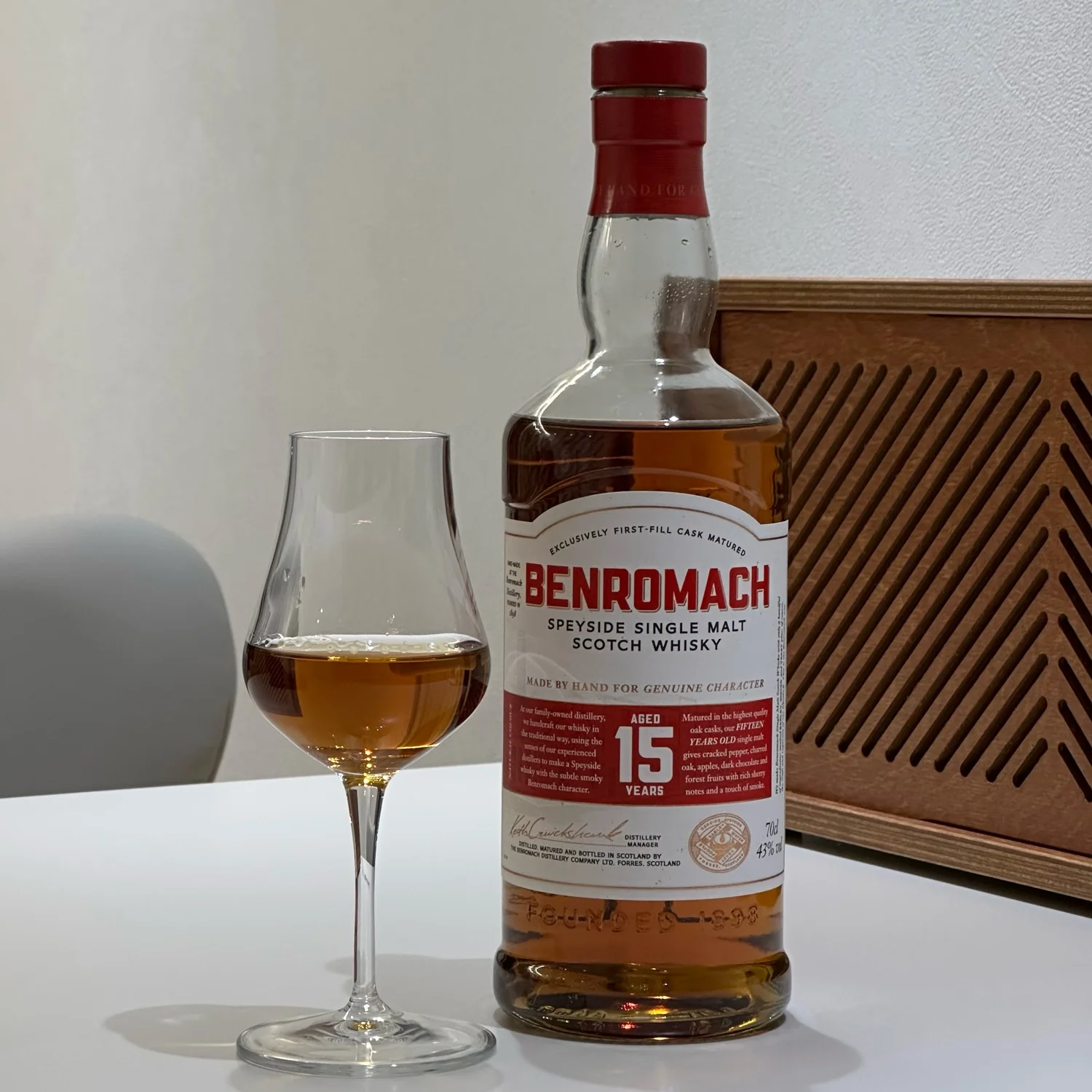
Same broad cask direction as the 10, carried five years further. Light peat is preserved. Single review is here. Sits roughly twice the price of the 10.
Side by side - nose
Starting on the 10. About three months in, so there’s a faint underaged alcohol prickle, but quiet. Sherry and smoke don’t enter one after the other - they hit the door together. A subtle sulphur thread peeks through inside that pair. Sulphur isn’t a note I personally love, but at this level it stays clean. If it pushed harder, this would land closer to Glenfarclas 15 or Royal Brackla 12, but Benromach 10 stops well short. Bright fruit follows in the form of green apple, and the light peat sits comfortably underneath. Hold the glass a bit longer and both the sulphur and the smoke peel back, leaving an apple-juice sweetness on top.
Switch to the 15 and the same outline reads dialed up one notch. Picture the 10’s nose as a small hexagon - the hexagon gets larger in all six directions at once. Spice, alcohol buzz, smoke, sherry all run at higher concentration. But the sulphur from the 10 has been sanded off entirely, and the apple has shifted from green to ripe honey apple, almost syrupy. The smoke being louder doesn’t mean it dominates - the sweetness still sits slightly ahead, with the quiet smoke filling the in-between spaces and adding complexity. Nothing in this nose grates. That’s the biggest single difference.
Two split points on the nose: sulphur present or not, and apple in its green or honey form. Same light peat construction, but moving up the line trims the rough edges and concentrates the rest.
Side by side - palate
This is where the gap opens.
A sip of the 10. First impression is flat. Bottle’s been open a while, which is part of it - spice is almost absent. Malt sweetness leads, sherry sweetness shadows it. The dimensionality you got on the nose dampens one shade in the mouth. Less impact than first sips months ago, but for the price tier it still holds up.
Move to the 15 and the volume of information jumps. Sweet, intuitively so. Sherry and malt sweetness coexist rather than crowding each other out. The maltiness comes through hard - single malt doing what single malt does. The ABV is identical at 43%, but the body in the mouth sits one level above the 10. Call it oily or call it creamy, the texture is meaningfully thicker. A touch more tannin would have made it a perfect personal match - that’s the only small notch missing.
Side by side, the shape reads clean: “malt sweetness one note for the 10” versus “sherry plus malt plus oily body together for the 15.” Worth noting the 10’s pour was from a bottle most of the way through, which biases the read.
Side by side - finish
The finish keeps the gap that opened on the nose going.
The 10’s finish opens with a sweet, fruit-leaning impression. Smoke is almost absent at first, then a quiet new-leather plus smoke combo climbs in over time. Not the heavy leather of Lagavulin 16 - more like new leather smelled with the nose held a little off the glass. The distance gives it character.
The 15 goes the opposite direction. Smoke dominates over sherry, and it’s a very satisfying read of smoke. Behind that, a thin sticky sherry follows, then a faint oak layer further back. With time, actual peat lifts - not the leathery smoke of the 10 but real peatiness, the hospital-style note that I personally enjoy. The amount of information carried into the finish is one tier above.
Side by side, the gap between the two finishes is wider than the gap on the nose or the palate. The finish is where the price differential lands most clearly.
Does five years justify roughly double the price
Within the same line, the 15 takes the outline one shade deeper. If that were the entire story, double the money would be a stretch. But the 15 also actively trims rough edges - the 10’s sulphur thread is gone, the apple shifts honey-ward, the weak finish smoke turns into proper peat. It’s not pure concentration; the direction shifts a little too.
The 10’s identity is the only entry-tier bottle pairing light peat with a sherry profile in its price range. Sherry plus light peat isn’t a configuration big distilleries run often. The 15 sits in a tier that overlaps with GlenAllachie 15, GlenAllachie 10 Cask Strength, Dewar’s 18 Mizunara Cask. GlenAllachie 15 shows up first - that one goes all in on a single sherry sweetness line. Tasty in a direct way, but doesn’t spread information across the glass the way the 15 does. Given the choice again, the answer is the 15.
Looking higher up the line
Benromach 21 sits at roughly double the 15. That puts it in the same neighborhood as Springbank 10. Neither has crossed my glass yet, but if forced to pick blind I’d lean toward the 21 - genuinely curious what the same line looks like another step up. Pure value-for-money, though, keeps pulling back to the 15. The information jump from the 10 to the 15 felt bigger than the price multiple. Light peat next to sherry being rare in the first place is part of the same equation. Patterns shared across sherry cask whiskies in general I broke out in sherry cask common tasting notes.
![[Korea] KI ONE Tiger Korean Single Malt Review](/assets/images/posts/2026-05-17-kiwon-tiger-korean-single-malt-review.webp)
![[Cocktail] Camus VSOP + Disaronno French Connection](/assets/images/posts/2026-05-14-camus-vsop-disaronno-french-connection-cocktail.webp)