 위린이
위린이
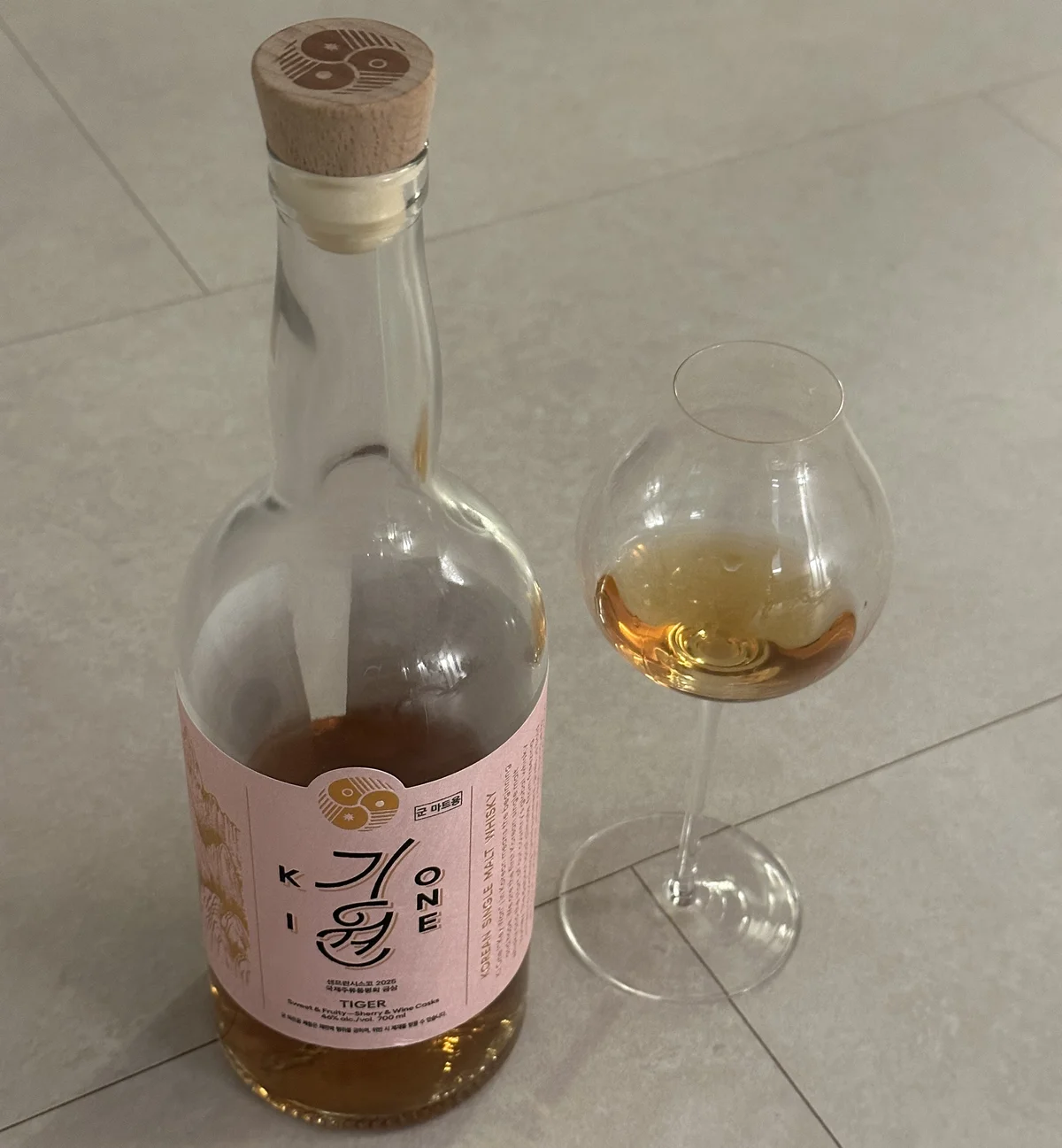
A bottle of KI ONE Tiger landed on the table at a friend’s place last weekend, and I finally got two proper pours of it. Korean single malt is still a small corner of the global whisky map, and to me Tiger is the bottle outside readers are most likely to run into first - Three Societies has been the one Korean distillery actually getting written about overseas. So this is less a price-and-value writeup and more a note on what the liquid itself tastes like, from someone still finding my way with whisky.
Opinions at the table were split. One friend thought the sherry was pushed too hard, another thought 46% made it easy to sip for a long evening. I sat closer to the second camp, but the sherry-forward profile is worth flagging upfront so the rest of these notes make sense.
What KI ONE Tiger actually is
KI ONE comes out of Three Societies Distillery in Namyangju, just outside Seoul - the first proper single malt distillery in Korea. Distillation started in 2020, and the Tiger expression dropped in November 2024 as part of the signature lineup. The same lineup has an Eagle (bourbon-led) and a Unicorn (smoky); Tiger is the sherry and wine cask one.
There’s no age statement on the label. Korean law requires at least three years in cask to call something whisky, so it’s somewhere in that early-aged window. The cask story is oloroso sherry as the backbone with red wine casks blended in. Bottled at 46%, non-chill-filtered, no added colour, so the colour you see is what the wood gave it. Korea’s humid summers and cold winters push aging faster than Scotland, which is the easy way to read why a young malt like this drinks fuller than its years suggest.
The wider KI ONE range picked up a trophy at IWSC 2025. I couldn’t confirm whether Tiger specifically was the bottle that won, so leave that as a range-level note.
Nose, palate, finish
Standard whisky glasses at the table, not Glencairns. I let the pour sit for a minute before going in.
Nose
Sherry and oak lead, but not the dense Christmas-cake nose you get from a heavy oloroso bomb. It’s softer - sweet, slightly sticky, with spice tucked behind. The classic dried-fruit-and-nut signature from the common notes in sherry cask whisky is there but lighter, and the red wine cask seems to lift it sideways into something a bit brighter. At 46% there’s almost no alcohol heat on the nose. Friendly approach.
Palate
Sweet on entry. Butterscotch candy hits first, sherry follows half a beat later. There’s a creamy texture in the mid-palate, and for a second I got something close to red berries folded into cream - not a note I’d have predicted on a Korean malt, but it came back the same way on the second sip, so it wasn’t just suggestion.
Body is medium-plus for the strength. It doesn’t feel thin, but it also doesn’t have the cask-strength weight of something like Kavalan Solist Oloroso, which sits closest as a regional reference - another Asian distillery leaning hard on sherry casks at high strength. Tiger is the more conversational version of that idea. Easy to nurse through a long sit-down.
Finish
Sherry rides through to the end. There’s a soft spice in the tail, warm rather than hot. Medium length. No tannic grip, no rough alcohol catching on the way down. It clears cleanly enough that the next sip starts fresh, which is more than I can say for some young sherried malts at this strength.
What worked alongside it
The food at the table happened to be the right kind of accident - a few cheese slices and some dark chocolate. Dark chocolate flattened Tiger’s sweetness one notch and left the sherry stickiness sitting on its own, which I liked. Cheese pushed the creamy mid-palate forward. Nothing surprising for a sherry-led malt, just confirmation that the standard pairings work without overthinking it.
Where it sits
Taste-only, this is a bottle I’d recommend trying. The texture is unusual for the age, the strength is sociable, and the sherry-and-wine cask blend gives it a profile that doesn’t directly clone any of the obvious Scotch references. I’d put it around 4.2 from where I’m sitting.
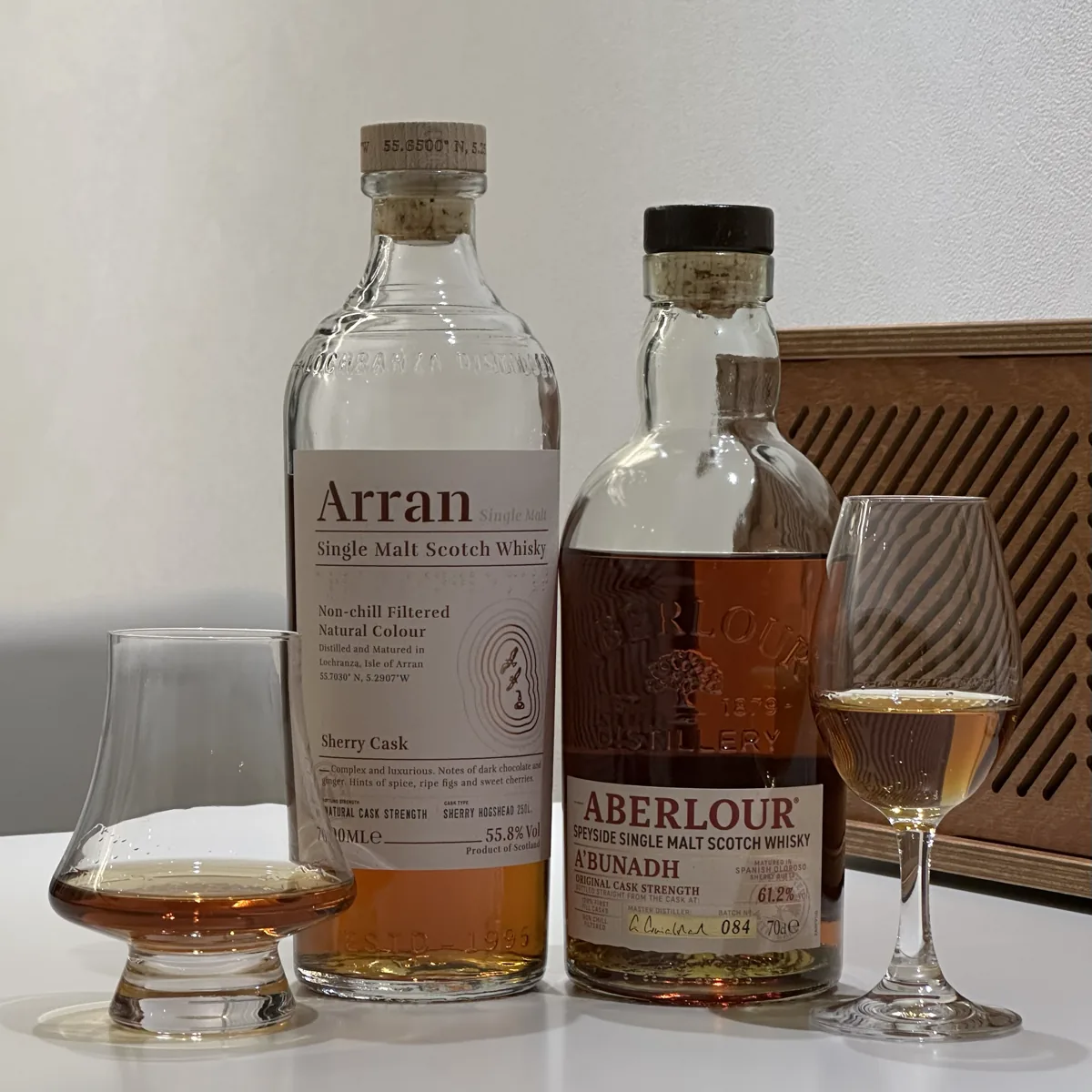
For an outside reader, the more useful question is where Tiger lands next to imports you can already get easily. Compared to GlenDronach 12 Original, Tiger is less dense, less deeply sherried, and reads younger - but it has a textural lift the GlenDronach doesn’t. Against the Arran cask strength I covered in the Arran Sherry Cask vs Aberlour A’bunadh comparison, it’s noticeably gentler and less concentrated. If your interest is the deepest sherry profile possible, the Scotch options still win. If your interest is hearing what a young Asian-climate single malt sounds like when it leans on sherry casks, Tiger is one of the cleaner examples of that conversation right now.
The pour I had came from a PX (Korean military commissary) bottle a friend brought along, and the broader retail version of Tiger sits at a premium that puts it firmly in mid-shelf single malt territory rather than entry-level. That’s the honest tension with the bottle - the liquid is interesting, but you’re also paying the early-distillery tax. For me, knowing what it tastes like was the point of the evening, and on that count it delivered. If a second bottle ever shows up at another gathering, I’m taking the pour to check whether that berries-and-cream flash returns on a different night.
![[Sherry & Light Peat] Benromach 15 Years Review](/assets/images/posts/2026-05-19-benromach-15-years-review.webp)
![[Cocktail] Camus VSOP + Disaronno French Connection](/assets/images/posts/2026-05-14-camus-vsop-disaronno-french-connection-cocktail.webp)