 위린이
위린이
My first Glenmorangie was the 10 Original, back when I was just starting out. My first reaction was that whisky could be this light and clean. Then I tried Nectar D’Or and the whole picture of Glenmorangie shifted. Sauternes, Monbazillac, Moscatel, Tokaji - four dessert wine cask finishes working together to pull this sweet, creamy thing I hadn’t tasted anywhere else. ‘Dessert whisky’ - that was the phrase that landed.
The distillery
- Founded: 1843, northern Highlands in Tain. Uses the tallest stills in Scotland to pull a light, delicate spirit
- Key figure: Dr. Bill Lumsden. Drove the wine cask finish experiments - sherry, port, Sauternes
- Style: Poster child for the light, floral northern Highlands profile
Dessert wine cask angle
“Nectar D’Or” is French for “golden nectar.” It came out of Glenmorangie’s Extra Matured range, the series that pushes extra maturation through different wine casks.
What happens when light, fruity spirit meets sweet white wine casks - that curiosity is where Nectar D’Or started. The current 16-year version spends 14 years in bourbon casks, then another 2 years in Sauternes, Monbazillac, Moscatel, and Tokaji casks. Compared with the old 12-year Nectar D’Or, this version reads creamier and more layered, with less of a simple honeyed sweetness.
The lineup
Glenmorangie splits into the core age-stated range and the Extra Matured wine cask range.
| Expression | Cask | ABV | Notes |
|---|---|---|---|
| Original 10 Years | Bourbon cask | 40% | Light, citrus-led entry point |
| Lasanta 12 Years | Bourbon + Oloroso/PX sherry finish | 43% | Gateway to sherry |
| Quinta Ruban 14 Years | Bourbon + port wine cask finish | 46% | Berry-forward |
| The Nectar 16 Years | Bourbon + Sauternes etc. dessert wine finish | 46% | Today’s bottle |
| 18 Years | Bourbon 15 yrs + Oloroso sherry 3 yrs | 43% | Top of the core range |
Tasting notes
The Nectar isn’t one wine cask. It’s four sweet white wine cask types. Sauternes from Bordeaux, Monbazillac from southwest France, Moscatel from Spain, and Tokaji from Hungary. Sauternes and Monbazillac bring baked fruit and pastry notes, Moscatel pushes syrupy sweetness, and Tokaji adds a honeyed, almond-like edge. Together they give The Nectar a different sweetness from the usual sherry or port finish.
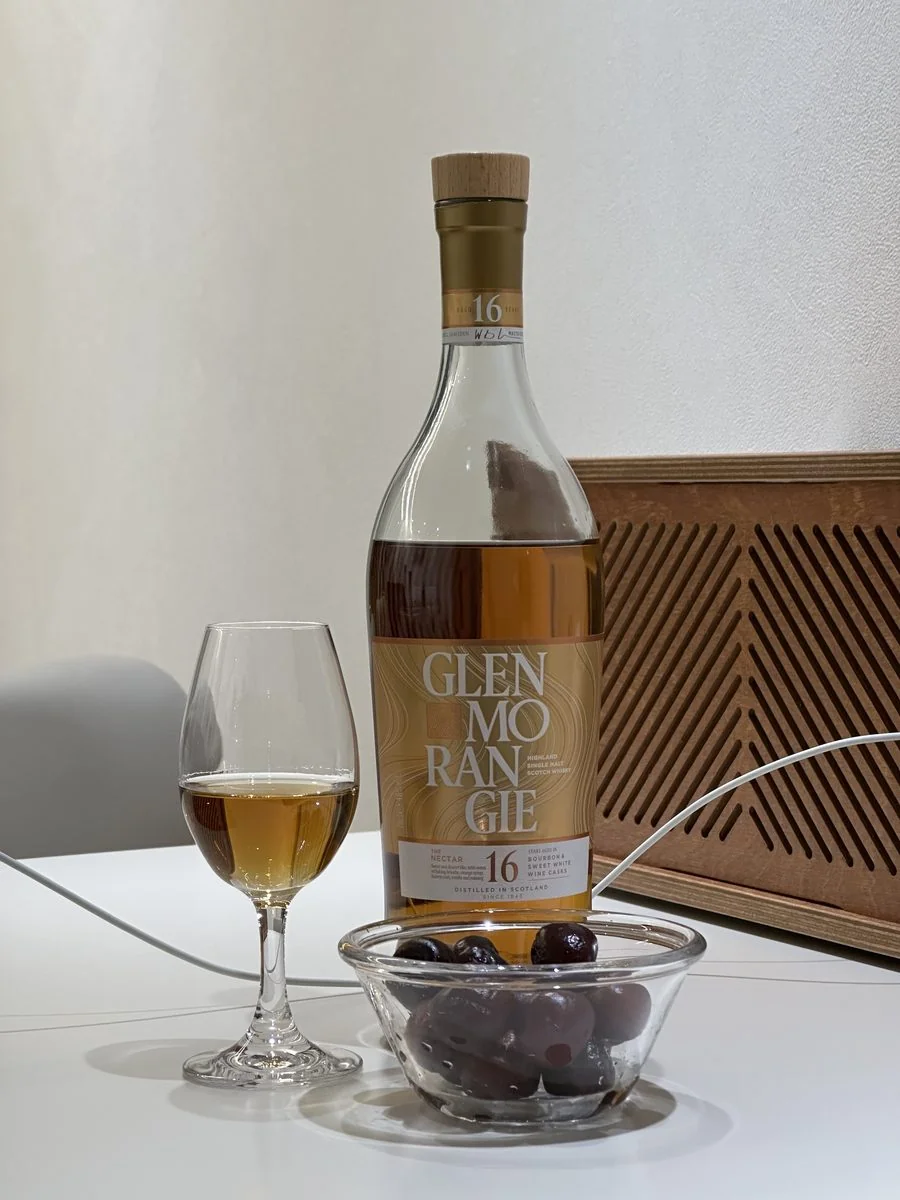
Nose
The pour reads different right away. Oak first, then sweet florals come up fast. Something like bright spring azalea - that kind of floral lift. Vanilla sits underneath, and a hit of citrus zest that feels like pressing an orange peel with your thumb brushes the nose. There’s a tart acacia honey thing too, a bit denser and thicker than Balvenie DoubleWood.
Give it more time and vanilla cream shows up with a slight wax edge. Bright and sweet enough that you double-check the bottle. If you’re used to peat, this is the exact opposite end of the world.
Palate
Oily. Fills the mouth. Honey sweetness spreads across the tongue. The Sauternes influence is obvious because the sweetness has a completely different shape from a typical sherry cask whisky. If something like GlenDronach 12 is dried-fruit-centric, The Nectar is closer to fresh fruit - slightly overripe tropical fruit, really.
There’s a buttery pastry thing happening too, like a well-made mille-feuille. Spice is there but soft, so the sweetness leads without ever getting heavy. Not just sweet - sweet with structure.
Finish
Warm and comfortable. Hazelnut nuttiness shows up first, then vanilla sweetness trails. The warmth going down is cozy enough that the space between sips naturally stretches longer.
Right at the tail, a bit of tannin and a subtle oak note poke up, putting a period on all that sweetness. A sweet whisky with a clean ending - that’s the biggest strength The Nectar has.
Food pairings
- Creme brulee - The honey and vanilla of The Nectar bridge straight into the caramel dessert
- Orange chocolate - The citrus notes from the Sauternes cask click with orange chocolate
Takeaway
Almost no harsh alcohol edge. The sweet white wine finish smooths it out. If whisky alcohol usually gets in the way, or if you’re coming over from wine or cocktails into single malt, this is one of the easier Glenmorangies to meet halfway.
It’s not cheap. You’ll often end up torn between this and the 18 at a similar price bracket, and there’s no right answer - just taste. If you want classic single malt, the 18. If you want something different, The Nectar. For a cask finish angle comparison, Balvenie 12 DoubleWood or Dewar’s 18 Mizunara Cask Finish are interesting picks too. One last note - The Nectar seems to show off its citrus and floral side better slightly chilled.
![[Bourbon] Knob Creek vs Russell's Single Barrel](/assets/images/posts/2026-04-26-knob-creek-9-vs-russells-reserve-single-barrel-comparison.webp)
![[Highland] Glenmorangie Infinita 18 First Pour Review](/assets/images/posts/2026-04-24-glenmorangie-the-infinita-18-years-review.webp)
![[Sherry] Macallan 12 vs GlenDronach 12 - Side by Side](/assets/images/posts/2026-04-20-macallan-12-vs-glendronach-12-sherry-comparison.webp)