 Spemer
Three vials, one distillery, three different proofs. A friend dropped off the Tamdhu 12, 15, and Batch Strength in one handoff, and you don’t get to line up the same distillery across age and strength that often. Out came three glasses.
A distillery that runs only sherry casks
Tamdhu is a Speyside distillery, founded 1897, picked up by Ian Macleod in 2011 and rebuilt around a single idea: the whole core range matures in sherry casks. Not sherry-finished, not sherry-heavy. No bourbon barrels in the blend at all. Plenty of distilleries lean on sherry. Running the entire core lineup on a single cask policy is a much shorter list.
They set up an on-site cooperage in 2019, which tracks. If you commit to 100% sherry, cask sourcing is basically half the business. Going in I wanted to know how three bottles built on the same wood policy could pull apart.
Where the three split on paper
| Tamdhu 12 | Tamdhu 15 | Batch Strength | |
|---|---|---|---|
| ABV | 43% | 46% | 57.5% (varies by batch) |
| Cask | 100% sherry (oloroso) | 100% sherry (oloroso) | 100% sherry (oloroso) |
| Filtration | Non chill-filtered | Non chill-filtered | Non chill-filtered |
| Colouring | Natural colour | Natural colour | Natural colour |
Batch Strength is exactly what the name says. The vial I had was 57.5%, but other batches have come out at 58.8% or 59.5%. Natural colour and non chill-filtered hold across all three.
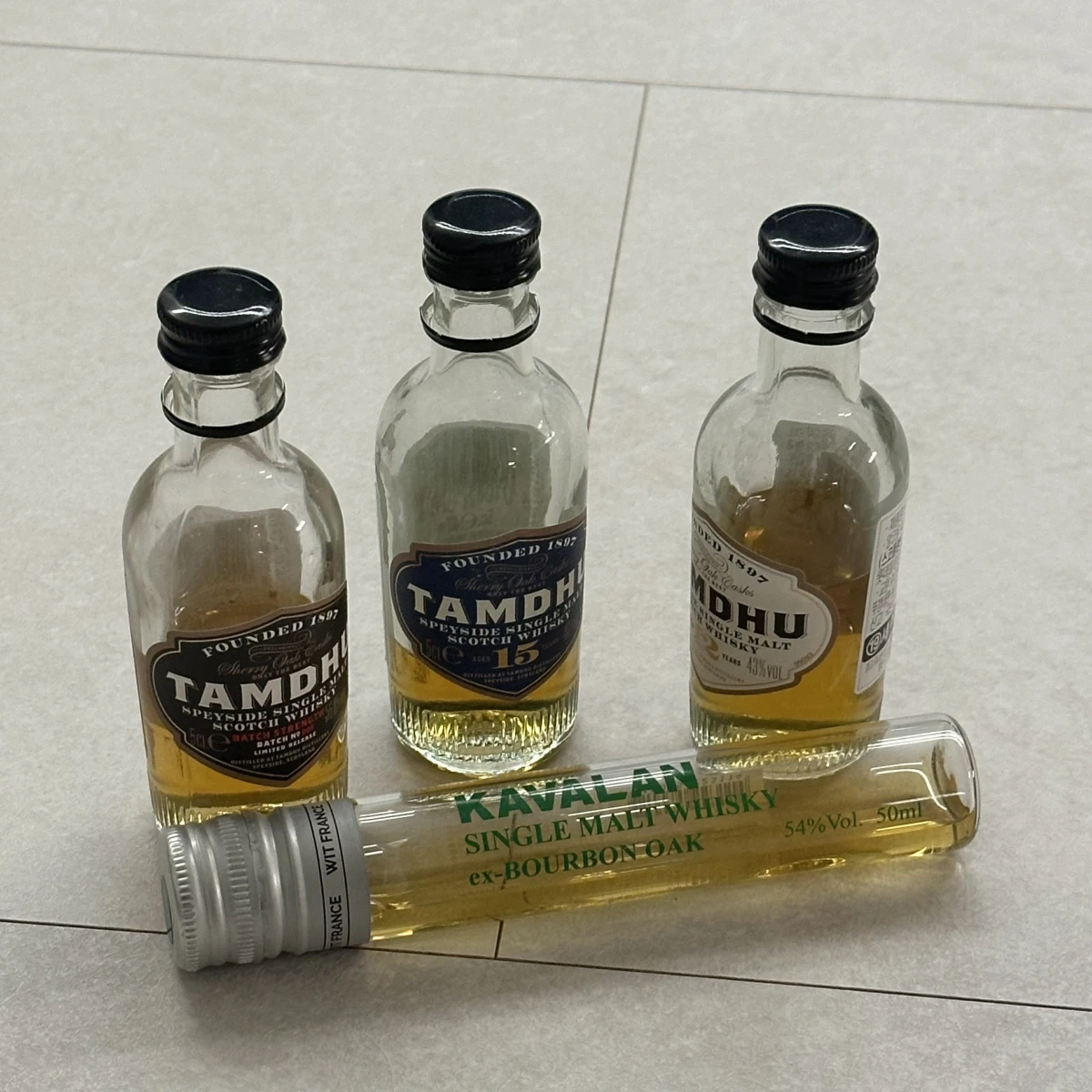
Three Glencairns, three pours from the vials. The Kavalan Ex-Bourbon in the corner of the photo was for a different session and didn’t go into this flight.
Tamdhu 12 - the lightest of the three
Lightest body of the flight. Rated 3.9.
Nose
Bright across the board. Citrus arrives first, light spice trails behind, and oak sits underneath without weighing anything down. Not the dark dried-fruit and dark chocolate cliche of “sherry whisky.” Closer to the brighter end of the sherry spectrum.
Palate
The sherry shows up clean. Reads close to Macallan 12 Sherry Oak in shape, just a touch thicker through the middle. Same tier of bottle and a fair head-to-head against the Macallan.
Finish
Closes on the sweet side. There might be a wisp of smoke at the tail, but not enough to commit to. Medium length, no surprises.
Tamdhu 15 - the glass that emptied first
Rated 4.1. The pour I refilled fastest during the flight, almost without noticing.
Nose
Same family as the 12. One layer denser. Oak steps back slightly and the gap fills with more varied fruit. Reads like a tidied-up version of the 12 rather than a different whisky. The oloroso line also reads sharper than on the 12.
Palate
The spice from the nose follows through. On top of that, a malty thread shows up that the 12 doesn’t really have. The 12 runs on a two-axis frame of sherry plus oak. The 15 adds malt as a third axis, and that’s where it pulls ahead.
Finish
Sherry hangs around, but malt rides next to it and stretches the closing minute longer than the 12. That’s the part that keeps pulling the next sip out of the glass.
Batch Strength - what proof does to sherry
Rated 4.1. The vial I tasted was 57.5%.
Nose
Heavy. Where the 12 and 15 sat in the bright register, this one drops the centre of gravity. Light spice, woody underneath, with an orange note riding on top. Alcohol shows up but never burns through. The thick sherry coat reads like a first-fill heavy pour.
Palate
Body is the headline. The proof is well over the other two, but it lands cleaner than the alcohol bite I get from cask-strength sherries like A’bunadh Batch 84. The interesting move is the sweetness. The heavy sugar weight the 12 and 15 lean on actually pulls back, and fresh-fruit character comes forward instead. Cranking the proof doesn’t crank the sweetness. The opposite, almost.
Finish
Long and warm. Sherry stretches out. The longest finish of the three by a clear margin.
What the three tasted together actually showed
Sat with all three open, the proof-to-character map was easy to read. At 43%, the sherry sweetness leads. At 46%, malt slots in as a second voice and the picture gets one layer thicker. At 57.5%, the sweetness steps back and fruit plus wood come to the front.
The 15 is the value pick. It sits one tier above the 12 in price, and the malt layer plus the added complexity carries the gap. The Batch Strength is in the same tier as the 15. Both rated 4.1, but for a bottle that gets poured often, the 15 wins by ease. If the moment calls for weight in the glass, Batch Strength is the answer.
The natural cross-shop at this tier is GlenAllachie 15. That one mixes PX and oloroso casks, and the sweetness lands rounder, more butterscotch-leaning. Tamdhu 15 runs drier, more malt-forward. Which way you go is taste, not quality.
Wrap
The 100% sherry cask policy holds up. Three bottles split only by age and proof, and the sherry character carries through every glass. All three sit on the sweeter side of the sherry spectrum, so anyone who already likes sherry malts has a low-risk entry anywhere in the range.
If I’m buying one with my own money, it’s the 15. The 12 is a solid entry-level sherry pour. The Batch Strength earns its slot when the night needs weight. After tasting all three together, the “15 is the one” reputation that follows Tamdhu around finally clicked. For a bottle that gets opened often, the 15 is the glass that keeps filling itself.
If sherry-cask character itself is new territory, I broke out the common threads in sherry cask whisky tasting notes.
![[Sherry] GlenDronach Ode to the Dark vs Kavalan Solist](/assets/images/posts/2026-06-09-glendronach-ode-to-the-dark-vs-kavalan-solist-oloroso-sherry-comparison.webp)
![[Sherry CS] GlenDronach Ode to the Dark Review](/assets/images/posts/2026-06-03-glendronach-ode-to-the-dark-review.webp)
![[Islay] Bunnahabhain 12 Years - Two Months After Opening](/assets/images/posts/2026-05-31-bunnahabhain-12-after-two-months-review.webp)